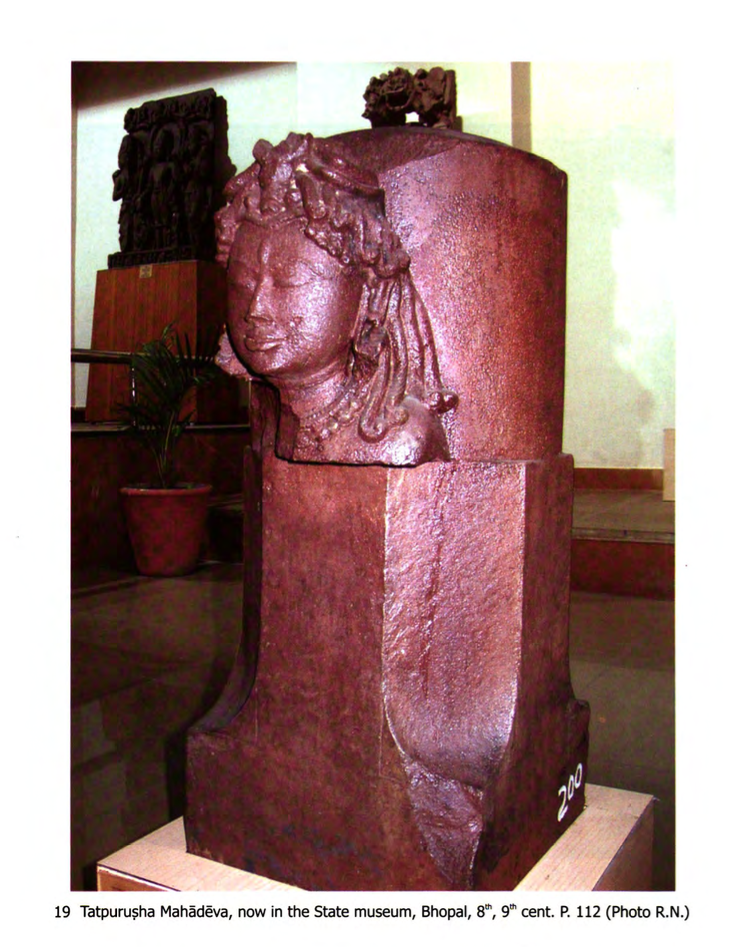
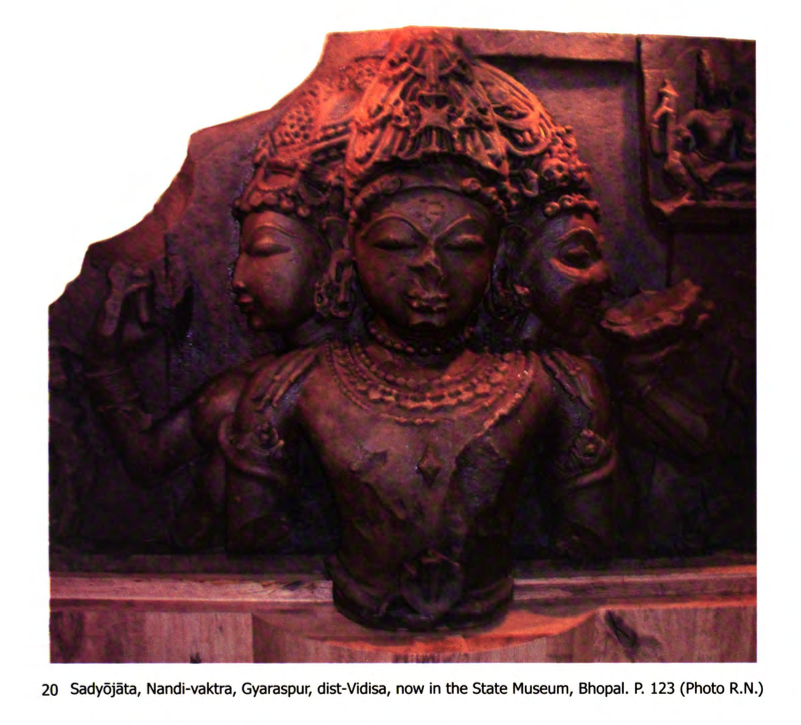
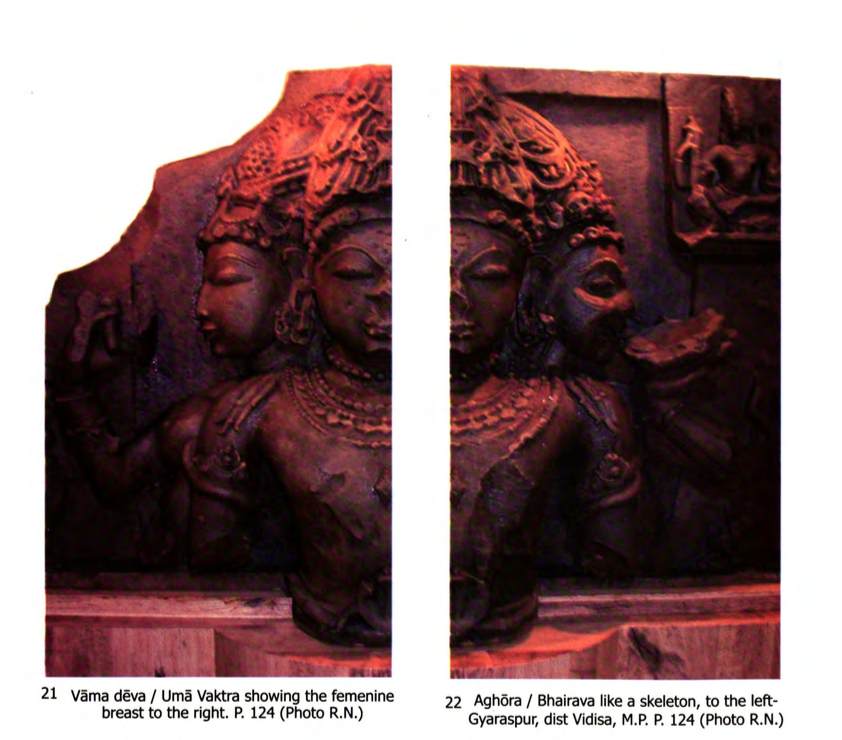
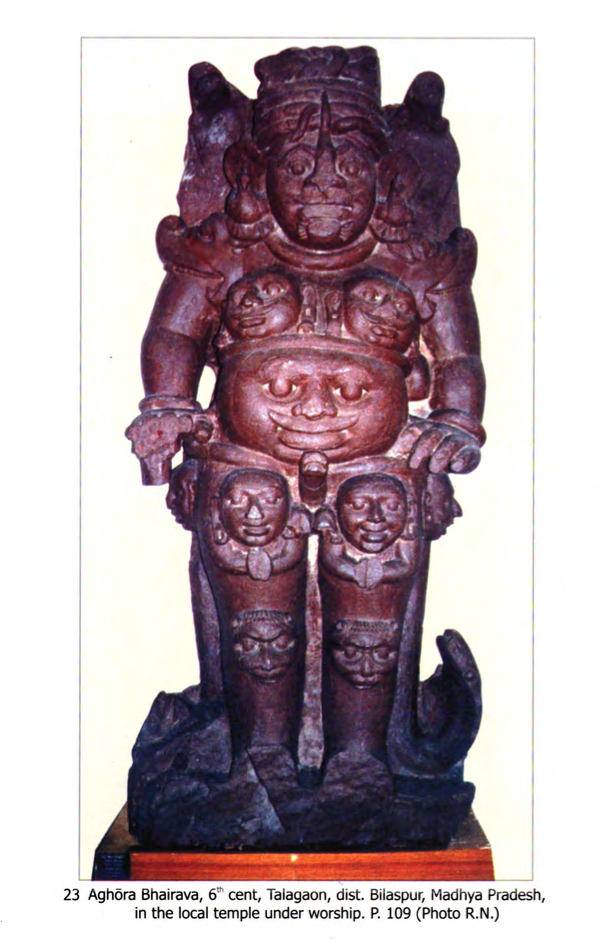
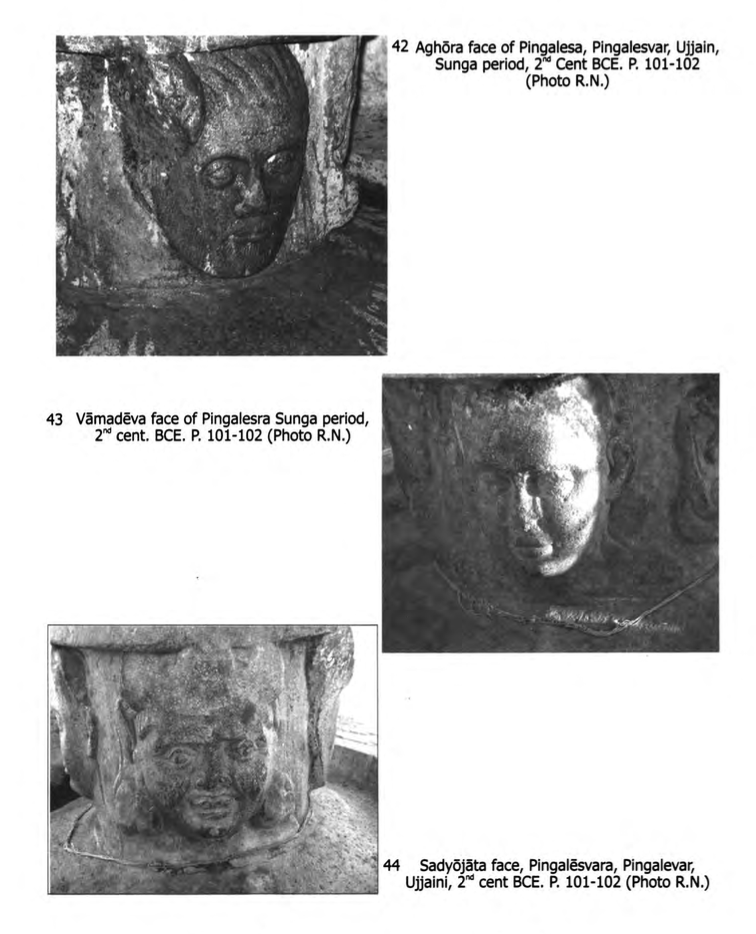
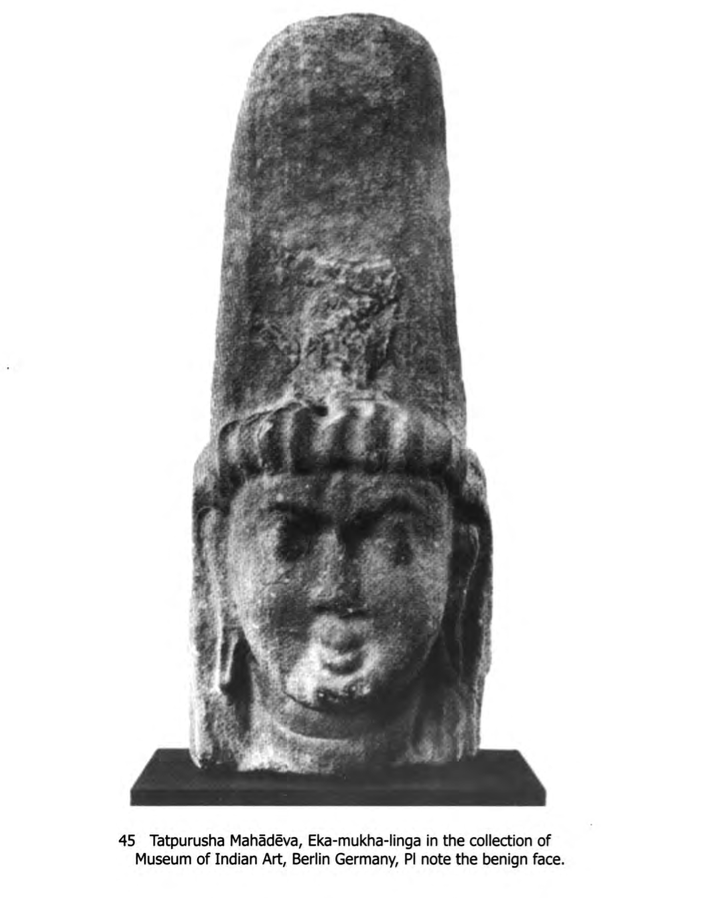
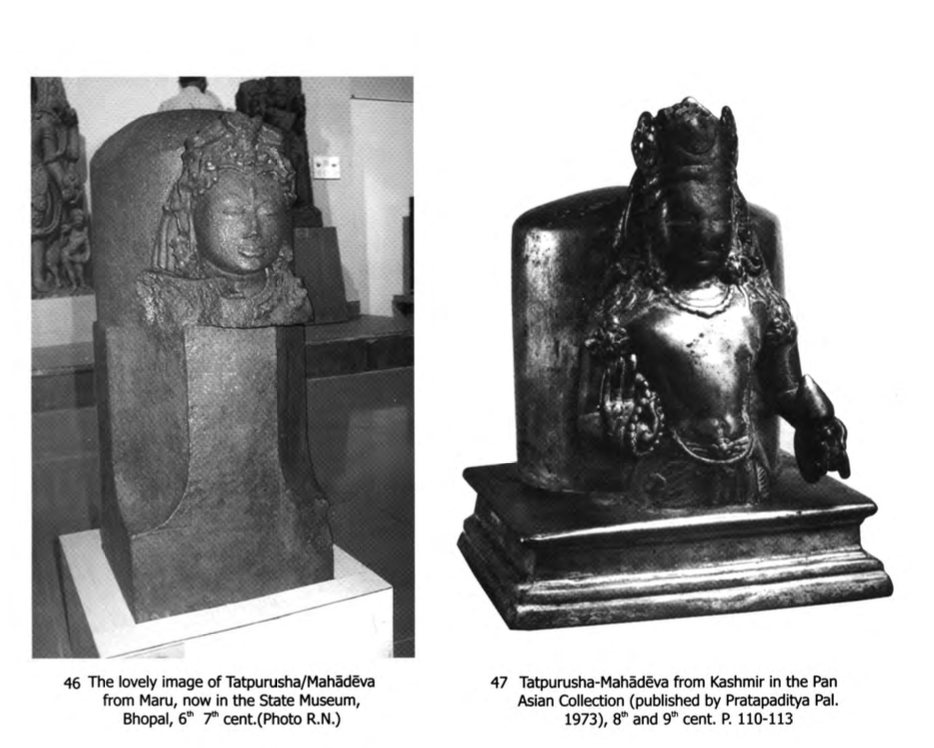
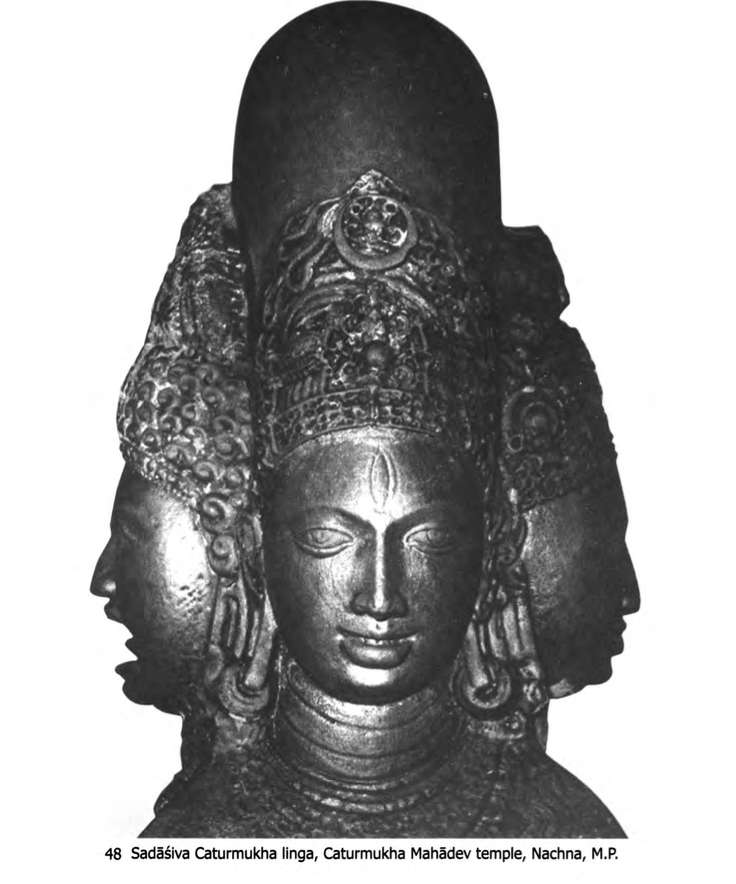
Dhyāna Ślokaशाखा सहस्रविस्तीरण वेदागम मयात्मने ।नमो अनन्तफलोत्पाद कल्पवृक्षाय शम्भवे ॥śākhāsahasra vistīrṇa vēdāgama mayātmanē .namo ananta phalotpāda kalpavṛkṣāya sambhave .. — Sthava Cintāmaṇi verse 16, BhaṭṭanārāyaṇaSalutations to the Sublime ŚivaThe celestial All bestowing Kalpa tree,The embodiment of Vedas and Agamas,That springs and spreadsInto thousands of branchesTo put forth endless fruits of life
ஞானத்தால் தொழுவார் சில ஞானிகள்ஞானத்தால் தொழுவேன் உனை நான் அல்லேன்ஞானத்தால் தொழுவார்கள் தொழக் கண்டுஞானத்தாய் உனை நானும் தொழுவனே — அப்பர்“Lord, some knowledgeable men worship Thee with knowledgeI am not so knowledgable to worship you with knowledge,But looking at those who worship. Thee with knowledgeI, too worship Thee with knowledge” — St. Appar
About the BookA path breaking new approach to the study of Indian art and religion, the work bases its analysis on the subject on two rare Sanskrit texts, Sarva-siddhānt-viveka, (critical understanding of all religious systems) and Jñāna-siddhi (achievement of knowledge) through which the meaning and identitfication of some of the breath taking sculptures of India suhc as Elephanta Trimurti are discussed. After introducing as many as thirty various schools of Śaivism and “Śākta-vāma-tantras” the date and authorship of the Sanskrit texts are detailed both from North and South Indian perspective and their contents summarized. The Jñāna-siddhi is an unknown Śākta-tantra while the other text is an 11th cent Text giving extraordinary insight into the various Śaiva systems that prevailed in India. No other text so far known gives such detailed information on Bhairavas, Kapālika, Kālamukhas, Soma-siddhāntins, and other schools of Śaivam as this text.
Both the texts are given in original. The commentator on these texts cites Svacchānda Bhairava tantra extensively that gives a clear picture of Vāma-Śākta ideaology and Bhairava school of thought.
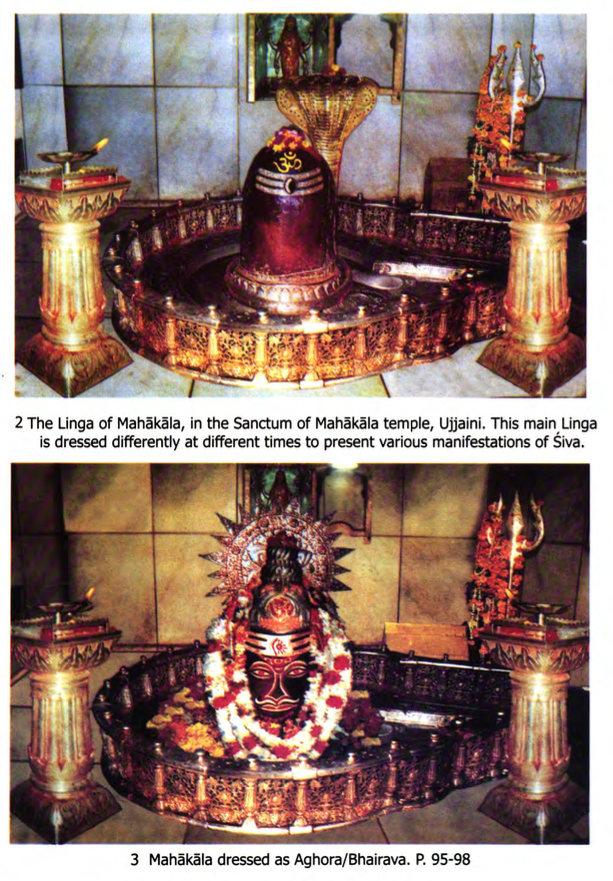
With the help of these two texts the author examines the Temples of India and their sculptures. It is seen that Madhya pradesh (Central India) and other regions including Kashmir have leaned very heavily on Bhairava worship and that the temples and sculptures need to be studied from that angle. The study also reinterpret and correct many identifications of Tāntric and other sculptures in great museums of the World as at USA, UK, Germany, France and other Western world, and also in Indian museums. All the revisions are on textual basis and on inscriptions. The art and history of the ancient city of Ujjaini, which seemed to have played a leading role in Bhairava Śaivism is lucidly explained. Both the Sanskrit texts are given in original.
With over 24 colour plates and over 100 black and white illustrations, the book revolutionizes the study of monumental art of India and is a must for all the Museums, Libraies and scholars on Indology.
Preface
I dedicate this work with admiration and veneration to the greatest Śiva yogi, His Holiness, Śrīla Śrī. Shanmukha Deśika Jñānasambandha Paramāchārya Svāmikaḷ, the Mahāsannidhānam, who is the embodiment of Śiva Carya, Śiva Kriya, Śiva Yoga and Śiva Jñāna, and the 26th head of the Dharmapuram Adhīnam, Śaiva Mutt, Tamilnad, on his 81st birthday. I had the privilege of having his darśan and the benefit of his discourses on many occasion and found in him singular dedication to Śaiva worship and faith. His knowledge of Śaivism is unparalleled and he follows it as a way of life and not as an intellectual acquisition. He lives every minute in Śiva consciousness. His Holiness has absolute faith in Vedic, Āgamic and Purāṇic unity that is the foundation of Indian ethos and culture and strives to contribute to its proper understanding and appreciation.
He comes from the same lineage of the great Tamil Śaivism founded by Śrī Maykaṇṭār and Guru Jñāna Sambandar, the founder of Dharmapuram Adhīnam and also the great poet Kumaraguruparar and Veḷḷi-ambala-Vāṇa Tambiran, who in his masterly commentary on Jñānavaraṇa text, cites the two texts Sarva-Siddhānta-Viveka, and Jñāna-Siddhi, the two rare Sanskrit texts that form the subject matter of this study. The present Sannidhānam combines in himself all the knowledge and experiences of his predecessors, and enlivens the religious life of this region. I consider this as an honour and privilege to present this volume as an imperishable fragrant flower of offering on his 81st birthday.
This work bases its analysis on two rare Sanskrit texts, Sarva-Siddhānta-Viveka, (Critical understanding of all religious systems) and Jñāna-Siddhi (Achievement of Knowledge), through which the meaning and identification of some of the immortal sculptures of India like Elephanta Trimurti are rexamined.
After introducing as many as thirty various Schools of Saivism and "Śākta-Vāma tantras", the date and authorship of the Sanskrit texts are detailed both from North and South Indian perspective.
The Jñāna-Siddhi is an unknown Śākta-tantra while the other text Sarva-Siddhānta-Viveka is a 11th cent digest giving extraordinary insight into various Śaiva systems. No other text, so far known, gives such detailed information on Bhairava, Kāpālika, Kālāmukha, Sōma, and Other schools of Śaivam as this one. Both the texts are given in original in the available form. The Sivacchanda Bhairava tantra, the authoritative text is cited extensively to provide a clear picture of Vama-Sakta ideology and Bhairava School of thought.
It is seen that Madhya Pradesh (Central India) and other regions including Kashmir leaned very heavily on Bhairava worship and so their temples and sculptures are studied from that angle.
The study also reinterprets and corrects many doubtful identifications of Tāntric and other sculptures displayed in great museums of the world like USA, UK, Germany, France and other Western countries, and also in Indian Museums. All the revisions are based on textual and inscriptional sources. The art and history of the ancient city of Ujjaini, which seemed to have played a leading role in Bhairava Śaivism is lucidly explained. With over 24 colour plates and Over 100 black and white illustrations, the book revolutionizes the study of the monumental art of India.
I express my profound heartfelt thanks, to Dr. Bettina Baumer, who presented me with Svacchanda Bhairava tantra with kindness and encouragement. Prof. R.N. Misra, of Institute of Advanced Studies, Shimla, Dr. Kamalesa Dutt Tripati, the Director of Kalidasa Academy, Ujjaini, Sri Muhammad, Superintending Archaeologist, Bhopal Circle, Archaeological Survey of India, Prof. Dwivedi, University of Gwalior and a large number of other enthusiastic scholars who evinced great interest in this research.
I am greatly indebted to Sri. C.V.N. Ravi, the Proprietor of Jai Ganesh Offset Printers, Mylapore, in seeing this book printed neatly with great patience and dedication.
R. Nagaswamy — 5.5.2006
1. Sarva-Siddhānta-Vivēka and Jñāna-SiddhiIntroduction
Two Sanskrit texts, Sarva-siddhānta-vivēka and Jñāna-siddhi, both of great importance to the study of history of Indian Śivaism are included in this volume. This work also gives a brief history about where these texts are found, the texts in original, followed by brief summaries of the contents of both texts and a critical evaluation and their use to Śaiva art and religion.
The text is found in a Tamil commentary on Jñāna-āvaraṇa-viḷakkam1 by Veḷḷi-ambala-vāṇar Tambiran who was an extraordinary Śaiva exponent. According to traditions, he was a contemporary of the celebrated Kumara-guruparar who lived in the time of Tirumalai Nayak of Madurai who ruled in the middle of 17th century.
Veḷḷi-ambala-vāṇar belonged to the 17th century. He is said to have gone to Vāranāsi to learn Śaiva systems, studied under Kumara-guruparar and has written an exhaustive commentary on the Tamil Jñānāvaraṇa2 text. The interesting part of the text is he cites many important Sanskrit texts in a Tamil work. Veḷḷai-ambala-vāṇar cites more than 180 texts.
Sanskrit and Tamil texts cited in Jñānāvaraṇa-viḷakkam by Veḷḷi-ambala-vāṇa Tambiraṉ:-
Acintya-viśva-sādākhya-dakṣināgama — 253
Āditya-purāṇam — 981
Ajitāgamam — 340
Ambā-sthavam — 10
Ānmārtha-pujā paddhati — 767
Arivānanda-siddhi T — 126
Bhaviṣya-purānam — 981
Bhīma-samhitā — 413
Bhoga-kārikā — 737
Bhuvan Tattvam — 30
Brahadāraṇyaka-bhāṣyam — 103
Brahad-kālōttara — 1055
Brahmāṇḍa purāṇam — 413
Candra-dīpam — 65
Chidambara-māhātmyam S — 1003
Chidambara-mānmyam — 247
Dakṣiṇa — 1132
Dakṣiṇāgamam — 252
Devi-kālōttaram — 348
Dīkṣā-vivēkam
Dīptam — 186
Dṛk-dṛśya-vivekam
Gauḍapādīya-vivaraṇa by Bhagavadpāda — 104
Gauda-pādīya-vivaraṇam — 104
Guru-sthuti — 115
Hālāsya-māhātmy — 787
Hiraṇya-garbha-vēdāntam — 71
Hitōpadesa
Jīvaka-cintāmaṇi — 411
Jñāna-dīkṣā-prakāsikā — 383
Jñāna-dīpikā — 72
Jñāna-dīpikā T — 837
Jñānānta-paribhāṣā — 661
Jñāna-ratnāvalī — 1134
Jñāna-sāram — 65
Jñānaśāstra-pañcakam
Jñāna-siddhi – 114
Jñāna-siddhi(Prāsāda-prakaraṇam) — 78
Jñāna-vāciṭṭam T — 165
Jñānāvaraṇa bhāṣyam — 331
Jñānāvaraṇam — 53
Kālidāsa — 672
Kālōttaram — 402
Kāmikam — 228
Kāñci-mānmyam — 5
Kanda-kālōttaram — 646
Kanda-purāṇam — 229
Kandha (S) — 646
Kanmāvaraṇam — 53
Kāraṇam — 1003
Kiraṇam — 806
Kriyā-krama-dyōtikā T — 1009
Kriyā-sāra — 727
Kumara-guruparar T
Kurum-tiraṭṭu — 164
Kūṭastha-dīpikā — 148
Mahimnam — 413
Mahimna-sthavam — 424
Makuṭam — 674
Makuṭottaram — 257
Mālinī-vijaya — 517
Matangam — 656
Mey-jñāna-viḷakkam T — 1168
Mṛgendra — 663
Mudumoḻimevaippu T
Mukti niścayam — 325
Nāda-kārikā — 622
Navalinga-līlai T — 181
Nirāmaya-devar-(work) — 131
Nirvāṇa-sāram — 65
Niśvāsa-kārikā — 26
Niśvāsōttaram — 596
Paripūrṇa-siddhi T — 107
Pañca-daśi — 349
Pañcā-praṇava-vivēkam — 52
Pañcanada-mānmyam — 349
Pañcāvaraṇa-sthava — 1054
Parākhya — 255
Paramokṣa-nirāśā-kārikai — 227
Parāsaram — 514
Pauṣkaram — 223
Ponvaṇṇattu-antāti T — 1003
Prakaṭārtha-vivaraṇam — 102
Prāśāda-vivaraṇam
Prāśāda-viḷakkam T
Pūjā-sthavam — 684
Pujā-sthava-vyākhyānam — 1054
Puṇḍarīkapura-mānmyam — 231
Ratna-trayam — 633
Raurava-vṛitti-vivēkam — 224
Raurava-āgamam — 217
Rauravōttaram — 579
Rupasvarūpa-ahaval T — 637
Sadāśiva-rūpam — 1054
Śaiva-nikanṭu T — 169
Śiva-purāṇam — 404
Śakti-nipāta-ahaval T — 361
Sālīkanātha — 430
Sambandar-tēvāram — 595
Chāndokya-upaniṣad
Samkṣepa-sārīrakam — 102
Saṅkalpa-nirākaraṇam — 298
Sarva-jñānottaram — 218
Sarva-mata-upanyāsam — 185
Sarva-siddhānta-rahasya — 1136
Sarva-siddhānta-saṅgraḥ — 1135
Sarva-Siddhānta-vivēkam
Shad-padārtha-dīpikā — 1054
Shad-sahasra-kālottara — 611
Siddhānta-bhodam — 402
Siddhānta-cintya-viśva-Sādākhya — 95
Siddhānta-dīpikā — 186
Siddhānta-rahasya S — 1130
Siddhānta-samuccayam — 187
Siddhānta-sārāvaḷi T — 1068
Siddha-tantra — 595
Siddha-tantra-āgama — 606
Siddha-tantram — 456
Śiva-dharmottaram T — 900
Śiva-dharmam — 229
Śiva-gītā — 784
Śiva-Jñāna-bodham — 390,415
Śivajñāna-bodha-saṅgraham — 228
Śiva-jñāna-siddhiyār T — 170
Śiva-prakāśam
Śiva-prakāśam T — 676
Śiva-pūjā-sthavam — 236
Śiva-purāṇam also called Brahmāṇḍa-purāṇam — 32
Śiva-tantra-rahasya — 665
Srī makuṭam — 249
Srīman mṛgendram — 255
Suddhākhya — 623
Suprabhēdham 341
Sureśvara-vārtika
Sūta-samhitā — 170
Svacchanda-Bhairavam — 26
Svacchanda — 10
Svāyambhuvam — 472
Svētāraṇya mānmiyam — 220
Tarkka-paribhāṣā — 459
Tattva-dīpam — 65
Tattvāmṛtam T — 106
Tattvaprākaśa-vritti of Aghōraśiva — 830
Tattva-prakāśam — 189
Tattva-saṅgraham — 745
Tattvasāram — 65
Tattva-siddhi — 65
Tattva-vivēkam — 102
Tevāram — 815
Thiru-mantra-mālai — 815
Thirup-puhaḻ T — 7
Thiruveṇkāṭṭu-mānmyam — 417
Tiruvācakam T — 960
Tolkāppiyam T — 715
Uttara-kāmikam — 507
Vaiśeṣika-mata — 611
Vākya-vṛitti — 106
Vāma-tantra — 1131
Varga-rahasa — 729
Vāsiṣṭa-laiṅgam — 19
Vātula-suddhākhyam — 254
Vātulōttaram — 341
Vāyaviya-pūjā-paddhati — 692
Vāyu-purāṇam — 220
Vedānta prakaraṇam — 111
Vīra-tantram — 245
Viśva-sārōttaram — 653
Vṛddhagiri–mānmyam — 345
Yōgajam — 413
Yōga-sāram S — 720
Yōga-siddhi — 65
Yoga-śāstram — 417
Bhatta Pakaha — 434
(The numbers after the titles denote the page number of the book Jñānāvaraṇa-viḷakkam. “T" denotes the works in Tamil. Unless otherwise stated numbers given in the brackets in this and two more chapters refer to the page number of the book Jñānāvarṇa-viḷakkam.
The Tamil Śaiva Siddhānta school was founded by Meykaṇṭa Dēvar in his Tamil work “Śiva-jñāna-bodham” written in the 13th century. Aruḷ Nandi in his “Śiva-jñāna-siddhiyār”3 elaborated this. These two works put together constitute the basis of Tamil Śaiva Siddhānta system. Another Śaiva Siddhānta text Jñāna-āvaraṇa-dīpika
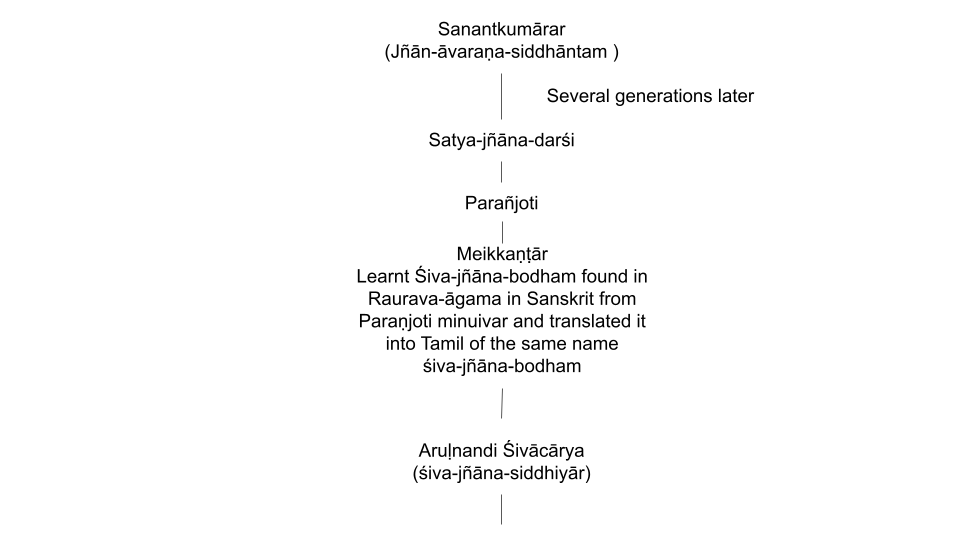
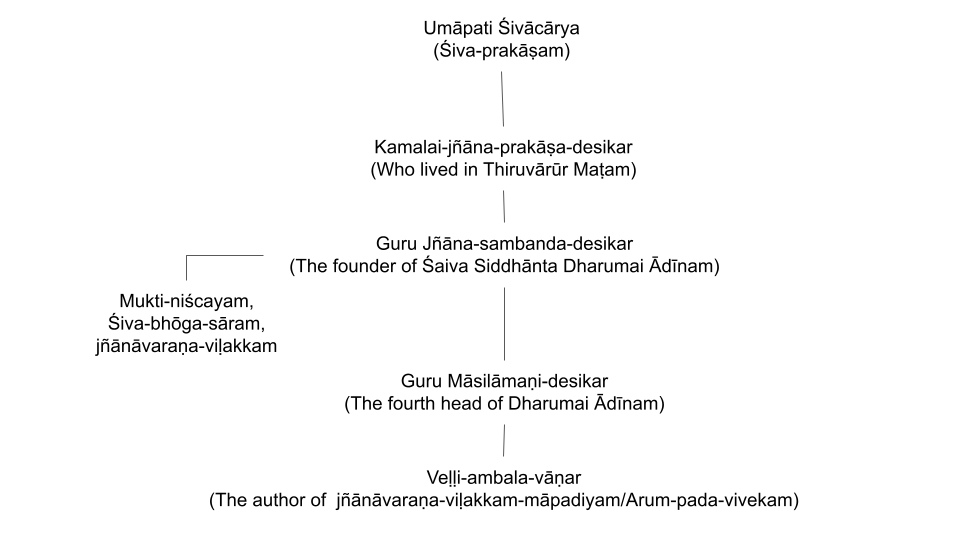
is said to have been written as a supplement to the Siddhānta text Śiva-Jñāna-siddhiyār by Guru Jñāna-sambanda-mūrtikaḷ (addressed as ādīna guru-mudalvar), the Founder Head of the Dharmapuram Ādhīnam Maṭha of Tamilnadu.Veḷḷi-ambala-vāṇar who is mentioned as “Śiva-Jñāni” and also “Rajata-Sabhānātha-yogi” wrote this commentary on the Jñāna-āvaraṇa-dīpikā as vyākhyāna-viḷakkam. He belonged to the Sanat-kumāra-santāna which elucidated Jñāna-āvaraṇa-siddhānta4 (School). This was a tradition established by one Satya-Jñāna-darśi, followed by Parañjoti who initiated Meykkaṇṭār, the founder of Śaiva siddānta tradition through his Tamil work Śiva-jñāna-bodham. This was a translation into Tamil of the Sanskrit text Śiva-jñāna-bodham (of the same name). In this line of teachers came Kamalai-jñāna-prakāśa-desikar who initiated Guru Jñānasambanda who established the Dharmapuram Ādhīnam maṭha. Guru Jñānasambanda wrote a text called Jñānāvaraṇa-dīpikā. Veḷḷi-ambala-vāṇar the author of this commentary obtained śiva-dīkṣa and sanyāsa
from Māsilāmaṇi Deśika, the fourth head and initiation (jñāna-dīkṣā) from Jñāna-sambanda-desikar, the fifth head of the Dharmapuram Maṭha .
Please check. [There was an Institution at Thiruvārūr in Tañjāvūr District, where one Kamalai-jñānap-prakāśa-deśika lived during the 16th century. Also at the maṭha of Dharmapuram was its head Jñāna-sambanda-deśika who initiated a certain Akalanka-muni (also called in Tamil as Māsilāmaṇi-deśika bhagavadpāda). Veḷḷi-ambala-vāṇa, who was called an “Ati-varnāśramī" received introduction and initiation under these great Ācāryas.]
From this it is evident that Veḷḷi-ambala-vāṇa Tambirāṉ had another but famous name Satya-jñānī and that he was an Ati-varṇāśrami, a recluse.
The Famous Śaiva Maṭha Dharmapuram Adheenam published the text Jñānāvaraṇa viḷakkam in two parts, the first part in 1957 and the second in 1959.
Sarva-Siddhānta-VivekaThe Sarva-siddhānta-viveka is a rare Sanskrit text dealing with various Śaiva and Śākta subsects that existed in mediaeval India. It deals with more than thirty subsects among the Śaiva and Śākta schools, their basic philosophy, the concept of Supreme in each school, their mode of worship, and the texts they followed, that are of great value to Indian religious history. This text helps in understanding monumental temples and sculptures throughout India that have come up in mediaeval times based on these schools.
The name of the author is not available, but the date of composition can be fixed with an amount of certainty. The available texts consist of more than 840 verses in anuṣṭub metre with a few prose passages in between. As its name “Sarva-siddhānta-viveka” suggests, in its original form, this text dealt with other schools as well like Advaita, Mīmāmsa, Sāmkhya, Yoga, Dvaita, Bauddha, Jaina and others, such as the “Sarva-darśana-sangraha” of Sāyana Mādhava,5 which has been published in more than two editions. The later text Sarva-darśana-saṅgraha is well known and extensively cited by scholars, but Sarva-siddhānta-viveka is not known. The present text shows that there has been a tradition of compiling basic tenets of all schools for the better understanding of serious students of philosophy.
Jñāna-Siddhi
The other text Jñāna-siddhi6 is an important source for the study of Śaivism and is also found in the same commentary on Jñānāvaraṇa-dīpikā by Veḷḷi-ambala-vāṇa-swāmikaḷ. It is mentioned in the commentary that it is an Āgama included among 224 secondary Āgamas and follows the Āgamic structure in its arrangement. This text contained more details in its original form but the available parts have been used to supplement what is not found in the Sarva-siddhānta-viveka. Jñāna-siddhi is in the form of a dialogue between Śiva and Devī and is ascribed to divine origin that carries authority as the other Āgamas. It consists of nearly 500 verses in anuṣṭub metre in the Sanskrit language.
Both the texts available to us have neither the beginning nor the end but compiled from the bulky volumes of commentary as homogeneous texts and presented here as found in the citations in their incomplete forms. As the citations are selective, there are gaps and also loss of continuity. In some instances, the same verses are cited more than once. Such repetitions have been removed in this volume. The citations occur along with many other quotations thus seem to fail in their cohesiveness. Veḷḷi-ambala-vāṇar has taken extraordinary care to cite the name of the text and even the chapter from which he quotes that makes the collection easy and authentic. In one or two instances there still persist doubts as to the citations and its text. Despite such difficulties, the volume of text cited from both the works is so great that they stand out as monumental texts. Unfortunately it has not been possible to trace the manuscripts that were used for the 1957 edition as they seemed to have suffered damage and loss. What is available are the citations only from which these two texts are reconstructed.
As these two texts are not cited in any study so far, including the recent exhaustive Śaiva studies by Sanderson7 or Goodal8, it is obvious that these texts are not known to any and deserve to be brought to the notice of the scholars in their present of state of availability with notes and comments.The Jñānāvaraṇa had a bhāṣya in Sanskrit from which Veḷḷi-ambala-vāṇar draws citations. At the beginning of the text, he makes it clear that he was composing Pada-vivēka (a commentary with meaning for words) for the Tamil Jñānāvaraṇa-viḷakkam that was composed by Guru Jñāna-sambanda-deśika9, the founder of the Dharmapuram Śaiva Siddhānta maṭha. This Acārya wrote three great works - Śiva-bhōga-sāram, Mukti-niścayarm and Jñānāvaraṇa-viḷakkam. As the contribution of Śrī Guru Jñāna-sambanda, the founder of the Dharmapuram maṭha is a landmark in the history of Tamil society and deserves to be properly appreciated. It is dealt with in the sequence. It is not known how close Jñānāvaraṇa-viḷakkam in Tamil, is to the bhāṣya in Sanskrit.
Obviously, it is evident that Guru Jñāna-sambanda-deśika was steeped in Jñānāvaraṇa tradition which is also called Jñānānta school (different from the Karmānta school). Jñānānta school is also called Siddhānta Śaivam. Veḷḷi-ambala-vāṇar was also an ardent follower of the same school and hence wrote this Pada-vivēka, now well known as Mahā-bhāṣya10. As Veḷḷi-ambala-vāṇar cites extensively from both Tamil and Sanskrit texts, there could be no doubt that his work is a Mahā-bhāṣya.
The benedictory verse of the Mahā-bhāṣya seems to suggests that “Jñānāvaraṇa-viḷakkam” of Guru Jñāna-sambanda-deśika was known as “Jñānāvaraṇa-dīpīkā in Sanskrit and that of Veḷḷi-ambala-vāṇar’s own work called arump-pada-vivēka or shortly pada-vivēka.
This work is an exposition of Śiva-jñāna-bodham and its great exposition Śiva-jñāna-siddhi by Aruḷnandi Śivācaryar. The later work Śiva-jñāna-siddhi is in two parts, as Parapakṣa and Supakṣa (parapakkam - the external schools and supakkam
- the internal schools). This text begins with the Supakṣa of Aruḷnandi. As the external schools have already been dealt with elaborately in Aruḷnandi's Parapakṣa, Veḷḷi-ambala-vāṇar begins discussing supakkam or what we may call the internal schools and their refutation and finally establish their own school firmly.
So, both the Sanskrit and Tamil texts dealing with the external schools have not been elaborately discussed here. It is in a way a great loss to our knowledge, because those portions dealing with Lokāyatas, Ārhatas, Baudhdhas, Māyāvādins and others in such texts as Sarva-siddhātanta-viveka and Jñāna-siddhi are lost.
It is however a matter of satisfaction that the extensive citations especially of Sarva-siddhātanta-viveka and Jñāna-siddhi provided in this portion help us greatly in understanding the Śaiva Siddhānta in an all India perspective, the like of which is not furnished by any other source.
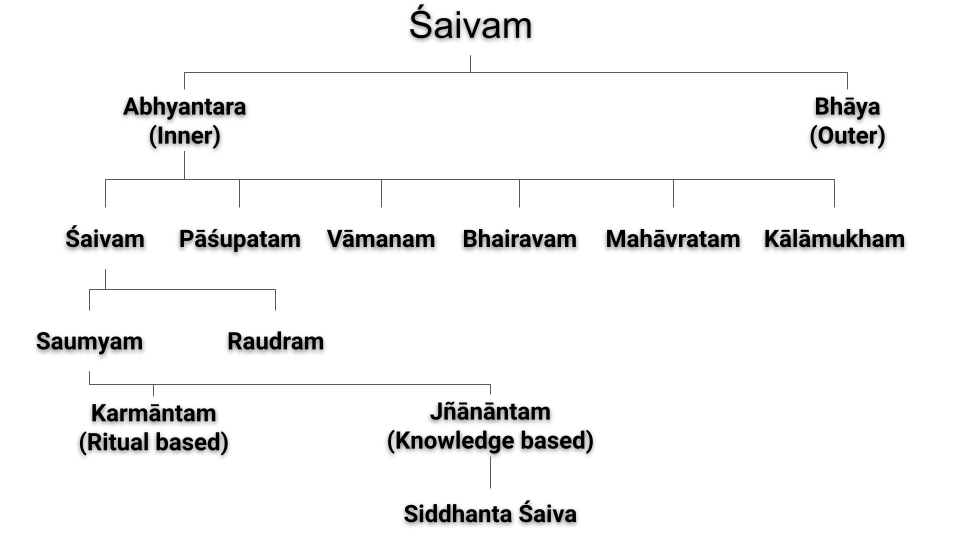
This part establishes that by Siddhānta Śaiva, it means the Śaiva system that is based mainly on the tenets of Āgamas like Kāmikāgama which in essence is a combination of both Vedic and Āgamic paths. In this school there is no question of rejecting either the Vedas or the Āgamas. It also categorically states that the Vedas are considered the “general texts” and the Āgamas are “specific texts”. Secondly, it also holds that Siddhānta Śaivas were classified as “the benign school” (saumya) while all the others were considered (raudra) “the wild schools”. Thirdly, even among the saumya schools, there are two distinct sub schools; one “the Karmānta school” and Jñānānta school. Karmānta school is also considered external school and the branch that emphasizes “Jñānānta" is called Siddhānta Śaivam. This Siddhānta Śaivam thus holds the observance of caryā, kriyā, and yoga as enunciated in the Āgamas culminate in Jñāna-knowledge like Vedānta and that alone is the path of liberation. So, Siddhānta Śaiva is called Jñānānta Śaivam through out this text. The supremacy of Jñānānta
is consistently maintained and all other Śaiva schools are held Pūrva-pakṣa i.e., the tenets of the schools are outlined and logically disproved. This means the followers of other schools will reach certain stages in the path of Śaiva liberation called pada-prāpti, while Siddhānta alone is considered the fruition of Supreme Śaiva liberation.Date of Tamil Śiva-jñāna-bodham
In the history of Tamil Śaivam, the text Śiva-jñāna-bodham by Meykaṇṭa-devar is the foremost and is assigned to the 13th century.11 It is in 12 sūtras. Earlier the Tamil authors and poets considered this text as a translation of the Sanskrit text Śiva-jñāna-bodha of Rauravāgama.12 However, in recent times they are claiming that the Tamil Śiva-jñāna-bodham is not a translation but an original work. The 1956 publications of the Tamil Śaiva maṭha, published the Sanskrit text along with the Tamil text13.
Veḷḷi-ambala-vāṇar discusses in a lengthy passage that the Sanskrit Śiva-jñāna-bodham is the original text and that the Tamil Śiva-jñāna-bodham of Meykaṇṭār and the Tamil Śiva-jñāna-Siddhi follow the original Sanskrit text page (579). The original Sanskrit text is found in the chapter “pāśa-vimocana paṭala” of the Rauravāgama which is the “ādi sūtra” (p. 581). The original Śiva-jñāna-bodha (in Sanskrit) was taught by Śiva (583). Veḷḷi-ambala-vāṇar is following the Jñānā-varaṇa-bhāṣya in Sanskrit in his tradition which he cites. The Sanskrit bhāshya holds that Sanaka and others understood this Sūtra, expounded by “Śiva”.
śiva vākyena pratiāpaditatvāt, pañca rūpa upapannāt liṅgāt, paraiḥ sanakādibhiḥ jagataḥ sakartṛkāriam jñāyate p.583.
Again the same position is asserted that the original Śiva-jñāna-bodha was taught by Śiva.
atra śiva jñāna bodha harasya prabhutva ukteḥ jagat kartṛtva anādi nirmala cidrupakena sarvajñatvādi śaktimatvam api siddham p.585.
Veḷḷi-ambala-vāṇar says Śiva-jñāna-bodha constituted an upāgama bheda called as Rauravottara thus suggesting that itself is an Āgama (p.579).
Veḷḷi-ambala-vāṇar is categoric in stating that the Tamil Śiva-jñāna-bodham is a translation from the Sanskrit Śiva-Jñāna-bodha, found in the pāśa-vimocana-paṭala of Rauravottara-āgama14. Another great commentator on the Tamil Śiva-jñāna-bodham was Śiva-jñāna Yogi, whose work Śiva-jñāna-bhāṣyam and called also as Drāviḍa-mahābhāṣyam, lived in the 18th cent. At the very beginning of the first sūtra, he maintains that the Tamil work is a translation of the Sanskrit Śiva-jñāna-bodham15. (Śiva-Jñāna-bhāṣyam of Śiva-jñāna-yogi, Śaiva Siddhānta Mahāsamajam, Chennai, 1936, p.73) In his long introduction it is said that Nandikeśvara received this Śiva-jñāna-bodham in Sanskrit from Srikaṇṭa Parameśvara, (p.15).
Nandi taught this to Saint Sanatkumāra, who transmitted this to Satya-jñāna-darśi from whom it came to Paramjyoti, the teacher of Meykaṇṭa-deva (p.16).17 Paramjyoti directed Meykaṇṭa-deva to translate this into Tamil which he did and from then the Tamil school took firm root. Aruḷnandi Śivācārya wrote the exhaustive commentary on this Tamil Śiva-jñāna-bodham in his Śiva-jñāna-siddhiyār. Śiva-jñāna-yogi in his bhāṣya mentions that this original Sanskrit text is found in Rauravāgama (and not Raurvaottara-āgama) (Also, see another publication of Tamil Śiva Jñāna Bodham with a commentary, Vedānta dīpika, published in 1922 at Kumbakōṇam which says in the title page Vedānta dīpika a commentary on Śiva-jñāna-bodham translated into Tamil by Meykaṇṭa Devar). From his time onwards the source of the original Śiva-jñāna-bodham was mentioned as Raurava-āgama. Whatever be the variations in the name it was believed until 20th century that the Tamil Śiva-jñāna-bodham is a translation from Sanskrit. Thiru V. Kalyanasundara Mudaliyar, the noted Tamil Scholar wrote in the 1936 Samājam edition that the Śiva-jñāna-upadēśa was received from his Gurunātha by Meykaṇṭa-devar and wrote the Tamil version (p.11). However, it was M. Balasubramanya Mudaliyar who wrote the biography of Śiva-jñāna-yogi, asserted in the same 1936 edition that the Tamil Śiva-jñāna-bodham not a translation but an original Tamil work (p.24). From then on, the now populist scholars started asserting that it is not a translation. But, any one who reads the available original texts and understands chronology will not be convinced by the present advocacy of independent work.
Sri N.R. Bhat, who has edited many Śaiva-āgamas for the French Institute of Indology, Pondicherry stated the Sanskrit Śiva-jñāna-bodham text is not found in any known Raurava-āgama manuscripts and so the Tamil text should be considered the original. The Sarva-siddhānta-vivēka text which is earlier than Aghōra-Śivācārya, quotes three sūtras verbatim from the Sanskrit Śiva-jñāna-bodham.
So, the existing Sanskrit Śiva-jñāna-bodham is certainly earlier than 11th century. We must now agree with earlier Tamil poets and scholars and hold that the Tamil Śiva-jñāna-bodham is a Tamil translation from the original Sanskrit text. The controversy may now be set at rest.
The entire text of Sarva-siddhānta-viveka is based on this Śiva-jñāna-bodham and hence should be viewed as a Siddhānta Śaiva text par excellence. A careful study of this school and the texts cited indicate that both the Tamil Śaiva Siddhānta and Siddhānta Śaiva of the rest of India are identical. It also shows that Śaiva Siddhānta of the Tamil region produced an enormous body of Śaiva Śāstra literature in Tamil language, that spread Śaivism among a vast population not fluent with the Sanskrit language and never struck an independent or conflicting path.
The Tamil soil was most fertile for this movement by its great devotional popular upsurge created by the Śaiva Nāyaṉmārs, especially Tēvāram saints Appar, Sambandar, Sundarar and the Thiruvācakam of saint Māṇikkavācakar. The age of the Tēvāram saints showed that Śaivism went beyond caste and that trend remained throughout the centuries. In one and the same santāna paramparā - hierarchy of Ācāryas, we find both non-Brahmins and Brahmins as gurus. Eminent Ācāryas, of the agricultural caste were held as the most venerated Ācāryas by even the most eminent Brahmin Śaivācāryas as in the case of Meykaṇṭār and his disciple Aruḷnandi Śivācāryār. The one distinct contribution of the Tamil Śaivam, is the total integration of the Indian society under the banner of Śaivism, beyond caste and creed.
This also gives a negation to the populist movement that Sanskrit is a Brahminical language that was not available to the non Brahmin community.
The shear volume of Tamil Śaiva Śāstric texts, considerable number being excellent translations from Sanskrit originals, by eminent Ācāryas belonging to Veḷḷāḷa caste (Śūdras) shows that there was no linguistic divide. This text Jñānāvaraṇa-dīpika by Guru Jñāna-sambanda-deśika and Veḷḷi-ambala-vāṇar is the best example of such a great system.
S.N.Dasgupta has done yeomen service to the history of Indian philosophical systems by publishing five volumes19. While he has dealt with all the major schools in detail, the history of Śaiva has not received adequate attention in his series. The learned professor had a desire to treat the Śaiva systems more exhaustively and was obviously collecting data but could not complete the task in his lifetime20.
Monumental temples dedicated to Śiva were built and sculptures portrayed in the whole of India and South East Asia.
There have been overwhelming numbers of Śiva temples when compared to all other systems put together, but the history of the Śaiva system has not received the attention it deserves. The present text gives more information and picture about this system than hitherto known. It is thus a very valuable text.
The available text also gives the tenets of subsects among the Sākta Vāma schools which is another notable usefulness of this text. It gives nine subsects among them, throwing light on their diverse approaches. Interestingly, it includes the Śākta Vāma school as a sub school of the Śaiva system and is thus a valuable source for the history of Sākta traditions as well.
Different schools of Philosophies: Summarising Traditions
The tradition of summarising different systems of philosophy either for study or for purpose or refutation may be traced to the sūtra period. The Brahmā-sūtra for example refers to various systems and their refutations. The commentators like Śaṅkara have elaborated these various systems in the course of their refutation. This gives us an insight into these systems and helps us in understanding the history of various schools.
Āgamic tradition: Mṛgendra Āgama
Traditionally the Śaivāgamas list the external schools from early times. The Mṛgendra-āgama for example which is an early text (earlier than the 10th cent) refers to the following schools, the views of which are refuted from the Śaiva-siddhānta standpoint.
Vedānta-vādi
Kāpila’s Sāmkhya school
Kānāda School (Vaiśeshikas)
Hiranya garbha school
Pātanjala (Yoga) school
Anekāntika-vādi (Jains)
Saugatas (Buddhist school)
Sadasad-vādi
Pāñca-rātra school (Vaishnava school) and
Padārtika-darśana
The Great Kashmiri scholar Nārāyaṇkaṇṭa (10th cent) has an elaborate commentary on Mṛgendra in which he gives more details about all these schools.21 (Sri Mrigendra Tantra – Vidyāpāda and Yoga-pāda, with the commentary of Nārāyanakanṭa. Ed by Madhusudan Kaul Sastri, published by Meharchand Lakshman Dass, New Delhi, 1982.)
Svacchanda-tantraAnother important text that similarly gives a list of different schools is the Svacchanda-tantra. This text is held by some scholars as not the original Svacchanda-bhairava-tantra22 but should be considered a later work. However, as the present text has a detailed commentary on it by Kṣemarāja, a disciple of Abhinavagupta, there could be no doubt that it is earlier than the 10th century. The Svacchanda-tantra is called Mahāmaheśvara-darśana and also as Svacchanda-naya. Kṣemarāja himself was called Mahāmaheśvara-ācārya and his commentary called Udyota.
While the text Svacchanda briefly gives the list of different schools, Kṣemarāja in his commentary provides more insight into the schools so listed. The following are the schools listed in the text.
Sāmkhya
Yoga
Pāñcarātrikas
Svabhāva-vādis
Karma-vādis
Samsaya-vādis
Nagna-kṣapaṇakas (jains)
Bhūta-vādis
Laukika-vādis
Ātma-cintakas
Tarka-pravādis (Naiyayikas)
Vaiśeṣikas (also called Shad-padārtha-parāyanas)
Nyāya-vādis
Hetu-driṣṭānta-vādis (Saugatas)
Eka-janma-vādis
Eka-vādis
Dhūrta-vādis (Mlecchādi sāśtra niṣṭakas)
Kṣemarāja gives the following details on these schools.
Sāmkhyas are those who hold that ignorance about the principles Prakṛti and Puruṣa leads on to worldly suffering and their correct knowledge leads them to liberation:
(prakṛti puruṣayor aviveka mātrāt samsāraḥ; vivekāt tu muktiḥ).
Yoga-śāstra-vādi are those who hold that realisation of the nature of one's own self, by a manifestation of union of soul with the mind by steadfast retention:
cittaikagryaātma-yoga āveśa samprāpya - driṣṭa svarūpāvasthiti muktiḥPāñca-rātrikas: The Pāñca-rātris accept 26 principles. They hold that Vāsudeva who is of the nature of great splendour and who is the soul of Para-prakṛti constitutes the world.
(ṣaḍvimśati tattva-rūpa mahāvibhūtyātmaka - vāsudevākhya – paraprakṛti pariṇāmātmaka-prakṛtyādi jagad-vādi)
Svabhāva-vādi contents that there is no such entity called God other than Nature that causes bodily-form, instruments of perceptions and worldly spheres:
(pṛthvyādayaḥ svabhāvena tanu-karaṇa-bhuvana-kāryam pravartante. na punaḥ īśvaraḥ asti iti evam vādi).
Karma-vādi This school contends that action alone is the cause of the Universe and nothing else. (It is not clear whether karma here refers to Vedic sacrifices (yajña-karma) or simple worldly action. For there are many āgamic texts list Mīmāmsa-karma Śāktas which emphasise karma and are known as karma-mīmāmsakas. But, there is another mention of mīmāmasakas in this list. In all probability, it is the mīmāmsakas who are referred to here.
(karmaiva viśvakāraṇam. na anyat iti ācakṣvānāḥ)
Samsaya-vādis are those who express doubts about all tenets.
Nagna-kṣapaṇakas Are the Jains who argue as “asti nāsti”.
Bhūta-vādis are the Cārvākas who hold that there are only four basic elements namely earth, water, air and fire that are seen visible and there is nothing else.
(pṛthvi appa, tejaḥ vāyu iti bhūta catuṣṭayam eva pratyakṣha driṣṭam asti iti kathayadbhiḥ cārvākair)
Ātma-cintakas: those who hold that all those that have come into existence and are likely to appear again are none other than the Supreme are the Vaidikas.
(puruṣa evedam sarvam yadbhūtam yad ca bhavyam ityādi cintayadbhir vaidikais)
Tarka-pravādis: Inferring causes for principles that are not known by other means is called ūhah-tarkaḥ a form of deduction. Those who insist on such deductions are the tarka-vādis.
(avijñāta tattve arthe kāraṇa utpatti tattvajñānārtham ūhaḥ-tarkaḥ)
Vaiśeṣikas also called Ṣaḍ-padārtha-parāyaṇas: this school hold that there are only six principles namely material, quality, action, commonality, special characteristics, and coherence.
(dravya, guṇa, karma, sāmānya,viśeṣa, samvāya padārthākhya ṣaḍkam eva tattvam iti abhidadabhiḥ kānāda siṣyaiḥ)
Nyāya-vādas: This school is different from the Tarka School. The Naiyāyikas believe that knowledge of evidence about the 16 principles provides a source of liberation.
(pramānādi padārtha ṣodaśa tattva jñānāt niśśreyaso bhavati iti bhruvānaiḥ naiyāyikaiḥ)
Hetu-drishṭānta-vādi: Buddhist (Saugatas)
Ekajanma-vādi: this school asserts that there is no other birth than this.
(vartamānam eva ekam idam janma na tu janmāntaram abhūt bhāvi vā iti uditavadbhiḥ)
Ekātma-vādi: This is the Advaita school which holds that the consciousness which is only one and that is what Śivādvaitin holds as non dualism of the self-luminous consciousness and independent - pārameśvara-śāstra.
(Pārameśvara-śāstra-pratipādita-svaprakāśa-svatantra-cid-advaya-vāda-vyatirekena sattādyadvaya vādibhiḥ)
Dhūrta-vāda lokaih: The texts expounded by dhūrtas like mlecchas.
(dhūrta-viracita-mlecchādi śāstra-niṣṭaiḥ)
The above schools mentioned in the Svacchanda tantra and the commentary by Kṣemarāja around 1000 CE would show that many sub-sects were active at that point of time.
(sanskrit)
(Sri Svacchanda Tantram - Pg.11 with the commentary of Kshemaraya, Pub. By Sampurnan and Skt. University. Varanasi, 1993, Patala 10, verses 676-681.)
Though the names of these schools are listed, there were more such schools which may number more than three hundred, says Svaccanda tantra.23The Tarka school is always engaged in clearing doubts rather than realising the truth. This concentration is on arguments and all interested in winning over the others. Those who do not have devotion towards the preceptor, good and the Śāstras, and waste their time in arguments are dry logicians,24 (śuṣuka tarkavalambinaḥ (10/1149)).
They abandon the true path and hence go to the nether world, as they pursue an ignorant path laid on an unrighteous path. The four principles regained progress are dharma, jñāna, vairāgya and aiśvarya, righteous conduct, knowledge, determined rejection of desires and command over self unrighteous conduct. Importance, attachment to desires and non-control over self arise out of tamoguṇa. Those who pursue tarka system are overtaken by tamoguṇa.
The Laukika knowledge is based only on right conduct dharmas (Vārtā). The Pañcarātrins have the righteous knowledge. They are (abhygamana, upadana, yajna and a conclusion that god himself becomes a worldly element).
The Vaidikas preach both rituals (karma anuṣṭāna) and knowledge, the Baudhas and Jainas are bound by rejection of desires. The Sāṁkhyas, emphasise, both prāṇa (knowledge and rejection of desires) (vairagyam). The Pātañjala yogin emphasise prāṇa-vairagyan and in addition self control. All these followers are born again after their demise.
The Parameśvara Śāstra crosses these boundaries and so is called ‘Atimārga’, those who go beyond birth and death are Atimārgins.
The Kapālavratins and Pāśupatas are not born again, as they remain steadfast in Īśvara. By the knowledge (dīkṣa) obtained through imitation and observing that Śaiva code of conduct, the Kapalavratins goes to his chosen path. Similarly, the Pāśupatas who smear his body with sacred ashes and repeat gods name constantly, reach the abode of lord Īśvara.25 (11-74) They attain liberation and are not reborn. The Laukikas die and are born again and again.
Para-mokṣa-nirāśā-kārikā
A text of another category in the Śaiva system that is of interest to this study is Para-mokṣa-nirāsā-kārikā of Sadyojyoti Śivācārya, an eminent Kashmiri scholar (10th cent). He begins his work with a citation from the Rauarava-āgama which he calls Raurava-sūtra, and refers to Sāmkhya, Yoga, Vedānta-jñāna , Pāñcarātra, Māheśvara yogis, Pramāna-āgneya-kartṛtva, and Viśikhāmala-kāraka schools. Obviously, these schools were the earliest that prevailed in the time of the early stage of the Raurava āgama. Bhaṭṭa-Rāmakaṇṭa who was a disciple of Abhinava-gupta, 2nd half of 10th century wrote a commentary on Sadyojyoti-Śiva’s work. As mentioned earlier Sadyojyoti in addition to listing a number of schools external to Śaiv-siddhānta, lists many internal Śaiva schools as well. Rāmakaṇṭa elaborates all these schools. The following are the schools thus listed in the work.
Sāmkhyas
Pramāna-kartritva (Yogis)
Āgneya-kartritvas (These hold that the their followers will attain equality with Sūrya and Agni (Āditya agniyādi samatā) by following their respective āgamas)
Pravāha-nityeśvaras
Pradīpa-nirvāna-vadi
Samāna-tāntrikas
Samutpatti-samkrānti-vāda
Utpatti-sama-vāda-pakṣha
Śikhā-samkrānti-vādi (Pāśupatas)
Abhivyakti-samatā
Samata-samkrānti-pakṣha
Āveśa-samatā-pakṣha
Gaṇendra-sama-pakṣha
Svarūpāvāpti-pakṣha
Śivād-ādikhya-pakṣha
Guṇa-samkrānti-vāda
Jñāna -samkrānti-vāda
Utpatti-samkrānti-pakṣha
Guna-samkrānti (Pāśupatas)
Parama-āveśa-pakṣha
Parināma-vāda
Siddhānta-vādi
(Paramokṣa-nirāśa-kārikā in Aṣṭa-prakaraṇa Ed. By Pandit Vraja vallabha Dwivedi, Sampurnanand Sanskrit University, Varanasi, 1988)
Makuṭāgama
The Makuṭāgama provides the following list of Śaivas in order and their divisions.
Urdhva Śaivam
Adi-Śaivam
Mahā Śaivam
Anu Śaivam
Avānatara Śaivam
Miśra Śaivam
Bheda Śaivam
Guṇa Śaivam
Ajñā Śaivam
The Makuṭāgama is called a Mahātantra which is said to deal with Ūrdhva Śaivas. It also mentions four divisions among the Śaiva system namely Śaivam, Pāsupatam, Sōmam, and Lākulam and holds Śaivam as the best among the four. This division is further categorised into two as Raudra and Saumya schools. It further says that the Saumya school is divided into Dakṣṇina (right) and Vāma (sub-school). The discipline enjoined in the Vedas is called Dakṣiṇācāra while the system advocated opposite to Dakṣiṇa is called the Vāma system. There are some schools in which there is a mixture of both the systems that go by the name Miśra. (Makuṭa Tantrāvatāra Paṭala.27 - (ver. 16-22) The Makuṭa is declared as the essence of the Vedas (and falls under Dakṣiṇa school.)
The Makuṭāgama defines tantra as that which weaves expanding knowledge found in rituals and mental imagery into a carpet and protects the follower (the word tantra is split who “tan" (weave) and “yra" (protect) on the basis of which the above meaning is derived).
Sarva-darśana-saṅgraha
In the Sanskrit tradition, the most outstanding work on different schools of Indian philosophy is no doubt the “Sarva-darśana-saṅgraha”, without entering into the polemics of refutation. This work of Sāyana, assigned to 14th century is an admirable history of Indian philosophy and scholars have drawn on it for an understanding of different systems28. Sāyana deals with the following systems in his work.
Cāruvākas
Bauddhas
Arhatas (Jainas)
Ramanujīya system
Pūrṇa Prajña system
Nakulīśa Pāśupata
Śaiva
Raseśvara
Pratyabhijñā
Vaiśeṣika or Aulūkya
Akṣapāda or Nyāya
Jaiminīya
Paninīya
Sāmkhya and
Patañjali yoga sūtra.
Sāyana mentions the sub-sects among the Bauddhas and their tenets briefly as:
Vaibhāṣhikas
Sautrāntika
Yogācāra and
Mādhyamika
Dealing with Jainas, Sāyana mentions the two main divisions amongst them namely Svetambaras and Digambaras and their life style. Sāyana also refers to Vaiṣṇava system as Rāmānuja-darśana, and mentions in the text Veṅkaṭanātha (Vedanta desika) and Yāmuna. The dvaita school of Vaiṣṇavism is called Pūrṇa-prajñā-darśanam, at the beginning of which Mādhvācārya is called Ānanda-tīrtha. Four different Śaiva schools namely Nakulīśa-pāśupata, Śaiva, Pratya-bhinjñā and Raseśvara systems are dealt with.
In the Pāśupata school, the Gana-kārika, Haradattācārya, and Nakuleśa are cited as authorities, In the Śaiva system Siddha-guru, Bhojarāja, Sōmasambhu, Nārāyana-kaṇṭa, Saurabheya, Mṛgendra-āgama,Pauṣkara-āgama, Kāraṇa-āgama,Tattva-prakāśa, Tattva-saṇgraha, Kālottara, Kiraṇa-āgama, and Jñāna-ratnāvalī are cited as authorities. Somānandanātha, Utpalācārya, Udayākara’s son, Śiva sūtras and Kriyādhikāra appear as authorities in Pratybhijñā school. The Raseśvara-vādins are also considered Maheśvaras. Govinda-bhagavadpāda, Rasārṇava, Rasa-hṛdaya, Raseśvara-siddhānta and Sarvajña, and Sarvajña Rāmeśvara bhaṭṭāraka, Sākara siddhi appear as authorities. The other schools are cited mainly as respective Sūtrakāras. The most important point is that Sāyana does not import his conclusion on any of the schools, but reflects truly the respective schools. He cites in each school the views of opposing schools and answers them from their respective stand point.
On account of its objectivity, clarity and comprehensiveness, Sarva-darśana-saṅgraha remains a leading text as history of Indian philosophy.
Śivāgrayogi’s Śaiva pari-bhaṣa
Śivāgrayogi, who was almost a contemporary of Veḷḷi-ambala-vāṇar, the commentator, and lived in Tamilnadu, has composed a Sanskrit text called Śaiva-paribhāṣa29. (The Śaiva Paribhāṣa of Śivagra yogin. Text and Translation by S. Suryanarayana Sastri, Pub. University of Madras, 1982).
Following the tradition, he deals with the opposing schools and establishes his own school based on Śaiva-āgamas, mainly on Pauṣkara. He deals with the following schools.
Bauddhas
Prābhākaras
Bhāṭṭas
Naiyāyikas
Pāñcarātras
Kṣapanakas
Vamsikas
Sāmkhya
Cāruvakas
Mādhyamikas
Yogācārās
Śivasāmya vādins
Pāśupatas
Kāpālikas
Mahāvratis
Abhivyakti
Guṇa - Sattva
Utpatit Sāmya
Sankrāntavādi
Samāveśa
According to his school, experiencing the joy of Śiva through union with Śiva is liberation. śivākyabhāvena, śivananda anubhava eva mokṣa.
(sanskrit)
Bhaṭṭa in Sthavacintāmaṇi, verse 16.
(Sanskrit)
Sarasvata Stotra, cited by Kṣemarāja in Stavacintāmaṇi.
(Stavacintāmaṇi, of Bhaṭṭa Nārāyaṇa, with the commentary of Kṣemarāja, Ed Pandit Mukunda Rama Shastri, Published in Kashmir Series of Texts Srinagar, 1918)
Dasgupta, Smendranath, A History of Indian Philosophy, Vol. I Vol. V Motilal Banarsidass, Delhi, Reprint, 1975.
We have seen that Sarva-siddhānta-viveka, brings the Vāma systems under the Śaiva group. The Kulārṇava tantra has the following to say on the subject.30
“This world is constituted of both Śiva and Śakti, consciousness and power, and established in such a world is the Kula-dharma which is therefore the highest of all. It bases itself on the truth of both Śiva and Śakti and therefore it is the most true, most wholesome. The six darśanas are my limbs. He who differentiates among them cuts across “my body”. Therefore the Śāstra of the Kula is none other than the Śāstra of the Veda”.
“vedāntmakam śastram viddhi kaulātmakam”There are seven religious systems recognized bestowing spiritual merits to the followers. The first is the path of Karma - the Vedic ritual, the second is Vaiṣṇavism that emphasises, bhakti, devotion towards Lord. The third is Śaivam which is a path of meditation (japa) and knowledge (jñāna); The fourth is the Dakṣiṇa system that harmonises karma, bhakti and jñāna. The fifth is the Vāma school where externalisation (pravṛtti is turned into nivṛtti (internal the dakṣiṇa and vāma
school considered for a man of evolved nature. The Siddhānta is considered still for a highly evolved nature. The final is said to be the Kaula system which is claimed to be the essence of all, the very Śiva. It has been extracted from the ocean of the Vedas and Āgamas with the churning rod of jñāna by Śiva himself.31 p. 30-31.
Dealing with Daśa-kārya, the Jñāna-siddhi, shows that the text was in the form of questions by the Devī and the answers were provided by Īśvara,32 as seen in many Āgamic texts. (p. 144).
The Tamil traditionThe Tamil language has also a long-standing tradition of referring to different viewpoints of philosophical systems almost from the beginning of the common era. A verse in the Puranāṉūṟu
anthology of the Saṅgam age refers to a Brahmāṇa of Puṉcāṟṟūr, whose family was Vedic Śaivas, who were reputed for their mastery of logic with which they refuted the other schools of thoughts and established the system of Śaivāgamas taught by Śiva33. There are references in other Saṅgam poems to such philosophical disputations.Maṇimēkhalai
The most striking example of listing systematically other schools of thoughts is found in the Tamil epic, Maṇimēkhalai, the date of which is not certain, but probably ascribable to 3rd, 4th century CE.34 It is a Buddhist text in which the central character, Maṇimēkhalai, visits different philosophers, and listens to the exposition of their systems. Enumerating the schools she listened to, the text mentions first six systems and their authors, which are as follows:
Lokāyata - Bṛhaspati
Bauddha - Jina (Buddha)
Sāmkhya - Kapila
Naiyāyika - Akṣapāda
Vaiśeṣhika - Kānāda and
Mīmāmsā - Jaimini
The text then details briefly their tenets. Besides these six schools, (which are considered ṣanmatas later), the text also says she met Śaiva-vādi, Brahmā-vādi (of Hiraṇya garbha), Vaiṣṇava-vādi, Veda-vādi, Ājīvaka-vādi and Nighaṇṭa-vādi, who seem to have formed another group of six systems. As she was not convinced of their expositions, she finally embraced Buddhism and became a nun. Maṇimēkhalai says though they are not convincing systems, she is not refuting any, as it is not her mission. (Ch., 27)35 Thus this text summarises 12 schools without any debate, and would thus constitute an attempt to give history of philosophies, known to them then.
But, what is surprising is that it deals in long passages, the Naiyāyikās, Ājīvikas, Jainas (Nighaṇṭa-vādis), Sāmkhyas and Vaiśeṣikas and Bhūta-vādis whereas the other schools like Śaiva, Vaiṣṇava, and Veda-vādis are only cursorily mentioned. There is no mention of subsects among various schools either.Tēvāram hymns
The Tēvāram saints have given references to Buddhist and Jains, and their lifestyle in their devotional songs though in a negative way by ridiculing them. Three texts of the Śaiva canon, belonging to the mediaeval period, 12th to 14th century, deserve attention in this regard. They are Jñāna-mirtam by Vāgīśamuni, Śiva-jñāna-siddhiyār by Aruḷnandi-Śivācāryar 13th century, and Śivaprākasam by Umāpati-Śivam, of 14th century.
Jñānāmirtam
Vāgīśa-muni, the author of this Tamil-text, hailed from Kodampākkam, a part of Madras and later moved to Thiruvoṟṟiyūr, an outskirt of Madras, where he expounded Sōma-Siddhānta school of Śaivam.36 He wrote this work in his Jñānāmirtam, around 1175 CE which belongs to the saumya school of Śaivam. The author refers to Lokāyata, Mīmāmsa and Māyā-vāda, the last one was identified by one commentator as Śivādvaita school. The treatment of these three schools is not exhaustive in this text but gives only a bare outline.
Śiva-jñāna-siddhiyār
The second text, which is of great importance, is Śiva-jñāna-siddhiyār by Aruḷnandi Śivācārya. The Tamil Śaiva Siddhānta school, was founded by Meykaṇṭa-deva with his Śiva-jñāna-bodham in Tamil in the 13th century. Aruḷnandi Śivam was his disciple who wrote an exhaustive treatise, expanding the Śiva-jñāna-bodha. These two texts form the main plank of Tamil Śaiva Siddhānta. Aruḷnandi wrote his text in two parts as (a) External schools and (para-pakkam) (b) own Siddhānta (su-pakkam; sva-pakṣa). It is in part 1, the para-paksha, that he details various schools differing from the Śaiva Siddhānta system. The later is considered the Jñānānta-āvaraṇa, school, which emphasises, path of knowledge. Consisting of 300 Tamil verses, it deals with views of fourteen opposing systems and refutes them in detail.
The following are the systems that are detailed.
Lokāyata
Sautrāntika
Vaibhāṣika
Yogācāra
Mādyamikas
Nighanṭa vādi
Ājīvaka
Bhaṭṭācārya
Prābhākara
Sabda Brahmā vādi
Māyā vāda
Bhāskara
Niriśvara Sāmkhya
Pāñcarātri
Among them are the four branches of Buddhism: Sautrāntika, Vaibhāṣika, Yogācāra, and Mādhyamikas. The tenets of each system are first given in outline followed by point-by-point refutation. While most of the other schools are dealt with in detail Vaibhāṣika, Yogācāra, and Mādhyamika Schools are treated rather summarily in just two verses each. It may be seen that Naiyāyikas, and Vaiśeṣika and other schools of Śaiva system are not dealt with at all in this text. However, this may be considered as an exhaustive text that throws light on different systems that held the field in the 13th century.
Saṅkalpa-nirākaraṇam of UmāpatiThe third text of importance is Saṇkalpa-nirākaraṇam by that great and prolific Tamil Śaiva Siddhānta exponent, Umāpati Śiva, who wrote this work in Saka 1235 (1313 CE). He mentions the date of this composition in the text.
This whole work is meant to refute the opposing views like the Para-pakṣa of Aruḷnandi, but with this difference that he does not state or refute the well known opposing schools like Lokāyata, Bauddha, Jaina, Mīrnāmsa, (Vaiśeṣika and Sāmkhya) as these are considered external (purac-camayā). On the contrary, he concentrates on the subsects among the Śaiva system. The following Śaiva sub-sects are thus detailed in the text and rejected.
Māyā vāda
Aikya vāda
Pāṣhāna vāda
Bheda vāda
Śivasama vāda
Sankrānta vāda
Īśvara Avikāra vāda
Nimitta Kārana Parināmavāda, and
Śaiva vāda
Thus, it is evident that by about 1300 CE, several sub-sects among the Śaivas had cropped up, each emphasising their own system. If one takes the work of Śiva-jñāna-siddhiyār of Aruḷnandi and this Saṅkalpa-nirākaraṇam of Umāpati, we get a complete picture of history of philosophy, opposed to the Śaiva Siddhānta school. Even Saṅkalpa-nirārakaraṇam does not deal with Kāpālika, Mahāvrata and other such schools. The number of sub-schools among the Śaivas treated in the Sarva-siddhānta-viveka is far more than in any of the texts mentioned above.
Veḷḷi-Ambala-vāṇar on ĀgamasSome of the observances of Veḷḷi-ambala-vāṇar on Āgamas are interesting and of historic interest. The Siddha-tantra from which he quotes extensively is called an Āgama (606). Svacchanda tantra is called at places as Svacchanda-bhairava,Svacchanda-lalita, Svacchanda-lalita-bhairava-mahā-tantra at other places.
That it is identical with the now available text is seen in a number of instances. For example, Tattva-vijñāna-paṭala from which he quotes is verbatim found in the available published text.39 (638, 867, 1051, 1106 etc) Virtually the entire Svacchanda text is cited all over this work that would enable one to take up a critical comparison and even edition of Svacchanda is possible. However, it is not attempted here as it is outside the scope of this school. The following paṭalas of Svacchanda is mentioned in this text.
Tantravatara paṭala (43)
Gangāvatāra paṭala (42)
Dikshā paṭala (38)
Prāsāda vidhi paṭala (38)
Śivaprāpti paṭala (38)
Tattva-vijñāna paṭala
Tantravātara paṭala (43)
Gangāvatara paṭala (42)
Dikshā paṭala (38)
Prāsāda vidhi paṭala (38)
Śivaprāpti paṭala (38)
Tattva-vijñāna paṭala (3 Tantravātara patala (43)
Gangāvatara paṭala (42)
Dikshā paṭala (38)
Prāsāda vidhi paṭala (38)
Śivaprāpti paṭala (38)
Tattva-vijñāna paṭala (38)
The Svacchanda holds that Śiva-tattva is śūnya as it is the base of Laya-Śiva (laya śiva adhiṣṭāna). There are many common factors between Svacchanda and Siddhānta Śaivam. Śiva is called bhairava-sadāśiva, who is rudra-murti who remains in Sadāśiva form and not in other Rudra forms. Bhairava is also identified with Srikaṇṭanātha Rudramūrti. The Svacchanda also holds that one who meditates on Svacchanda Bhairava-deva will attain mokṣa quickly. There is also variation in the dikṣa among the followers of the Bhairava school. Bhairava also had five faces. All schools proclaim that their Supreme has five faces.The Bhairva school also holds that Pāśupatas, Rudras and others fall under pūrva pakṣins. The Āgama Jñāna-siddhi is a Vāma-dakṣina-tantra-bheda40.
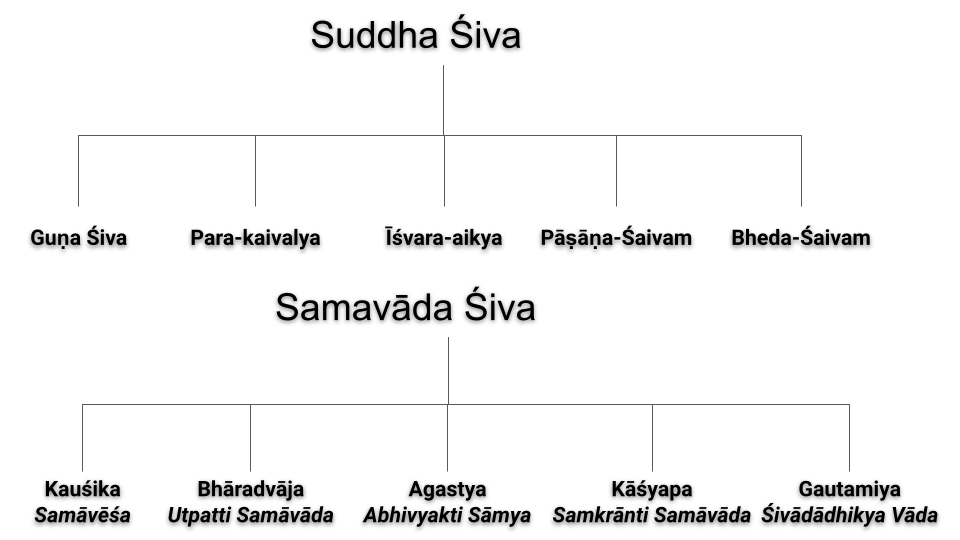
Śrauta Pāśupatam was propagated by Upamanyu muni41. It was taught by Śiva to Śivā in accordance with Śruti. Nīlakaṇṭa Śivācārya is a Vaidika Pāśupata, which is divided into Vaidika pāsupatam and Tāntrika Pāśupadam. The Śiva-jñānottara is a Śuddha-śaiva-āgama.
It is also called Yoga-sāmkhya-āgama.42 Some authorities hold Sōma-siddhānta as a subsect of Kālāmukha system. At places Veḷḷi-ambala-vāṇar refutes Aghōra Sivācārya’s views43. The teachings like bheda, mukti etc are not found in contemporary texts44.Matsyendranātha KaulaRegarding Matsyendranātha’s date, attention may be drawn to the view of Gopinath Kaviraj, in “Some aspects of the history and doctrines of the Nāthas”45 (notes an religion and philosophy of Gopinath Kaviraj, Ed. Gaurīnath Sastri, Sampuranand Sanskrit - university Varanasi, 1987 - P.56-62). Gopinath Kaviraj discusses the possible age of Matsyendranātha and seems to hold 12th century as a possible date46 (p.61) though he also refers to 6th or 7th century or even 1000 CE as held by others. In the light of the present text Sarva-siddhānta-viveka the 12th century date may have to be discarded.
This text says that they belonged to the Kaula school of the Siddha’s path matsyendranātha siddha mataḥ kaulaka smṛtaḥ47 who followed eight texts listed as:
Mantrevara Śaiva, Yantra Śaiva, Divya Śaiva, Arṣa-gaṇa?, Arka Śaiva and Yogini Siddhata.
A gap in the text unfortunately, leaves a lacuna in the list but that it consisted of eight texts is made clear. The school is brought under Bhairava Śaivam. “bhairavasyāpi bhedosti”48. The adherents of this school reach the abode of Bhairava at the time of liberation.
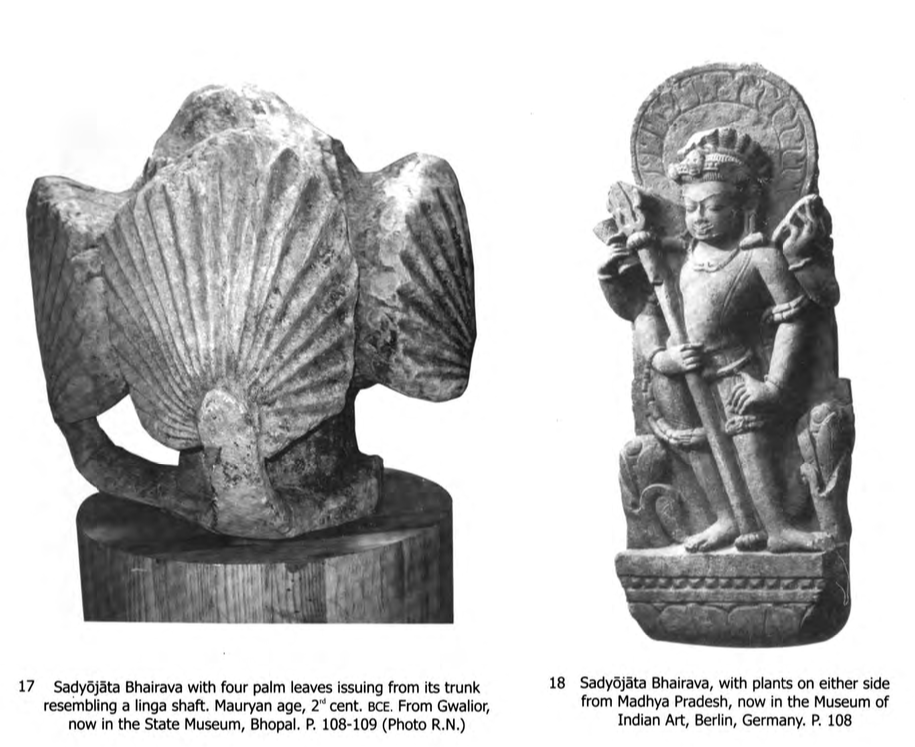
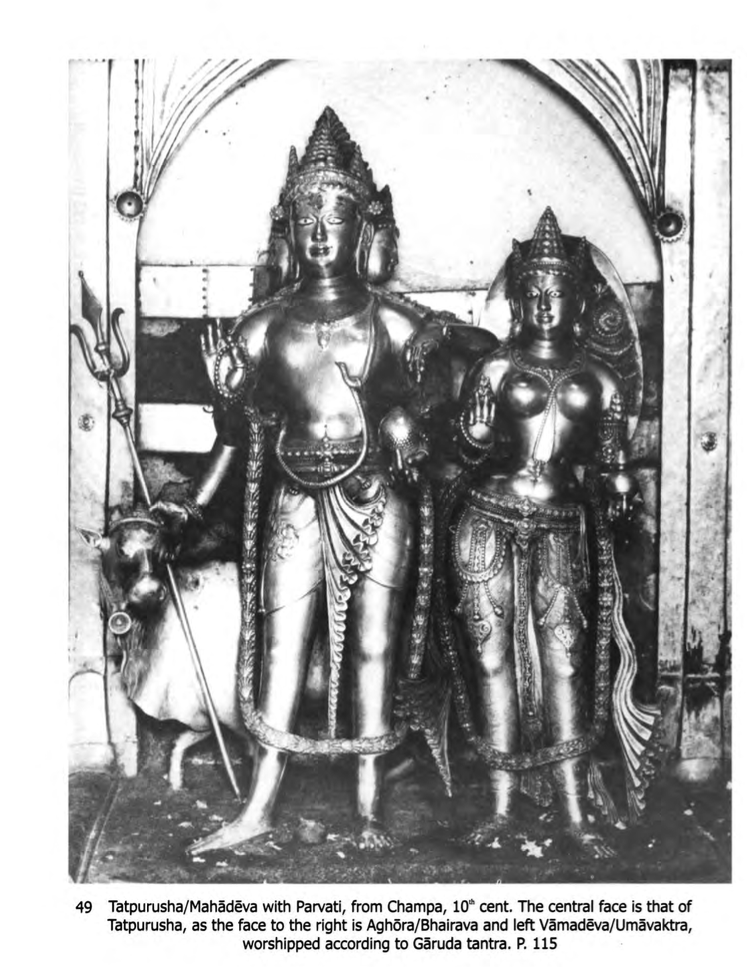
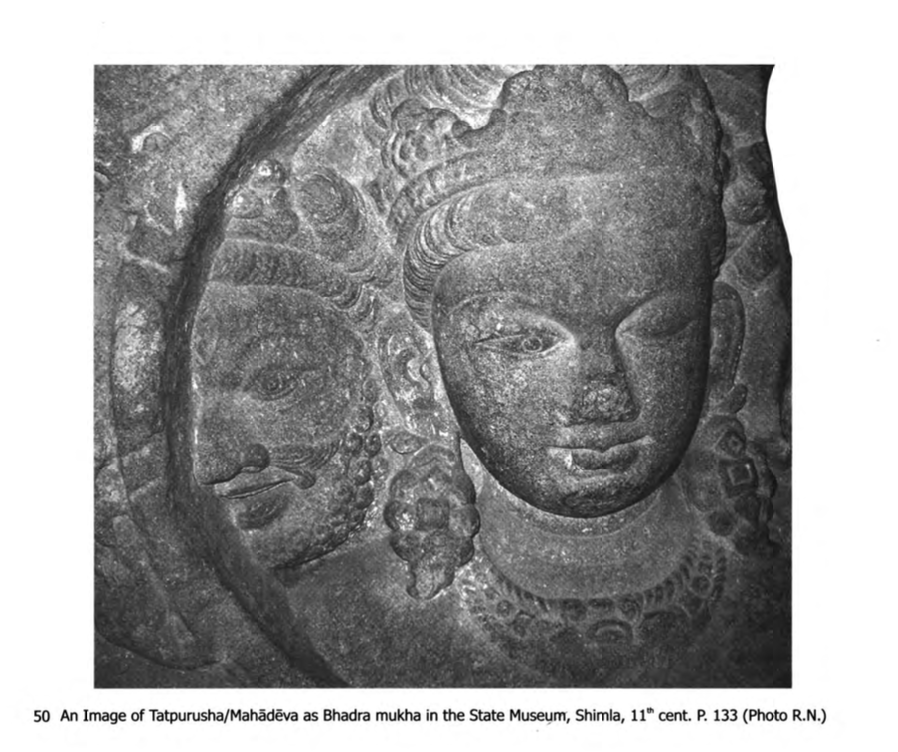
Pañca-mūrta are different from Pañca-Brahmāns49 - the Pañca mūrtas are Śiva, Śakti, Nāda, Bindu and SadaŚiva, whereas pañca-brahmās are Tatpuruṣa, Aghōra, Sadyōjāta, Vāmadeva, and Īśāna.50 (p.67)
While elaborating on the pañca-bhutas, a kuraḷ is quoted and Thiruvaḷḷuvar is called Thiruvaḷḷuva-nāyanār.51 There are two schools that bring Vidyā-tattvas and Śiva tattvas expounded in Siddhānta, under Vedanta. Tattvarāya school brings these tattvas directly under Vedānta, while the school of Nirāmayadeva includes them in their detailed exposition. So both Tattvarāya and Nirāmaya deva were Vedānta Śaivas.52
The five sacred acts of Śiva pañca-krityas are divided into three as sthūla-pañca-krityam, sukṣma-pañca-krityas and anugraha-pañca-krityas.53 (page 99). Śiva performs sūkṣma-pañca-kritya during the stage of samhara.
The school of Nirāmaya-deva, who was an exponent of Vedāntic Śaivism, is considered as “nimitta karaṇa pariṇāma vādi"54 as his school. Though mostly akin to Siddhānta the Śiva-vedanta is held to be a pariṇāma vāda, of the ekānma-vāda. The work of Tattva-rāyar another school of Śiva-vedānta, in which one attains the vision of the guru - standing at the stage of Omkāra (praṇava), expounds 68 tattvas. The work of Niramaya-devar expounds 36 tattvas.
The text Jñāna-siddhi is an Āgama55 of Śakti-pariṇāma-vāda. Śiva himself is considered the guru-svarūpa.56 (p.114). Jñāna-siddhi expounds guru-pādukā at the end of detailing kalā-rūpas57 - p. 116.
Thiru-mantiram
The Tamil text Thiru-mantiram cited here gives the following lineage of Suddha Śaiva exponents. The system starts with Para Śiva, and down up to Nandikeśvara, falls under divine origin.
ParaŚiva -> Śakti -> Śadāśiva -> Maheśa -> Rudra -> Viṣṇu -> Brahmā -> Nandi
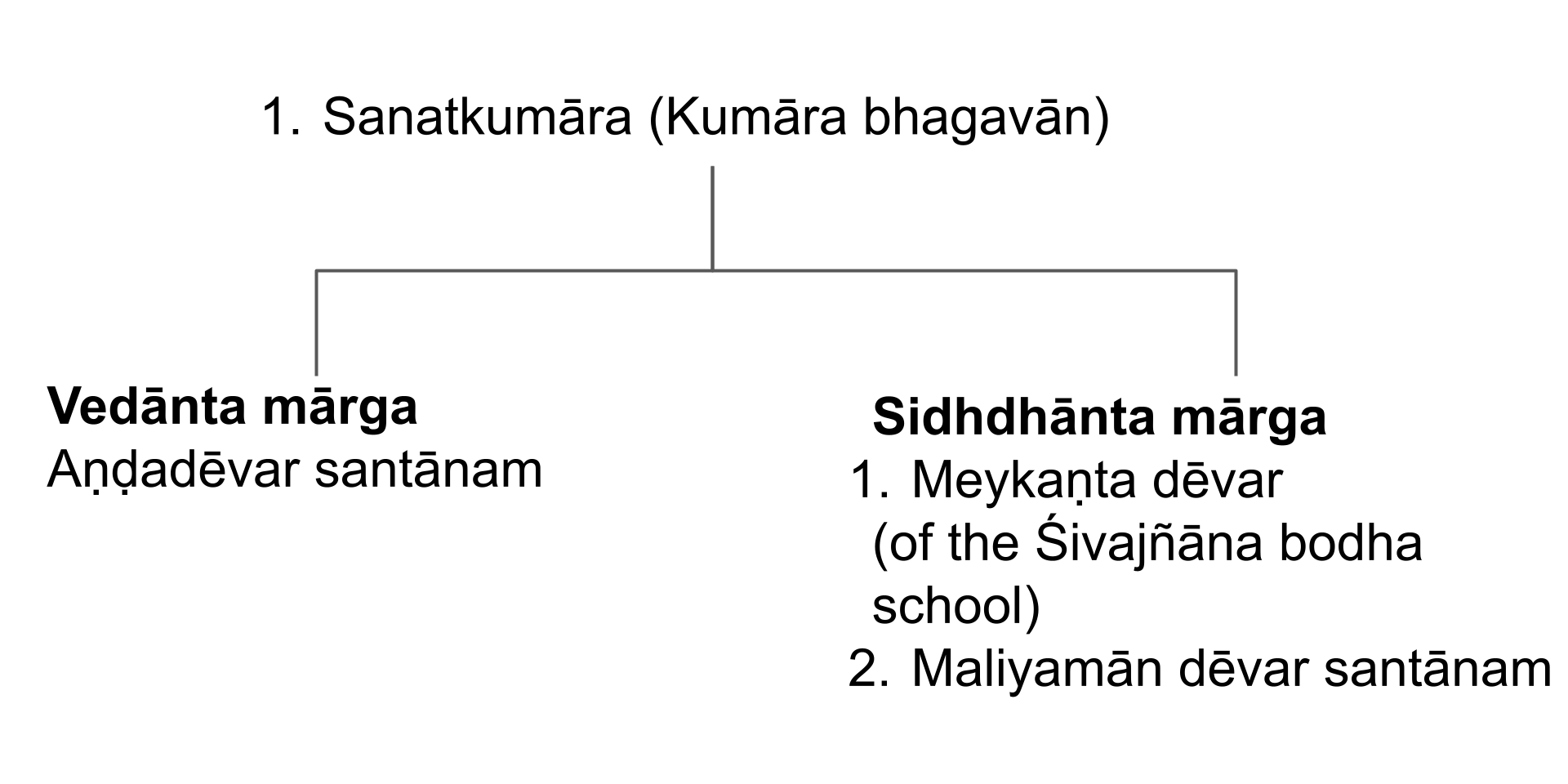
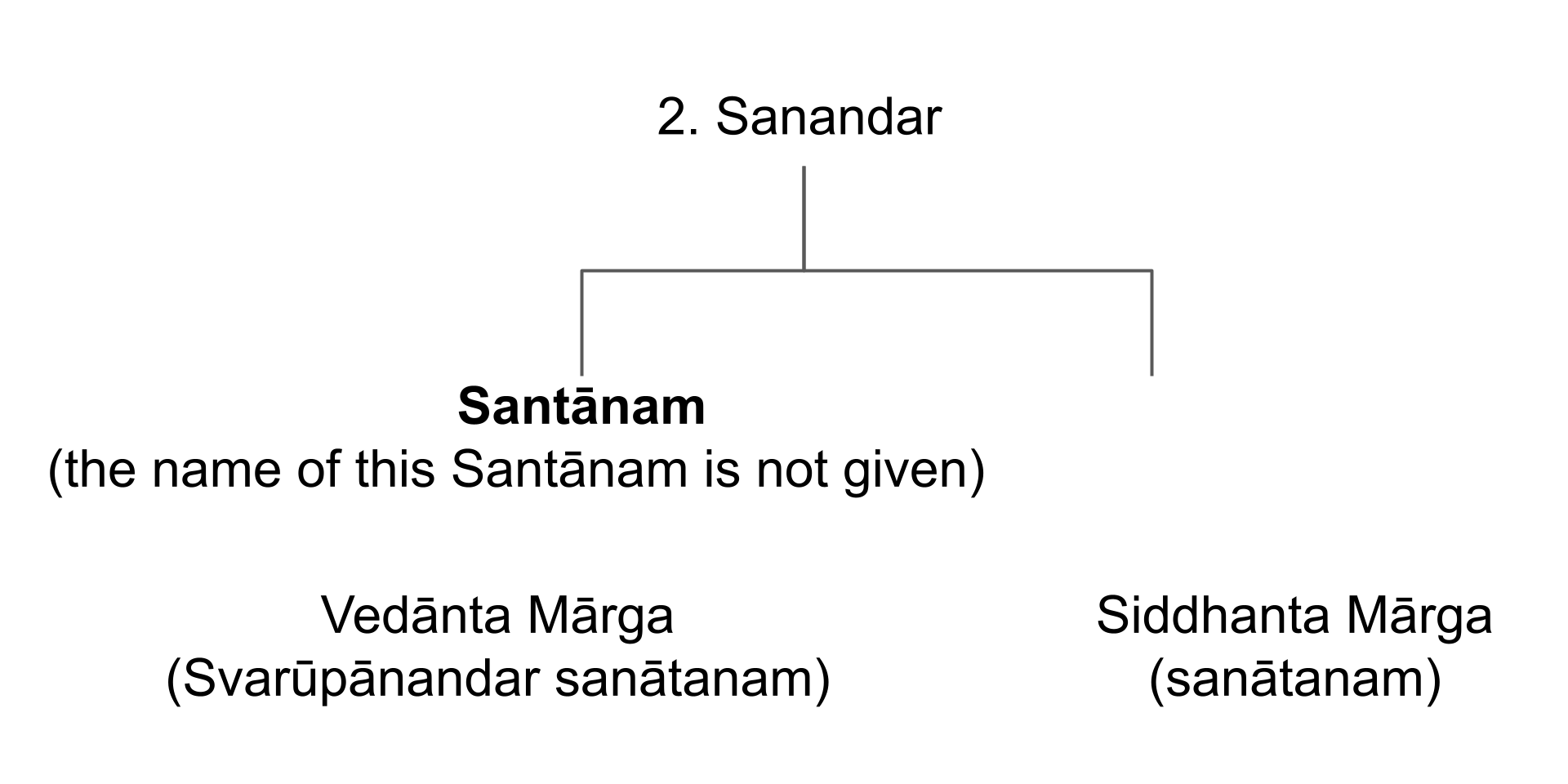
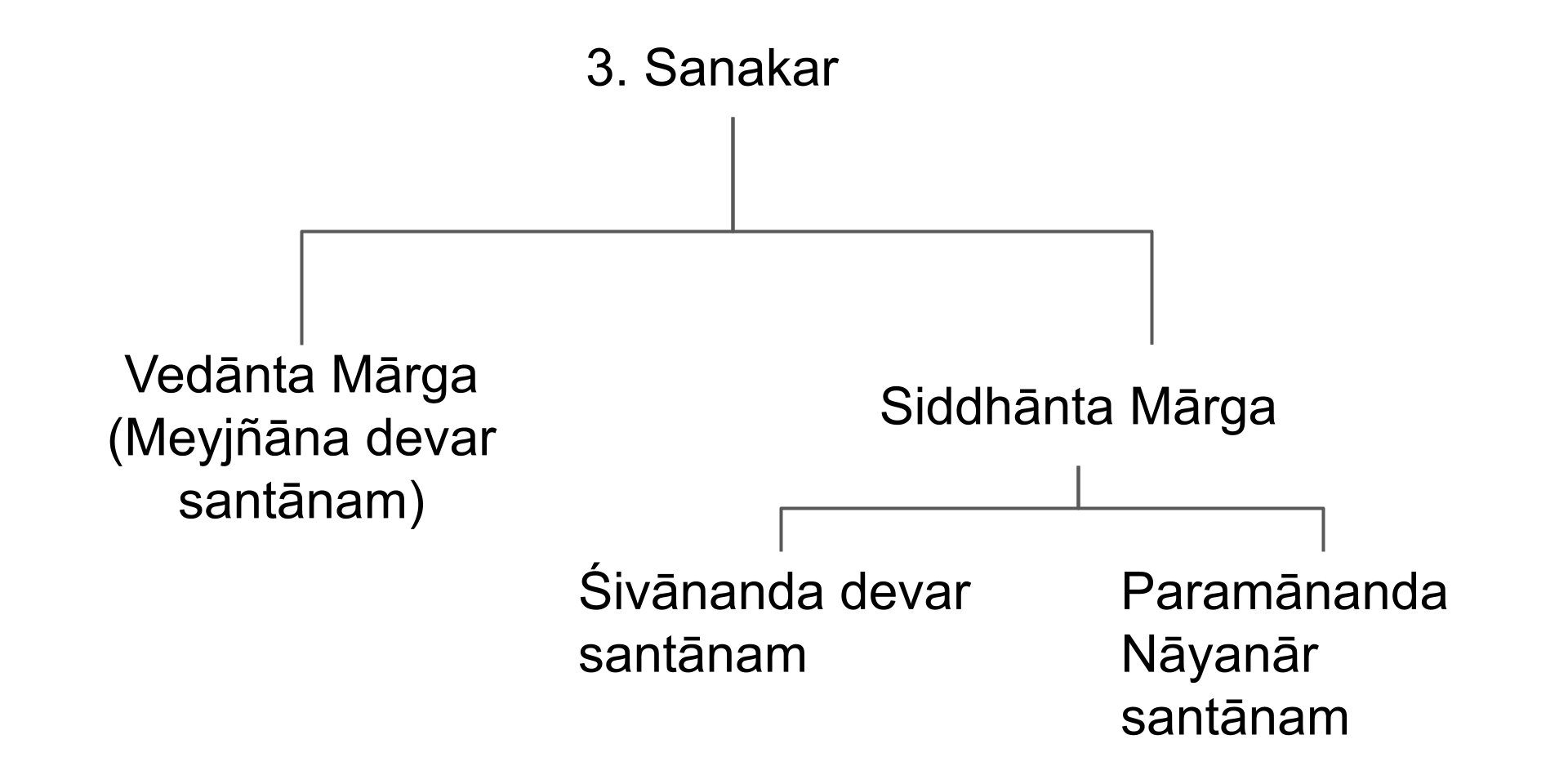
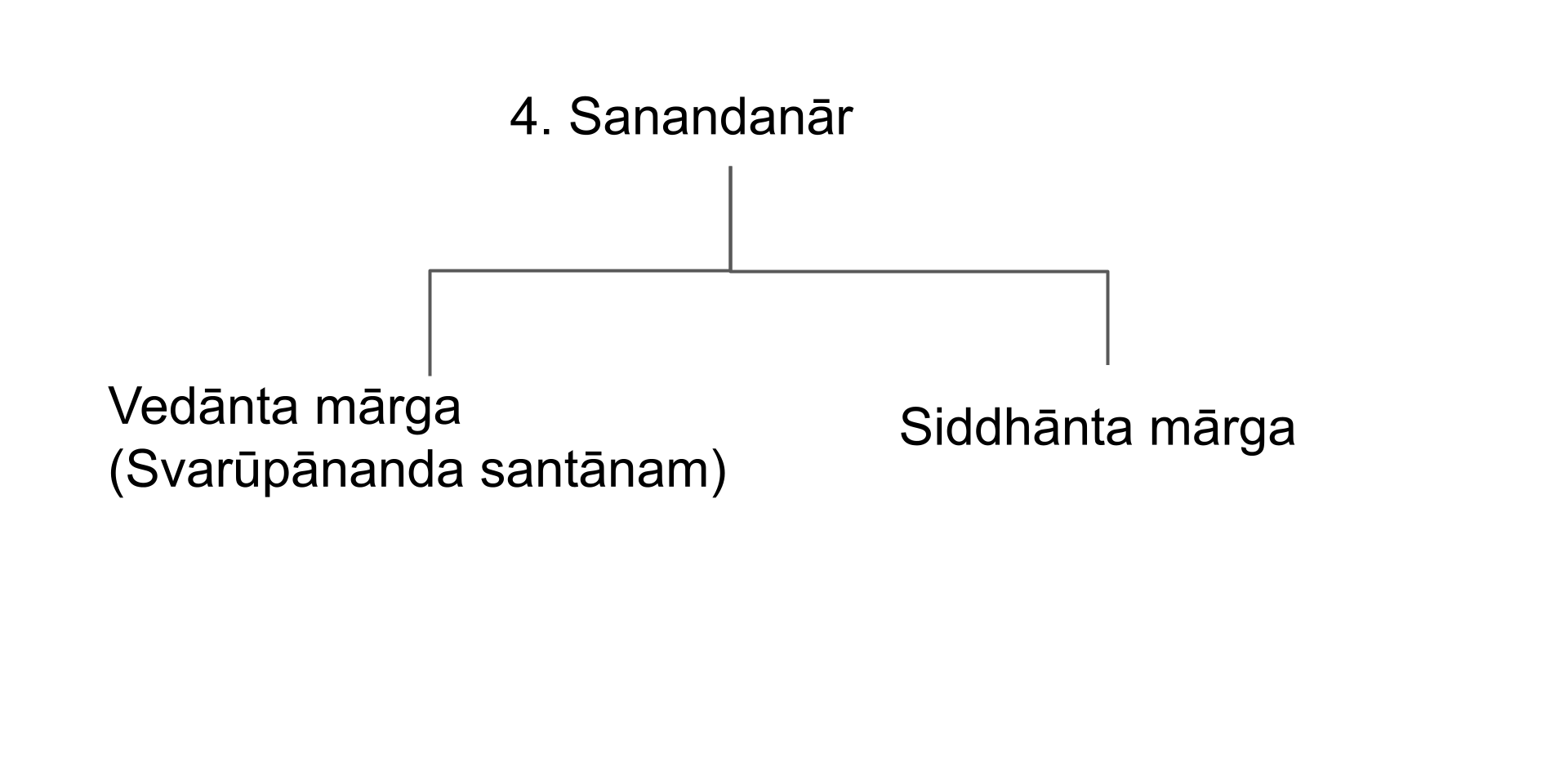
Nandi taught this Jñānamārga to four sages, who were also called Nandis, they were Sanatkumārar, Sanandar, Sanakar, Sanandanar.
This Jñāna school branched into two broad divisions - Vedānta Mārga and Siddhānta Mārga. Besides these four sages, four other sages also received this knowledge from Nandi. They were Patañjali, Vyāgrapādar, Śivayoga Māmuni and Thirumūlar. Vyāgrapādar was the giver of Jñānavarṇa school. (The other two were probably originators of Śuddha-śiva-yoga and Śuddha-śiva-jñāna schools).
Thirumūlar had the following disciples: Mālāngan, Indran, Soman, Brahman, Rudran, Kanduru, Kālāngi and Kañca malaiyan.Jñāna mārga
How the main school of Jñāna branched are detailed bellow:
Among those mentioned, Śiva-yoga-māmuni is probably identical with Upamanyu-mahāmuni who is mentioned as the teacher of the vaidika (Vedānta) pāśupata system in many texts. The Pāśupata system is known as Pāśupat-yoga. Thiru-mūlar in his own work Thirumantram, states (in verse 102 of Pāyiram) that eight maṭhas were established, including the one under his own name. The other seven were headed by 1) Kālangi (Kālāgni), 2) Aghora, 3) Thirumālikai devar, 4) Nādāntar, 5) Bhoga devar, 6) Paramānandar and 7) Nirāmaya devar. The works of Thirumālikai devar, Thiru-mūlar, and Nirāmaya devar have survived and are in Tamil language. It is not known whether the others wrote treatises in Tamil.
A total of eight belonging to Nandikeśvara school are thus known.
Besides Nandikeśvara, Vijñāna-devar also known as Rudra-devar was the originator of another branch that gave birth to the following branches.58
Thiru Mālikai Devar Santānam
Vālikanta Santānam
Vāmadevar Santānam
Uttamanathas Santānam
Karuvar devar Santānam
Idaikkāṭṭu devar Santānam
Thiruvaḷḷuva devar Santānam
Śivavākya devar Santānam
These eight and the eight of Nandikeśvarar santānam, making a total of 16 were called ancient Jñāna-santānams.
A few later sanātanams that came up are also listed. They are.
Thiruneri Santānam
Thirupperumturai Santānam
Thirumaḻapādi Santānam
Nirainta-devar Santānam
Singanath-devar Santānam
and so many others. These five were probably active during the 17th century.
It is seen that eight Santānam lineages are traced to Nandikeśvara. Of these, three Santānam that came through Sanatkumāra had at least two distinct branches as Vedānta school and Siddhānta school. Meykaṇṭa-dēvar belonged to the Siddhānta school. An interesting note says that Meykaṇṭa-dēvar of the Siddhānta school followed the Śiva-jñāna-bodha-mārga which suggests that there was a specific lineage before him that went by the name Śiva-jñāna-bodha-mārga. This is obviously identical with the Sanskrit Śiva-jñāna-bodham of Raurava-āgama and that explains why he translated it into Tamil.
From other sources it is learnt that Meykaṇṭar learnt Śiva-jñāna-bodham from Parañjoti munivar, who came in the lineage of Nandikeśvara through Satya-jñāna-darśi.
The other point of interest seen from this account of Veḷḷi-ambala-vāṇar is four out of the 16 Santānas that came out of Vijñāna-devar alias Bhoganātha - were well known to Tamils as great Siddhas.
They are Karuvūr-devar, Iḍaik-kāḍar, Thiruvaḷḷuvar and Śiva-vākyar. From this we learn they were also Santāna ācāryas. It may be noted that Thiruvaḷḷuvar the great exponent of Thirukkuṟaḷ was recognized as a Saivite Nāyaṉār of the Santāna category.60 Among the other notables, Thirumālikai-devar sang a delightful Thiru-visaippā poem on Śiva included in an anthology of Śaiva canonical text. The other lineages mentioned are otherwise not so well known.
The Dakṣiṇa school is included as a branch of Vāma school. (vāma bhedam and dakṣiṇa matam)61 (P. 169). Veḷḷi-ambala-vāṇar cites an interesting passage from Cintyāgamam which divides Śuddha Śaiva school into three categories as (1) vāma-śaivam, (2) dakṣiṇa-śaivam and (3) siddhānta-śaivam. The school that follows the Mūlāvatāra tantras is called vāma-śaivam that which follows Svacchanda school is dakṣiṇa-śaivam and the one that follows Āgamas like Kāmika etc. is siddhānta-śaivam.
vāma dakṣiṇa siddhāntam tridhātaḥ śuddha śaivakammulavatāra tantram śāstram yad vāma śaivakamsvacchanādi śāstram dakṣiṇam śaivam ucyatekāmikādini tantrāni siddhāntam śaivam ucyate
Veḷḷi-ambala-vāṇar seems to suggest that there existed a Śaiva nigaṇḍu that was cited in Cintyāgama.62 The Āgama such as the Sarva-jñānottara were considered a branch of Śaiva Sāmkhya in the Jñāna-siddhi63 (P.171).
Veḷḷi-ambala-vāṇar has quoted the important part of Navaliṅga-līlai, a Tamil text of the Vīra-śaivas. The Kāmikāgama also refers to Gāruḍa Śaivam, Bhūta Tantra, Dakṣiṇa Śaivam, and Vāma Tantra64 (p.183). Veḷḷi-ambala-vāṇar says Kālāmukha school was also called by some as Sōma Śaivam65 (p.154).
The Vātulāgama according to Veḷḷi-ambala-vāṇar is called a Mahāvrata tantra66. Wearing a liṅga on the body is also mentioned in Kāmika that speaks of Śuddha Śaiva. The liṅga-dhārana is also prescribed to Mahāvratis and Pāśupatas. Even as the Śri-Parvata mountain (now in Andhra Pradesh) is important for Vīra-śaivas, Thiruvoṟṟiyur a part of Madras is very important to Mahāvratis.
The Tantrika Pāśupata system is divided into three branches as Candra-vāda, Sūrya-vāda, and Sama-vāda67 (P.189). The Vaidika Pāśupata system originally taught by Śiva to Devī, was propagated by saint Upamanyu (śrauta pāśupatam nāma śrutyanusārena śivāyai śivena proktaḥ upamanyu ādibhih pravartitah ity jñeyam).
Veḷḷi-ambala-vāṇar holds that Nīlakaṇṭa Sivācārya was a Vaidika Pāśupata. He also says that Candra-vādins are a branch of Pāśupata system, and Kāleśvara Vādins are a branch of Kāpāla-śaivas. He also says that Sōma-siddhānta is a branch of Kālāmukha-bheda.
Veḷḷi-ambala-vāṇar says that these schools are no longer in practise.68 (p.219). Obviously, these schools of Pāśupatas and Kāpālikas went out of existence by 17th century.
Veḷḷi-ambala-vāṇar says Makuṭāgama is considered Dakṣiṇa-śaiva. The 25 Āgamas beginning from the Kāmika are divided into three as Dakṣiṇa, Vāma, and Miśra. Among them Makuṭa is brought under the Dakṣiṇa branch.
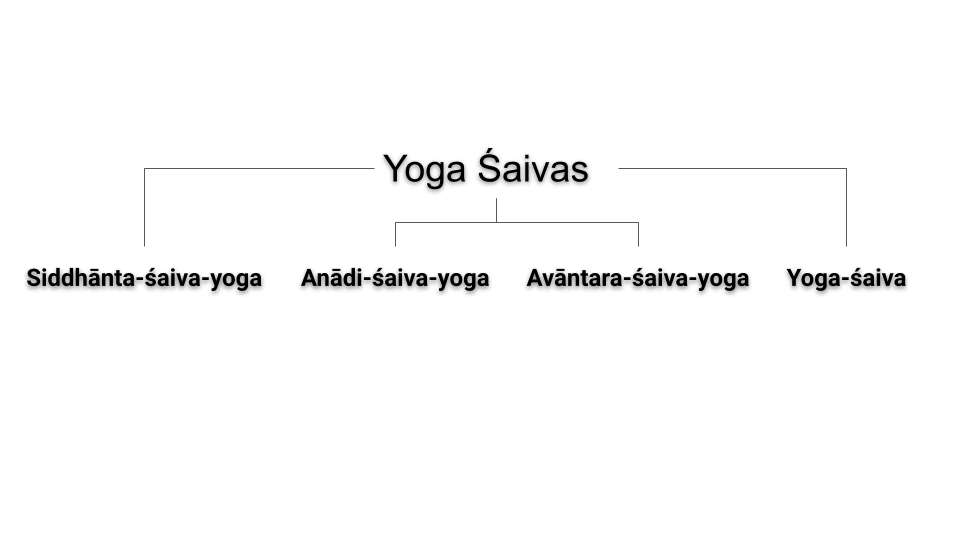
The Yoga-śaivam is called Saha-mārgam. The Yoga-jñāna-matam, Parayoga-matam, Niṣkala-yoga-matam, Paramukti-vāda-matam, and Śaiva Sāmkhya-Siddhānta-bhedam are all synonyms.
The Vaidika-vedānta has as its limb Jñāna sāṁkhya also known as Kapila sāṁkhyas, while the Yoga-sāṁkhya is known asPātañjala sāṁkhya. Similarly there are Śaiva-sāṁkhya a limb of Karmāvaraṇa-siddhānta and the jñāna-sāṁkhya and yoga-sāṁkhya as limbs of Jñānāvaraṇa-siddhānta.
Veḷḷi-ambala-vāṇar holds Śiva-Jñāna-bodha as a Jñānavaraṇa-siddhānta Āgama69(p.291) The Śiva-jñāna-bodha (obviously the Sanskrit one) is called Āgama and this fact points to its importance and its place in the Āgama literature.
Vira ŚaivamVeḷḷi-ambala-vāṇar, gives some important details about Dakṣiṇamata-siddhānta. He says that in modern times the Dakṣiṇa-śaiva school is now known as Vīra-śaivas.70 That the Vīra-śaivas are recognized as Dakṣiṇa-śaivas in the time of Veḷḷi-ambala-vāṇar in 17th century., who however does not cite any Sanskrit text, to outline the Vīra-śaiva school. On the other hand, he cites a Tamil work Nava-liṅga-līlai in which the Vīra-śaivas subsume the Dasāvasthā in their system (p.173). He cites as many as 92 Tamil verses from this text. An examination of the verses suggests the work is self contained and probably the text is complete.
According to the editors of Jñānāvaraṇa-viḷakkam, this Tamil work is not found in other sources and is not available except in this form.
The first verse abruptly begins with the statement that “this text was originally taught by Śiva to Umādevī on Kailāsa, which was taught to Basaveśvara by Prabhudeva in Karnāta language which was translated in Tamil by me ”… name of the translator is not available.
The second verse says that this text was translated as expounded in the nava-liṅga-cakra, and is appropriately called nava-liṅga-līlai. The same Śiva manifests in nine forms by internal divisions for the removal of pāśa of the souls shrouded in ignorance. The text mentions the nava-tattvas (nine) as Para Śiva, Para Śakti, Nāda, Bindu, Sadāśiva with five faces, Maheśa, Rudra, Viṣṇu, and Brahmā.
The Ekamūrti (supreme) splits itself into three as guru, liṅgam and jaṅgama. Continuing to detail the tenets of the school, it mentions iṣṭha-liṅga, prāṅa-liṅga and bhava-liṅgas. These three branch into six as acāra-liṅga, guru-liṅga, śiva-liṅga, jaṅgama-liṅga, prāsāda-liṅga, and mahā-liṅga. These six further undergo division due to tattvas into 36 and further sub-divided into 21671. There are Śrotas; crossing these six Śrotas one attains Jñāna-samadhi which is called “reaching the cave of nirañjana” (nirañjānādi guhai ceṟdal).72
The Suddhākhya-tantra gives the following account of Vīra-śaivas. Vīra-śaivas is superior to all other Śaivam which is also called Vīra-maheśvaram. The worship of God including the process of worship is very easy and convenient.73
Vīra-śaiva-tantra is divided into three categories as Samānya, Viśeṣa, and Nirāhāra.74 By touching the head with hand and wearing sacred ash, the adhrent’s body is considered Śiva-deha. He is absolved of all sins. He should wear the liṅga given by his guru either on his head, neck, hand forearm, heart, navel or in any one of these places. He should always be filled with devotion to Guru and liṅga and worship it once, twice or thrice a day. These are the common categories.
The Viśeṣa category consists of initiation by a guru, by invoking Śiva in a Kumbha and following the process of dīkṣa. In this process, consecration of prāṅa-liṅga is advocated.
The two categories of Nirāhāra consists of abandoning all worldly comforts and concentrating on Śiva in mind. He should wear a rag of cloth, a suffron cloth, jaṭā (matted locks of hair) or shaven head, and of trees, staff and Śaiva signs.
He should eat food obtained through begging moderately and reject all comforts and this observance is called Nirāhāri. Such an adherent is himself considered Parama Śiva (Supreme Śiva). Vira Maheśvaras have some common code of conduct. They should devote themselves to the Śiva mudras, and devotees with mind and material. One should never commit sin towards them at any cost. He should not be indifferent to a sin if committed by another person but if he is a strong well built man, the wrong doer should be punished. If he is not strong enough, he should move away from that place. He should constantly unite his prāṇa with the liṅga from the moment he receives the liṅga from his guru. For him, every breath is liṅga.75 (p.243-245)Ādi-śaivas follow the Aghōra-Śivācarya-paddhati76. Mahā-śaivas follow the Kāraṇāgama;77 In addition to performing ātmārtha and parārtha pūjās, Ūrdhva-śaivas perform and also perform Vedic sacrifices which are different from Ādi-śaivas and Mahā-śaivas. Among the habitations of Śivācāryas, Dakṣiṇāraṇya
identical with Tillai-āraṇya is the abode of Ūrdhva-śaivas. The Makuṭāgama followed by Ūrdhva-śaivas, is a Dakṣiṇāgama78. They are Advaita-vādins.
The Śiva-jñāna-bodham is considered an Āgama of Jñānāvaraṇa siddhānta. The texts like Mokṣa-kārikā of Sadyojyoti, and Tattva-prakāśa of Bhojarājā are considered Advaita-vādam by teachers80. But Aghōra Śivāchārya treats them as dualistic systems. The Śiva-jñāna-bodham was taught through bhāvanā-dīkṣā which is mentioned in Rauravāgama. The Jñānānta-paribhāṣa cites Śiva-jñāna-bodha-sūtra.
śirasthāne padam āhṛtya praṇato daṇḍavat guruḥbhāvanā dīkṣayā cainam śuddham kṛtvā yathā vidhiśivajñāna bodha śāstram dadyāt patyādi antaramanugrāhyastu yaḥ śiṣyaḥ varimāna kāya karmabhiḥartha prāṇābhimānāni sadgurubhyo nivedayet81
Śiva-vākya and Paṭṭinattu-piḷḷai are naiṣṭikar. Maṟai-jñāna-paṇḍāram and Umāpati Śivācāryār had knowledge of Śaiva system but no experience of Śaiva knowledge Jñānānta-anubhavam82 (p.422). Thirumūla-devar is called Thirumūla-deva-śivācāryar and Meykaṇṭa-devar as Meykaṇṭa-deva-śivācāryār.83 - P. 423.
(Sanskrit) … P. 440
Tīvrabheda Śaktipāta was obtained in Saumya Śaiva, by Maheśvara, Devi, Vighneśvara, and Guha.84 - P. 351
The Āgamas Makuta, Devi-kālottara, Suprabheda, Sarva-jñānottara are dakṣiṇa-āgamas. The meaning expounded in them namely the advaita system does not contradict Vedānta.85 P. 351.
Bharadvāja, Mātāṅga and others who had mild Śakti-bheda were taught Mṛgendra and Mātaṅga which are Vāmāgamas. They teach dvaita system, that contradict what was taught in the Vedas and so they are considered pūrva-pakṣas.86 - p.351.
(sanskrit)
Veḷḷai-ambala-vāṇar discusses in a lengthy passage that the Sanskrit Śiva-jñana-bodham is the original text and that the Tamil Śiva-jñāna-bodham of Meykaṇṭār and the Tamil Śiva-jñāna-Siddhi follow the original Sanskrit text87. The original Sanskrit text is found in the chapter “śivajñāna-vimocana-paṭala” of Rauravāgama which is the Ādi sūtra88. The original Śiva-jñāna-bodha (in Sanskrit) was taught by Śiva.89 Veḷḷi-ambala-vāṇar is following the Jñānāvaraṇa-bhāṣya in Sanskrit as his tradition which he cites. The Sanskrit bhāṣya holds that Sanaka and others understood this Sūtra expounded by Śiva.
śiva vākhyena pratyāpāditatvāt pañca rūpa upapannāt liṅgāt, paraiḥ sanakādibhiḥ jagataḥ sakartṛkāryam jñāyate90
Again the same position is asserted that the original Śiva-jñāna-bodha was taught by Śiva.
atra śiva-jñāna-bodhe harasya prabhutva ukteḥ jagat kartṛtva anādi nirmala cidrūpakena sarvajñatvādi śaktimatvam api siddam91
Veḷḷi-ambala-vāṇar, says Śiva-jñāna-bodha continued an upāgama bheda called as Raudravottara suggesting that itself is an āgama.92
The Svaccandra Tantra text gives interesting data about Pāśupata (verse 70).93
It speaks of two schools of Pāśupata, Lākula and Mausala. In a commentary on this verse, Kṣemarājā says that one school was established by Lakulīśa, and the other established by Lakulīśa's disciple Musalendra. The difference between the two schools lies in the ultimate stage of salvation. Lakuleśa school hold the adherent of the school will reach the abode of Īśvara, Aiśvaram-padam in which the emphasis seems to have been on japa and dhyāna (repetition of god's name and meditation.)
But the Musala school seems to have emphasized rituals (kriyā pradhānā) and hold the follower will reach māyā-tattva considered the ultimate. The Svacchanta Tantra itself refers to this difference.
(sanskrit)
It evidently shows, very early in the Pāśupata school, may be in the time of Lakulīśa, or immediately after his passing away, there arose differences in Pāśupata system, headed by Musala. It is also seen that there were other schools that sprang up such as Kāruka, also mentioned in Svacchanda text. It seems that the Musala school held that the ultimate stage was Kṣemeśa, while Kāruka held it is brahmāśrami.
There were also other schools among Pāśupata such as Vaimala who follow the rituals. The text pañcārtha-pramāṇa-aṣṭaka hold that Dhruva is the ultimate stage. This school is identical with Kāpālavratins.
Kāpālikas held that those who through knowledge obtained by initiation become pure, and observe Kāpālavrata till the end of their life, reach their salvation presented in their respective schools. Kṣemarājā says that Mausala and Kāruka emphasize only rituals, while Vaimalas emphasize Jñāna through dīkṣā. They wore kāpāla and bone ornaments as vrata and this seems to have been prescribed in kakutāmnāya. They also postulate tejesa as the ultimate while the Lakulīśa school - īśvara tattva pada prāpti; Mauśulaḥ - māyātattva pada prāpti and Vaimalas - īśvara tattva tejasa prāpti.94Bhairavam also had two broad divisions namely (1) the Vāma Bhairava and (2) Dakṣina Suddha Bhairava. Veḷḷi-ambala-vāṇar cites extensively from Svacchanda Bhairava text. According to it, the Śiva-tattva is “śūnya” as it is the laya-śiva-adhiṣṭāna. Veḷḷi-ambala-vāṇar is of the opinion there are many common factors between Siddhānta Śaiva and also Svaccanda (Bhairava).
There is a long discussion by Veḷḷi-ambala-vāṇar, on the tenets of Svacchanda, the prāsāda-vidhi-paṭala referring to it as Svacchanda-śiva-prapti. Svacchanda Bhairava is also called Sadāśiva Bhairava. The text holds, the follower of this school who mediates on Svacchanda Bhairava-deva, will attain liberation quickly. The follower will also attain both Siddhi and Mukti.95 (P.37). There are variations in this school in dīkṣas (dīkṣina-paṭala - initiation). The Bhairava Sadāśiva is identified with Rudramūrti, who remains in Sadāśiva form, and not other Rudra forms. Bhairava is also identified with Śruti-antanatha-rudramūrti. The texts cites verses giving the āvaraṇas of Bhairava.96 (P.44). There are eight Bhairavas in the second āvaraṇa whose names and places are also mentioned.
Kapālīśa - East
Sikhivāhanam - South east
Krodharājā - South
Vikarāla - South west
Manmatha - North West
Meghanādheśvara - West
Saumārājā - North
Vidyārājā - North East
Each of them has five faces, ten arms, kapāla-mālā, twinkling anklets etc. Bhairavi should be seated on the lap of Bhairava, and should have the same form as Bhairava with a slightly gasping mouth, and graceful smiling face.
भैरवं पूजयित्वा तु तस्योत्सङ्गे तु तां न्यसेत् ।यादृशं भैरवं रूपं भैरवीं तद्वदेव हि ॥ईषत्करालवदनां गम्भीरविपुलस्वराम् ।प्रसन्नास्यां सदा ध्यायेत् भैरवीं विस्मितेक्षणाम् ||
The text Jñāna-siddhi, published here speaks of the two broad divisions of the Bhairava system as Vāma and Dakṣiṇa Bhairava schools (p.46). This text also mentions Bhairava as having five faces. The Bhairava school holds the Pāsupata, and Rudra systems as Pūrva-pakṣa. An interesting point is that all schools hold that their supreme deity has five heads.
The work also deals with three kinds of dīkṣas in the Bhairava school. Different branches of the Bhairava-śaiva-siddhānta are:-
Lākulā
Vaidikī
Ādhyātmikī
Atimarga and
Mantra
All these schools were also considered as pūrva-pakṣa for in worship they advocate nara-māmsa etc. Rare texts named “Bhairava-siddhānta-siddhi” and “Siddhānta-rahasya”97 (p.49) are also mentioned. As the school concentrates on achievement of mystic powers (siddhis) its aim is not liberation.
Vāma, Bhairava and the Kaula schools reach pisāca-pada. As in the case of Vāma and Bhairava systems, the Saumya Siddhānta is also a tantrānuṣṭāna-siddhi.Śiva-jñāna-bodha is a sūtra text such as the (Brahmā) sūtras of Vyāsa. The Tamil works Śiva-jñāna-bodha and the Śiva-jñāna-siddhiyar follow the original Sanskrit text as the Source. (p.529) The authority attributed to the original source is equally applicable to its translation. Veḷḷi-ambala-vāṇar repeatedly mentions that the Sanskrit Śiva-jñāna-bodha is the original text.98 (pp.578, 579, 581, 583). He also holds Śiva-jñāna-siddhiyār also should be considered as uddesa sutra. He cites also from Jñānāvaraṇa-bhāṣya in Sanskrit. It important to trace this full text giving it the authority of the Sūtra literature.
1. Jñānāvarṇa viḷakkam and Mahā Bhāṣyam. Veḷḷi-ambala-vāṇar, Dharmapuram Ādhīnam, Vol.I, 1957; and Vol.II, 1959.
2. The tenth year Sovenir of Śrila Śri Shanmukha Desika Paramacharya Svamikal, Dharmapuram, Ādhīnam, 1943, p.83.
3. Śiva-jñāna-siddhiyar in Śiva-Jñāna-bodham, Meykaṇṭa śastram, Dharmapuram Adhīnam, 1956.
4. Jñānāvaraṇa-vilakkamum Mābātiamum, of Veḷḷi-ambala-vāṇar, Dharmapuram, p.407, the following colophon is found.
dharmapura stihitē śrī jñānasambandha guru caraṇa nīṣaṇṇa sainskāra vilasad. akalamka muni bhagavadpāda hṛdaya sambaddha sadācāra upadeśa samprāpta. śivānanda rasānubhava jāta varṇāsramātita niṣṭa niṣṇāta satya jñāna iti prasiddha rajata-sabha-nātha yogi viracita. jñānā varaṇa dīpikā vyākhyāna asphaṣṭa-pada-bodhanīyē sanmārga vivēkaḥ5. Sarva-darśana-saṅgraha of Sayana Madhava Ed. Cowell E.B and Gough Parimal Publication, New Delhi, 1986. Also published by Asiatic Society of Bengal, Calcutta, 1986.
6. Jñāna-Siddhi cited in this text, Jñānāvaraṇa viḷakkam-mābāṭiyam.7. Alexis Sanderson, "History through Textual criticism" in the study of Śaivism, Pañcaratra and Buddhist yogini Tantras, Les Sourus des Temples, Ed. Francoise Grimmal, 1FP, Pondichery, 2001.
8. Kiraṇavṛt - Bhatta Ramakanta's commentary On Kirana Tantra, Ed. Dominic Goodall, IFP, Pondichery, 1998.
9. Arunachalan M, Guru Jñāsambandhar, Dharmapuram, 1981, pp.85-86.
10. lbid= p.86
11. Meykaṇṭa Śātram, Pub, Dharmapuram, Preface, P.V.
12. Jñānāvaraṇa viḷakkam - p.421. (This text will be referred to in its abridged form as jv.)
13. Meykaṇṭa Sāttiram, 1956
14. jv. p.581
இந்த சிவஞான போதம் முதல் நூல் வழியே தமிழ் சிவஞான போதமும் சிவஞான சித்தியாரும் நடத்தலின் அந்த வடமொழியான சிவஞான போதம் இரெளரவோத்தரம் என்னும் உபாகம பேதம் என்னும் பக்ஷத்தாலும் வியாச சூத்திரம் போல பிறிதொரு நூலாம் என்னும் பக்ஷத்தாலும் மூலசூத்ரம் வேண்டுதலின் மற்ற உத்தேச சூத்திரமும் தானே சித்தித்தலின் அம்முதல் நூல் போல வழிநூலுக்கும் உண்டாம் என்க. jv. p.579
15. Śiva-Jñāna-bhāṣyam of Śiva-jñāna-yogi, Śaiva Siddhānta mahasamajam, Chennai, 1936, p.73
16. Meykaṇṭa Sattiram, 1956, p.15
17. Ibid, p.16
18. jv. p.297, p.333, and p.337
19. Surendranath Das Gupta, A History of Indian Philosophy, Five volumes, Motilal Banarsi dass, Delhi, 1975.
20. Ibid, vol.5, introp.XI
21. Śrī Mṛgendra Tantra-Vidyapada and Yoga-pada, with the commentary of Nārāyaṇakaṇṭa. Ed by Madhusudan Kaul Sastri, published by Meharchand Lakshman dass, New Delhi, 1982.
22. Svacchanda Tantra, with the commentory of Kṣemarājā, Five Volumes, Sampūrṇānand Sanskrit viśva vidyālaya, Vāraṇāsi, 1992.
23. Śrī Svacchanda Tantram - Pt.ll with the commentary of Kṣemarājā, Pub. by Sampūrṇānand Sanskrit University Vāranāsi, 1993, Paṭala 10, verses 676-681.
24. Suṣka tarkavalambinaḥ (10/1149);
25. Svacchanda Tantram, Paṭala ll, verse.74
26. Paramokṣa-nirāśā-kārikā in Aṣṭa-prakaṇa Ed. By Pandit Vraja vallabha Dwivedi, Sampurnanad Sanskrit University, Varanasi, 1988.
27. Makuṭāgama, Purva bhaga, Ed. S. Swaminatha Sivacharya, South Indian Arccakar Association, Chennai — 1977, Tantravatara Patala, Verses 16 - 22
28. Sarva-darśana-Saṅgraha, of Sayana Madhava ed Cowell E.B. and Gough A.E., New Delhi, 1986.
29. The Śaiva Paribhāṣa of Śivgra yogin. Text and Translation by S. Suryanaryana Sastri, Pub. University of Madras, 1982.
30. Kulārṇava Tantra, Ed. Sri John Woodroff, and M.P. Pandit, Motilal Banarsidass, Delhi, Reprint, 1984, p.35.
31. Ibid. pp.30-31; 32. jv p.144
33. Puranānūṟu, Ed. Svaminatha Iyer, U.V., Tyagaraja vilasam Publication, Chennai, 1962, Reprint, Verse-166.
34. Manimekhalai, Svaminatha Iyer, U.V., UVS Library, Chennai, 7th Reprint, 1998.
35. Manimekhalai, Murray S.Rajam Edition, Chennai, 1957, Chapter 27.
36. Jñānāmṛtam, of Vāgīsamuni with an ancient commentary (in Tamil), Ed. by Avvai S.Duraiswami Pillai, Annamalai University, Annamalainagar, 1987, 2nd Edition.
37. Śivajñāna siddhiyār in Meykaṇṭa Sāthram, Dharmapuram, 1956.
38. Saṅkalpa nirākaraṇam, of Umāpati Śivam, in Meykaṇṭa, Dharma Puram, 1956. p. 316
ஏழஞ்சு இருநூறு எடுத்த ஆயிரம்வாழுநற் சகளம் மருவா நிற்ப39. jv. p.638, 867, 1051, 1106 etc.,
40. Jñānasiddhi, cited in Jv. p. 46,
41. jv. p.193; 42. jv. p.329; 43. jv. p.219 44. jv. p.219
74. jv. p.244 the text pertaining to this school is called Vīra maheśvara - Tantra.
75. jv. pp.243-245; 76. jv. p.247; 77. jv. p.247; 78. jv. p.245
79. jv. p.291; 80. jv. pp.311-329;
81. Raurava cited in jv. 421;
82. jv. p.422; 83. jv. p.423; 84. jv. p.351;
85. jv. p.351; 86. jv. p.351; 87. jv. pp.578-579
88. jv. p.581; 89. jv. p.583; 90. jv. p.583; 91. jv. p.585; 92. jv. p.579;
93. Svacchanda, vol. 5, Patala II, verse,.70
94. Ibid, paṭala X, 675-680 also, 1084 where in Kapālīśvara is called Bhūteśvara95. Svacchanda, cited in Jv. pp. 37-45
96. Ibid p.44; 97. Ibid p.49;
98. jv. pp.578, 579, 581, 583 etc., On page 583 he makes a specific mention that the Sanskrit Śivajñāna bodhan is the original text or root text as
முதல் நூலான சிவஞான போத சூத்திரம்
and gives the first Sanskrit sutra as
strīpum napumsakādivāt jagatah kārya darśanāt asti kartā sa hṛtvaiva sṛjatyasmān prabhur haraḥ
2. Sarva-siddhānta-vivēka
The original text Sarva-siddhānta-vivēka is not known to any other source apart from these citations in the commentary of Jñānāvaraṇa-dīpikā. It is a very lucid commentary mainly meant to be useful to an ardent student of Śaiva system.
The available text begins abruptly with “Mantravāda” also known as Mantravāmi, and deals with nine subsects of Vāma schools of the Śāktas. However, from the first subsect described, it is seen that the original should have contained several chapters preceding the present portion as it mentions, “as described earlier” (prāk-ukta-vartmanā) in the very first verse.
The lost portion should have contained the name of the author, and perhaps his date and other biographical details, and may be details about other schools. The name of the author of Sarva-siddhānta-vivēka is not known. It is also not known whether the author has dealt with other schools of philosophy such as the Vedānta, Mīmāmsa, Nyāya, Bauddha, etc., as has been done by Sāyana Mādhava, the author of “Sarva-darśanasaṅgraha”. The Śaiva Siddhānta school mentions traditionally the systems of other schools, and refutes them before detailing their own system. It is possible that Sarva-siddhānta-vivēka also had details about other schools that have been lost. The name of the text Sarva-siddhānta-vivēka, “understanding all philosophical schools”, warrants the assumption. What has survived is only the portion relating to Śaiva schools and a part of Śākta schools.
Sāyana does not seem to have known either the text or the author of this Sarva-siddhānta-vivēka, for there is no mention of this text in his work Sarva-darśana-saṅgraha assigned to the 14th century. Sāyana does not confine his study only to the Śaiva system, though he discussed three sub schools among Śaivas namely Śaiva, Pāsupata-Śaivam and Vīra-Śaivam. He mentions the names of other schools, such as the Bauddham, Ārhatam etc.
Date of Sarva-siddhānta-vivēkaAs mentioned earlier, the available text is found only in a Tamil commentary by Veḷḷi-amabala-vāṇa-tambiran. As he went to Vāranasi and studied the Śaiva Systems, he should have had access there to the vast body of Sanskrit texts on Śaiva systems. The Sanskrit text Sarva-siddhānta-vivēka is evidently one such work he found at Vāranasi, which was available in the 17th century.
Inquiries at Varanasi and other institutions of Sanskrit manuscripts yielded no result, as none of them are aware of such a text. It is either lost or still in some library yet to be discovered. It is also not mentioned in any of the other ably and critically edited Āgamas or commentaries published so far. For example, the Svacchanda-tantra, Kiraṇa-vṛitti, Aṣhṭaprakaraṇa, Mātaṅga-paramesvara with the commentary of Bhaṭṭa Rāmakaṇṭa etc., has no mention of the Sarva-siddhānta-vivēka. It does not figure also in the exhaustive bibliography I listed by Sanderson in his recent article.1Regarding the date of the composition, an interesting light is available in the text. At one place, the author cites the author of “Ratna-traya” as his guru, and also cites two sutras from Ratna-traya2. Ratna-traya was composed by Śrī-Kaṇṭa-sūri, a disciple of the well-known Śaiva commentator Śrī-Rāma-kaṇṭa I, (who is considered different from Bhaṭṭa Rāma-kaṇṭa II, the son of Nārāyaṇa-kaṇṭa). Rāma-kaṇṭa I is assigned to the second half of the 10th century.3
Śrī-Kaṇṭa-sūri, ought to have lived then and written his work Ratna-traya sometime in the end of 10th or beginning of the 11th century. Thus, Sarva-siddhānta-vivēka should be assigned to a date closer to that period, probably to the beginning of the 11th century.
The Ratna-traya has a gloss by Aghora-Śivācarya who lived in the 12th century. We may therefore conclude that this Sarva-siddhanta-vivēka was written earlier than Aghora Śiva, in the 11th century. As Śrī-kaṇṭa-sūri was a disciple of Rāma-kaṇṭa, he may be held to be a Kashmiri scholar or who had gone to Kashmir for study. As the author of Sarva-siddhanta-vivēka also does not mention Kashmir Śaivam or any of the well known Kashmir authors, it is likely that he was a scholar from Central India, as seems to be indicated by his writings. The great Ācarya Abhinava-gupta holds Madhya Pradesh as the spring of Śaiva scholarship.
The Tamil commentator on Jñāna-āvaraṇa-dīpika, cites extensively from the other text named Jñāna-siddhi. Though some texts with this name are available, it is not known whether the cited text is identical with any of them. The author of Sarva-siddhānta-vivēka mentions this text at one place. Obviously, it must be identical with the text cited in this Tamil work.
It is pertinent to point out that the work Sarva-siddhānta-vivēka and Jñāna-siddhi are important for Art-historians to identify many unidentified sculptures of mediaeval India and also correct some of the identification already provided. For example, the Sarva-siddhānta-vivēka says that the Kālāmukhas should wear red sandal paste on their forehead and decorate themselves with sphaṭika kuṇḍalas (crystal ear pendants). The School holds Māhadēva as Rudra and not Bhairava. Everything emanates as an atom (aṇu) of Rudra who is the Primordial deity - Mūla-vigraha. Sadaśiva, the lord of the Universe, is eternal: Paśu are of three kinds while the Pāśa (bondage) are also of three kinds.
Paśu adores Śiva for release from the bondage. The aspirant should observe austerities on days of Aṣṭami, Caturdasi, Śivarātri, and Somavāra. This system of observance is called Kālāmukha-vrata. Initiated by Śiva-dīkṣa and by attaining Śakti-pāta (descent of divine grace), there arise equality in action from which the soul attains freedom. Lord Śiva shines as the sun while the individual shines as a star. The unity of ātma-śiva-samyoga is called para-mokṣa. The commentator Veḷḷi-ambala-Vāṇar adds a footnote to this Sarva-siddhānta-vivēka portion saying Kālāmukha school is also known as Soma-siddhāntam.4Thiruvoṟṟiyūr, a village near Madras and which is now a part of the city has an ancient Śiva temple that is celebrated by the Śaivite Tēvāram Saints. It houses an interesting sculpture of Śiva dated the11th century. The sculpture is seated in Yogāsana pose holding his front arms in chin-mudrā like the dharma cakra pravartana mudrā of Buddha images. The rear arms hold triśūla in the right and kapāla in the left.
The upper part of the trident is broken showing only the lower part. This has led to incorrect identification of the sculpture as Lakulīśa which is rarely seen in Tamilnadu. There is a similar portrayal in the original Vimāna of the same temple, especially in the grīva, which shows similar attributes wherein the triśūla is clearly visible. I have shown that this is a form of Dakṣiṇāmūrti. Both from inscriptions and literature it is known that Soma-siddhānta was expounded in the temple of Thiruvoṟṟiyur in Cōḻa times. From this text it is now possible to confirm that the sculpture represents Dakṣināmūrti, the Supreme deity of the Kālāmukhās. Other such identifications are possible as well. The available text of Sarva-siddhānta-vivēka is summarised in the following pages.
This text Sarva-siddhānta-vivēka is important from another angle. It focuses on five sub-sects among the Śaivas named after the sages Kauśika, Kāsyapa, Gautama, Bharadvāja, and Agastya. Among different schools the Vaidika Pāśupata school receives long passages.
Introduction to Vāma school
Veḷḷi-ambala-vāṇar provides valuable information about the Śākta System, before dealing with the Śaiva sub sects enumerated in the Sarva-siddhānta-vivēka. The Śaiva school divides various schools of philosophies into two broad categories as "Inner school" and "Outer school". This division is also called in Sanskrit as “Subtle school” or “Inner school” (sūkṣmam or abhyantara) and "Gross Outer school" (sthūlam or bāhyam).
स्थूलं च सूक्ष्मं चैव समयं द्विविधं भवेत् |स्थूलं बह्यमिति प्रोक्तं सुक्ष्ममाभ्यन्तरं स्मृतं ||
In each school, six systems are grouped. The external school consists of the following six schools:
1. Lokāyata 2. Bauddha 3. Jaina (Ārhata) 4. Mīmāmsa 5. Mayavāda (Advaita) 6. Pāñcarātra (Vaiṣṇava)
The following six are broadly brought under internal systems:
1. Śaivam 2. Pāśupatam 3. Vāmam 4. Bhairavam 5. Mahāvratam 6. Kālāmukham
The Śaiva school mentioned at the beginning is called suddha-śaiva (pure Śaivam) and the remaining five beginning with Pāśupatam are considered as Asuddha Śaivam (impure Śaivam). The “suddha-śaiva” system also known as saumya-śaivam, (benign Śaivam) is further divided into two categories as “karmānta-śaivam” and “jñānānta-śaivam”, on analogy with the Mīmāmsa school called karma-mīmāmsa (pūrva-mīmāmsa) and jñāna-mīmāmsa
(uttara-mīmāmsa)5. The Śaiva Siddhāntis are the followers of jñāna-mārga. It may be illustrated in the following chart.
Śaivam -> Ābhyantara-Inner -> Śaivam, Pāsupatam, Vāmanam, Bhairavam, Mahāvratam, Kālāmukham
Śaivam -> Śaivam -> Saumya, Raudra
Śaivam -> Śaivam -> Saumya -> Karmānta (Ritual based), Jñānāntam (knowledge based)
Śaivam -> Śaivam -> Saumya -> Jñānāntam (knowledge based) -> Siddhanta Śaiva
Śaivam -> Bāhya-Outer
All schools of Śaivas, except Siddhanta Śaivas, are called ābhyantara (ahac-camaya). The Karmānta Śaivam based on ritual is also clubbed with the other five schools that are counted as six systems and held Pūrva-pakṣa6 by the Siddhāntins. There is also an alternative definition. The Kāpālika school is considered a branch of Raudra school and a separate sect. Thus,it is counted with Pāśupata, Bhairava, Vāma, Mahāvrata and Kālāmukha schools, and designated as belonging to the Raudra school. The Śaivas (both Karmānta school and Jñānanta school) are counted together as Saumya schools, so the schools expounded by the Āgamas, beginning with Kāmika are considered “Siddhānta Śaiva”.
The āgamas are not uniform in their approach to classifications. For example, the āgama, “Acintya-viśva-sādākhya”7 divides Vāma (Śākta) school into three branches as “eastern school” (pūrva), “western school” (paścima) and “beginningless” (Anādi). The Acintya-viśva-sādākhya also divides Dakṣiṇa school into four sub schools.8
Mahāvratam
Kālāmukham
Kāpālam
Pāśupatam
Śaiva is also divided into four schools, but Siddhānta is divided into two sub schools.
The Suprabheda-āgama divides the Śaiva schools9 into four as:
Śaivam
Pāśupatam
Lākulam
Sōmam
However, the Jñānanta school which is considered a Saumya school, is called Parama Siddhānta.10
The Author of Sarva-siddhānta-vivēka cites a number of verses from Ratna-trayam and also from Śiva-yoga-ratnam,11 the latter authored by Maṟai-jñāna-desikar. The author of Sarva-siddhānta-vivēka also deals with the following Vāma Śākta schools:.
1. Mantra-vāmi 2. Yantra-vāmi 3. Auṣada-vāmi 4. Karma-siddhānta-vāmi 5. Advaita-vāmi 6. Dvaita-vāmi 7. Miśra-vāmi 8. Vāma-siddhānti and 9. Siddhānta-vāmi
Among the Śaiva schools, the following sub-sects are detailed in the Sarva-siddhānta-vivēka:
Kaulam
Driṣṭārtham
Gāruḍam
Vāmam
Dakṣiṇam
Bhūta tantram
Kālāmukham
Kāpālam
Mahāvratam
Pāśupatam
Guṇa-Sankrāntam
Pravāha-nityeśvaram
Vaidika-Pāśupatam
Yoga-Śaivam
Suddha-Śaiva-yogam
Siddhānta-Śaiva-yogam
Guṇa-Śaivam
Para-kaivalyam
Īśvara-Aikyam
Pashana-vadam
Bheda-Vadam
Sama-Vādam
Kauśikam
Bhāradvāja
Agastyam
Kāśyapam
Śiva-sankrāntam
Īśvara-avikāram
Pariṇāma-Vādam
Śaiva-Siddhāntam
There were some more sub-schools within the Śaivas mentioned by Veḷḷi-ambala-Vāṇar but they are not cited by the Sarva-siddhānta-vivēka. Either they are not mentioned in the original Sarva-siddhānta-vivēka text or Veḷḷi-ambala-vāṇar does not mention them. Instead, he cites extensively from Jñāna-siddhi
and a little from Svacchanda-tantram, which also appears in the commentary. The understanding of all the schools of Śaiva system is possible only with all these citations. As Svacchanda-tantram is in print, I am dealing with this only in my introduction and not providing the text. But as Jñāna-siddhi is not available anywhere else, I am including that text also in this book.
Importance of Sarva-siddhānta-vivēka
The importance of Sarva-siddhānta-vivēka may be gauged against this background. It deals with not less than 30 sub schools among the Śaivas that include Kāpālika, Kālāmukha, Soma etc. As stated earlier the Sarva-darśana-saṅgraha of Sāyana Mādhava deals with only three schools, Nakulīśa Pāśupata, Śaiva, and Pratyabhijñā School. The Sarva-siddhānta-vivēka turns out to be a very valuable text that throws greater light on the Śaiva system that flowered in India by about 1200 CE.
The Vāma Śākta Schools
The Vāma and Dakṣiṇa divisions of the Vāma school are also called the Sāmbhava school. The Bhairava school is called Dakṣiṇa. There is a third category in this school called Miśra, which is known as Yāmalam that relates to the worship of Sapta-matas12. Some schools of the Śaiva system are called by the Siddhāntins as “Inner-outsiders” (ābhyantara-bāhya or ahap-puṟac-camayam), because they adopt a lifestyle such as eating fish, meat and drink liquor which is not acceptable to the Saumya Siddhānta Śaivas. The Śuddha Śaivas do not include them among their groups.
Common factors among Vāma school
It has been stated earlier that the following six systems are “Inner-outsiders”13.
Śaivam
Pāśupatam
Vāmam
Bhairavam
Mahāvratam
Kālāmukham
We have also noted that the Vāma school (Sāmbhava) and the Bhairava school (Dakṣiṇa) are categories of the Vāma school. The third in the Vāma school namely Miśram (Yāmalam) is generally counted with the Vāma-Bhairava school.
वामं हि शाम्भवं शास्त्रं दक्षिणं भैरवात्मकम्|मिश्रं यमलाभित्युक्त्तं सप्तमातृप्रधानकं ||
The Vāma school is explained mainly with Svacchandra-tantra and Ambā Sthuti.
Yantra vāmi: This school, considering magical diagrams (yantra), follows the general tenets of the Vāma tantras but holds, liberation is possible only through it. The main objective of this school is the acquisition of mystic powers (“yantra-sarva-siddhi”). It lists the following eight great Siddhis.
1. Aṇimā 2. Garimā 3. Īśitva 4. Prāpti 5. Mahimā 6. Laghimā 7. Vaśitva 8. Prākāmya
They are achieved by:
1. Karṣaṇa 2. Sthambhana 3. Vidvēṣaṇa 4. Mõhana 5. Māraṇam 6. Bhēdana
The followers of this school will acquire both bhakti and mukti. As Yantra is directly the manifestation of Śakti, Siddhi is obtained through it and not by other means, though mantra etc., can be used as auxiliaries.
Auṣada Vāma: By taking recourse to Auṣada (medicines) that protects the body disorders one obtains a shining body. This school even holds that movement through space is possible by administering medicines. The school speaks of what it calls Kāya Kalpa. On the whole, we may say this school is dealt with rather cursorily.
Karma-Siddhānta: It may even be called the school of fatalists. It holds no one can control birth, decay, comfort, suffering, old age and death. What is to happen will always happen. So, one should act rightly, and act wherever one’s mind goes. However, one should not be lethargic in comfort or suffering.
Siddhānta Vāmi: The Siddhānta vāmi school rejects the eight sub-schools mentioned, that are called external schools. In this text, reference is made to “Suddha Śaivas” who are the “Dakṣiṇa-vāma-siddhāntins”. But as this school also advocates eating meat, fish, drinking, sacrificing human flesh as offerings etc.
The Siddhānta Śaivas do not accept this school of Dakṣiṇa-vāma-siddhānta. The Bhairava school is enumerated in Dakṣiṇāgama which emanated from the Bhairava Īśāna face14 (P. 21). According to Jñāna-siddhi, the Bhairava school has eight sub-divisions and six auxiliary divisions (upabhedas)15.
Mantra Vāmi: The sub-sect Mantra-Vāma of the Śākta tradition holds that its followers will obtain liberation by reciting sacred hymns alone in preference to other modes. The mantras used differently by them are namaḥ, svāha, svadhā, vauṣaḍ, vaṣaḍ, humpaḍ. There are seven cores of such great hymns called mahā-mantras which are employed in all sacrifices. All of them are different manifestations of power (Śakti). It is called “mantra” because the word manana stands for all comprehending nature, and the word traṇa stands for bestowing grace on worldly men. When the functions of both manana, and traṇa are united it is called “mantra”. It is clear from this that when one practises mantra sādhana by obtaining the knowledge of mantra first, salvation is obtained in mantra-vāda.
Advaita-Vāmi: Advaita-vāmi holds that everything is a transformation of Śakti. Without such a transformation of Śakti, nothing exists either as karma, Māya, loka (world), jīva (soul), īśvara (god), śiva, paśu, pāśa etc.
Man attains salvation through this knowledge, even if he is a murderer of Brahmins, drunkard or a debaucher. There is no question of salvation only through knowledge. The results of action (ritualistic action) do not disappear without having suffered. Not even crores of action can remove its effects. It is only an ignorant (ajñāni) who will say that liberation through knowledge is possible.Dvaita-Vāmi: According to Dvaita-Vāmi school there are three entities Śakti, Paśu, and Pāśa. Śakti is not the only one. The individual soul has all knowledge like Śakti but this knowledge does not shine because of association with beginningless impurities (anādi-mala). One should receive initiation in Śākta-dīkṣa from a guru in order to obtain the knowledge and observe the tantra taught by him. He should worship through caryā (observances) or yoga, or image worship (of either various forms of Śaktis or Śakti alone). Such a person will certainly be liberated by knowledge but not by any rituals.
Having been liberated by knowledge (Jñāna), he shines with Śakti . According to their Siddhānta, he enjoys freedom from impurities (su-nirmala) and gains all round knowledge and righteousness. It is clear that though this school prescribes image worship, right observances and yoga, it believes that liberation is possible only through Jñāna. In the ultimate state, the adherent attains all round knowledge sarvajñata and similarity with Śakti but he does not totally merge with Śakti. Hence the school goes by the name Dvaita-vāmi, dualistic Vāmi.Miśra-Vāmi: The mixed school of Vāmi, holds that the categories remain mutually exclusive from each other but are pervaded by Śakti. The main tenets of this school is that everything is Śakti, Śiva, his body, the concealment of knowledge, the soul, its body, and the worlds, are all forms of Śakti. The adherent should practise the path of the Śakti-tantra, should gather liquor (madhu), meat (māmsa), fish (matsya) etc.
He should perform image worship (pūja), fire sacrifice (homa), repetition of sacred names (japa) or meditation (dhyāna) and by worshipping Śakti, he attains liberation. The liberated person becomes the abode of Śakti, Śāktyātma, i.e., Śakti becomes his ātma. He is not separate from Sakti, but is dissolved in Śakti. He also does not believe in multiple lords (aneka-īśa-vādam) being equal to Śakti. He is pervaded by Śakti as his ātma, but is never equal to Śakti, the ultimate, and hence goes by the name Miśra-vāmi.Vāma-Siddhānta: The adherent of the Vāma school accepts appropriate teachings of the eight Vāma āgamas (which are not listed). The instruments of cognition are as described earlier (this early part is not available). Their categories are namely Śakti, Paśu, and Pāśa. The unparalleled Śakti, remains pervading everything. The adherent, practising Vāma and other (eight) agamic prescriptions, obtains Śaktipāta
(grace of Śakti) of either the intense or higher intense category, (Tīvra, or Tīvratara), and attains liberation by Sāmbhavi-dīkṣa (initiation). This is further aided by sad-upāya, which means the right course; defined as right path (san-marga), right knowledge (sad-jñāna) and right yoga (Sad-yoga). The root of this system, which is grace (anugraha), takes different forms. Śakti should be meditated as Sūrya, the Supreme Power. This school, though not explicit, also seems to advocate liquor, meat, fish etc., as it directs the adherents to follow Vāma texts.Siddhānta-vāmi (Śakti-pariṇāma-siddhānta): Accepting appropriately the tenets of Śāktam commonly told, this school holds Śakti as the creator of the universe, who appears in a thousand forms. Beginning from parā-śakti and ending with kriya-śakti the mobile and immobile beings of the entire world are varied manifestations of that Śakti; crores of living beings, beginning from Mantreśvaras and others are all her transformation.
The different sounds like “Vas” that separates the meaning and various forms of knowledge and the act of knowing which are all forms of Śakti. Whatever exists, including the world, are the forms of Śakti. Even the form of Śiva is Śakti. The followers of this school should adopt the path prescribed in the nine basic āgama texts with meaningful understanding. One who followed earlier either the external schools like Vaiṣṇavism or different internal Śaiva system like the Bhairava schools and receives the grace of Śakti (Śaktipāta) through good merits, and commonality of practices, become eligible to achieve liberation by initiation (dīkṣa) from a good guru in observances of Vāma-tantra and also by understanding the religious observances like caryā, kriyā etc. Thus, the Siddhānta-vāmi school does not reject the followers of other schools and states that there are certain common observances between them that give them the eligibility, but ultimately they have to accept the texts of Vāma-tantras and the need to be initiated by a Guru.
Dakṣiṇa Śaivas
The aspects of Dakṣiṇa system are demonstrated in texts like the Kāmikāgama, to exhibit achievements of mystic powers both visible and invisible, as there is a necessity to create confidence among people. It is for this purpose that four different texts namely, Gāruḍa-tantra, Dakṣiṇa-tantra, Vāma-tantra, and Bhūta-tantra, emanated from four faces of Śiva namely Puruṣa and other manifestations (Tatpuruṣa, Aghora, Sadyojata and Vāmadeva). These Śaiva schools are considered “downstream” (adhah-śrotas) schools, expounded by mūrtis such as Tatpuruṣa and others called vijñāna-kevala (manifestations of pure knowledge). These texts were expounded in conformity with āgamas like Kāmikāgama as dependent texts.
Gāruḍa-tantra: The Gāruḍa-tantra among the four mentioned above, advocates the worship of Tatpuruṣa Brahman, who is the lord of the universe, by which Siddhis mystic powers - are obtained.
Kālāmukha: Kālāmukha’s should wear crystal ear ornaments, smear their body with red sandal powder, putradīpa (there is a gap in the text at this point). Kālāmukha (the Aghora face) should be worshipped with these emblems. The instruments of cognition are mentioned earlier. Pati, Paśu and Pāśa are the three entities that need to be comprehended. Māhadeva who is none other than Rudra and not Bhairava, is the Pati (lord). As he does not manifest independently without Rudrāmśa this Rudra Māhadeva alone assumes forms like Dakṣināmūrti who is the main deity (mūlavigraha). He is Sadaśiva, eternal (nitya), auspicious (Śiva), and the universal lord (Jagat-pati). Depending upon his functions, he is called by different names.
Pāśas, Mala and Māya, as mentioned earlier are different. The world appears as a result of Māya. Śiva is worshipped for release from the bondage of Pāśa. The Kālāmukhas worship Śiva on aṣṭami day (8th day of the fortnight), caturdasi, (fourteenth day of the fortnight), on śivarātri day of each month, and somavāra
(Mondays) regularly by fasting and other means. This kind of worship is called Kālāmukha-vrata. After initiation with Śiva-dīkṣa and depending upon the descent of grace (Śaktipāta), the individual becomes pure after which the individual soul shines like a star, while Śiva is like the sun. The coming together of the individual soul and Śiva is called Supreme liberation, para-mokṣa. This observance and path is called the Kālāmukha system.Kāpāla School: The Kāpāla system follows the appropriate Kālāmula texts in which the adherent is guided by the Kāpāla-śaiva-tantra and considering himself as Maheśa at the end of final dissolution (Samhāra) , dances in the great cemetery. The follower of Kāpāla school goes abegging with human skull in one hand, singing Sāmagāna. One who practises this Kāpāla mode of observance is called Kāpāli.
Pañcārtha, Purākalpa, Śiva Guhya, Pramāṇa, Vyūha, Ādarśana, Padmā, Kāraka, Sailaka, Nṛtta, Suduṣprāpa and Siddhārtha, which are difficult to obtain, are the fourteen means for achieving mystic powers. The Lākula School is then detailed. The three principles of this school are Pati, Paśu, and Pāśa. Maheśvara who dances at the end of deluge in the great cemetery is Rudra, the lord of the universe. He is Sadaśiva, the omniscient and omnipotent lord. The ordinary souls are innumerable and are endowed with knowledge only. Śiva alone, has both knowledge and action not others. Karma and Māyā are the Pāśas. Ākaśa is called tattva (entity), time (kāla) is Māyā. There is no difference between time and Māyā. One who desires release from bondage initiated through Śivadīkṣa should perform daily rites as enshrined in Kāpāla Śāstra. He should acquire extreme determination, be indifferent to praise and ridicule follow the path mentioned earlier and eat food obtained through begging. Such a person attains liberation acquiring equality with Śiva.
He does not shine like a star but like the Sun; the liberation gives him omniscience different from the earlier stage. So he attains knowledge like Śiva.Mahāvrata Śaivas: Mahāvrata Śaivas accept appropriately the texts of the Kāpāla school. The Mahavrata has kuṇḍika, kuṇḍalam, uraga (snake), head ornament (sikhāmani), upavīta made of (human) hairs, which are called the five mudras, the signs of Mahāvrata. The three basic principles in this system are Pati, Paśu and Pāśa; the instruments of cognition in this system are as detailed earlier; among all pramāṇas (cognitive process), the Mahāvrata is considered the best. Being the omniscient and omnipotent, Sadāśiva is Pati, pure and blemishless, cause of all causes. Individual souls are many but they possess knowledge alone. The omnipotence is only with the Lord Pati, not with individual souls. Only karma and māyā are considered as bondages while āṇava (ego) is not which is accepted in other schools.
One obtaining the grace of Śakti, (Śaktipāta), should get initiated into the Śiva-dīkṣā, as specified in the tāntra of this school. The individual observing caryā (personal ritual discipline) and acquisition of knowledge get liberation. He should wear liṅga (liṅga-dhāri) either on his head, neck, heart, or above the navel as prescribed in the śāstra. There is no use of pūja etc., but wearing liṅga alone is sufficient to bestow liberation. He should show devotion towards all human beings and his guru, similar to how he would adore Siva. Even among these, devotion towards human beings, (jaṅgamas), is considered the best. The Mahāvratin obtains salvation, within one birth by following the daily rites etc., as found in Mahāvrata Śastra.
Śiva-yoga-mata
In the Śivayoga school, the adherents attain equality with Śiva in form. There are some schools wherein their followers believe that they either reach the same world as Śiva (sāloka) or proximity to Śiva (sāmīpya), but the adherents of those schools do not attain their ultimate longings. In this school Śiva-yoga-mata which speaks of equality with Śiva in form, the follower attain “oneness with Śiva” (he becomes Śiva). Equality with Śiva means he assumes Śivas form, which is also called one-ness with Śiva (Śiva-sāyujyam). Śiva-sārūpya and Śiva-sāyujya are synonyms in this school. Accepting as many adherents as possible to achieve Śiva-hood does not lead to any contradiction or multiplicity of Śiva, as the soul attains equality by only the grace of Śiva. The liberated souls are also Śiva but achieve Śivahood by Śiva's grace. Whereas Śivahood is beginningless in Śiva, who is made of the body of pañca-mantras, the Śivayogi who achieves liberation through Śiva-sārūpya attains mystic powers like anima, mahima etc.
There are several schools of Yoga Śaivas. However four branches of this system, namely Siddhānta-śaiva-yoga, Anādi-śaiva-yoga, Avāntara-śaiva-yoga and Yoga-Śaiva are dealt with in this text.
Avāntara Śaiva yoga
This school accepts appropriate to this tenet what has been told by para-kaivalya school. According to this school, praṇava is considered inert as it is in the form of sound consisting of five syllables. It is the cause of knowledge for all living beings, inspired by Brahma and other divinities who stimulate their senses towards objects of experience. It constitutes the Supreme bondage. Composed of the syllables “a”, “u”, “ma”, “bindu” and “nāda”. Praṇava is realised through yoga. It is pervaded by five gods as souls..
The five syllables of praṇava are constituted this way. “a-kāra” is “egoism” (ahamakāra), “u-kāra” is analytical knowledge (buddhi) and ma-kāra is the sound (nāda). The self knowledge, obtained through these instruments of cognition, comes like waves of water.
“a” has Brahma as its god, “u” has Viṣṇu, “ma” has Rudra, “bindu” has Īsvara and “nāda” has Sadaśiva as their gods. These are the five divinities. They have four-courses of action which pervade the three - life-breath (prāṇa), the accumulation of all these is bondage and release from bondage is salvation and nothing else, because actions like seeing can be prevented by getting rid of them. So, nāda is not the supreme Lord. Śiva, who is sentient and different from them. It is he who acts through the five acts in the form of “ma-kara” etc. As all of them are in essence Śiva, there is no difference among them. One should meditate these omniscient Gods in various forms. Brahmā, Viṣṇu, Rudra, Īśvara, and Sadaśiva are the five manifested gods. In whatever form the devotee worships him he takes that form and like Cintāmaṇi (wish fulfilling gem) bestows salvation. Brahmā who resides in mūlādhāra, pervades up to the nave through his own power.
Viṣṇu, pervades from the navel to neck, Rudra pervades unto the forehead, Maheśa remains in forehead unto the Brahma-randhra. Sadaśiva remains engulfing in the midst of them. One should meditate on each at their appropriate seats.Yoga-Śaivas
Yoga-Śaivas -> Siddhānta Śaiva Yogi, Anādi Śaiva Yogi, Avāntara Śaiva Yogi, yoga Śaiva
Suddha Śaiva YogaAmong the putra-mārgas mentioned earlier this school accepts that which is appropriate. Paśu and Pāśa have already been defined earlier. According to this school, Pati, the Lord, is Sadaśiva. The other gods like Maheśvara execute his orders. Among the pañca-sādākhyas, (the five Brahmans) that which is to be worshipped with rituals is called Śiva.
He is the Lord of 36 tattvas. One reaches proximity to Śiva by worshipping him through arccā rituals (sāmīруа); one achieves the very form of Śiva (sārūpya) by meditation which bestows equality with him and that is considered salvation which is the ultimate goal of this school. It is meant that one achieves equality with Śiva and the forms of Śiva (Śiva-samānatā and Śiva-vigraham) by sārūpyam. Among the puruṣārthas, (the ultimate achievement of human goals) sārūpya is considered the supreme for one to practise. That yoga should be practised according to the Āgamas like Mṛgendra.
Alternatively, learned men who would like to obtain self-realisation can practise the same, though it is a difficult path. This self-realisation is called Yogic state that is obtained by “one who has conquered perceptions” (jitākṣa). The state of jitākṣa is attained gradually by practising control of breath (prāṇāyāma). This consists of eight fold path - prā ṇāyāma, pratyāhāra, dhāraṇa, dhyāna, īkṣaṇa, japa, samādhi and yoga. The following are the definitions of these words.
Prāṇāyāma consists of two words: prāṇa - the vital breath and āyāma i.e., inhalation and exhalation. The word pratyāhāra means turning away the mind from all experiences of comforts and tastes. The mind is trained in this process to prevent the senses from attachments to external pleasures. Dhāraṇa stands for controlling to fix the mind on one’s chosen entity, to think about it constantly and fix it repeatedly on the same. Dhriṣṇa (jitākṣa) means to constantly think about the mantras hymns.
Through these mantras, the five Brahmans - Tatpuruṣa, Aghōra, Sadyōjāta, Vāmadēva and Īśāna should be invoked in the east, the south, the west, the north and up above. The four faces are as prescribed in the chapter on arccanā (worship). However, the top one, that is Īśāna has no face but is made to manifest only through hymnal invocation. When a person is able to steady his mind in that particular state it is called samādhi. Japa is to recite its name, dhyāna is to meditate on that, which involves creating face to face relationship or visualization. This realisation of the Supreme state and cultivating the same is the ultimate, which is known as Suddha-śaiva-yoga. The same process is also acceptable to other yogis who can follow their own system.
Anādi Śaiva Yoga
Anādi Śaiva yogis accepts the tenets from that which is suited to their needs. They hold the suddha-vidya-tattvas as inert beings that do not have the nature of Śiva. On the other hand, nāda is considered īśāna-svarūpa, the knowledge form and he is held as Śiva. There is no knowledge of object without sound for human beings. Śivajñāna is obtained only through śabda (sound). This knowledge is obtained gradually from the subtle to the gross form. The mystic sound Omkāra, is created by nāda and bindu. Pure knowledge comes through a pure path. The seed of knowledge is Omkāra is composed of five kalās (parts) as a, u, m, bindu and nāda and its lord is Īśvara, that is Sadaśiva .
The nāda emanates from the great subtle entity (maha-sūkṣma) and bindu originates from the subtle form. Paśyantī creates na-kāra, u-kāra comes from madhyama, and a-kāra is produced by vaikārī. In the midst of it is Maheśa, Rudra, Viṣṇu and Brahma. From the five emanate the five great acts of creations, sustenance, dissolution, concealment, and grace, and for these five acts Brahmā and other Gods emanate. Kuṭilā-śakti comes into being from 36 tattvas. Kuṭilā encompasses kuṇḍalī-śakti. Kuṇḍal emanates from praṇava. Thus the creator of the whole world is Śiva who is nāda, which is considered his category. One is called pure brahman and the other śabda-brahman, the latter known as Sadaśiva. Sadaśiva is praṇava, the cause of everything. So, one should meditate on Omkāra as mentioned in the Vedas and the Śivāgamas. The yogins who desire salvation, always meditate on nāda, which is Śiva’s supreme form. When the śabda-tattva merges with the supreme, yogins attain supreme liberation. When he attains that state he is called “Laya-yogi”.
The Vedic scholars are hundred times more meritorious than Brahmins. Those who are initiated into the Śaiva-tantras, are thousand times better than Veda-vādins. The patron is superior to the initiates into Śaiva systems. One who wears sacred ash is superior to patrons. The one who performs worship to the Lord is thousand times better than the one wearing sacred ash, the one who knows mantras is far superior to all the pūjakas. The one who knows the spiritual path is superior to the one who knows mantras. One who knows prasāda (mantras) is superior to the knowers of the spiritual path. Laya-yogi is considered superior to the prasāda-jñāni. Among the laya-yogins, the prāṇa-liṅgin is great. Therefore this mode of practice should be known from the Guru. Those who follow this system are called Anādi-Śaiva-Yogi.
Siddhānta Śaiva yoga
The Siddhānta-Śiva-Yogins accept whatever is suited from the common yoga system. There are three principles - pati, paśu and pāśa. Pāśa is called an impure sphere that forms the wall of division. Human life is called paśu, other living beings without thinking faculty are categorised as insentient. Enjoyment of pleasures is not possible without human life. If, however, they are referred to as their souls at places, it is purely contextual, as the Śuddha Śaivas have defined this position clearly. The human self strengthened by pāśa (kāla), following the path shown by learning, enjoying through senses like buddhi and desire (rāga), partakes in all pleasures found in the tattvas, beginning from māyā up to the world.
Human being’s are fond of enjoying pleasures. It is Śiva-tattva that induces them to enjoy the worldly life so much so that it is known as preraka in texts.
The individual soul realises the worldly things not by their own powers but through Śiva's act. The five fold path of action of the Lord (pati) called Śiva-tattva, is based on the functions. Jñāna is nāda-svarūpa, while kriyā is through power. When jñāna and kriyā are equal the sādākhya-tattva emanates. The Maheśvara-tattva emanates where there is more of action than knowledge (jñāna). The Rudra-tattva emanates when there is more yoga and less action. Rudra is also called Śuddha-vidyā. Here the word yoga that stands for knowledge is called Śuddha-vidyā. The Śuddha-tattva is eternal and is totally independent. The above categories do not exist without actions.
Śiva is meditated in his multiple forms in this manner. He is Nirañjana, Śānta, Sarvajña, and Sarvaga. Īśvara should therefore be meditated in these different forms. So among the five categories (pañca-tattvas) the prominence of Śiva and Śakti are recognized. In the Śuddha Śaiva system, vidya is recognized either individually or collectively. Śuddha-vidyā is golden in colour while Maheśvara is white, Sadaśiva is crystal in colour, bindu is white, while nāda is red. While meditating separately they should be invoked in colours as above. Their collective form appears as a faded moon-light that shows everything. Śiva of this form has five faces and four arms, which should be meditated for liberation. The insentient beings that exist only help and so should be considered as Śiva's body. The Siddhānta-Śaiva-yoga is also called Adi Śaivam.
Guṇa Śaiva schools
Guṇa Śaivas consider the whole world is permeated by guṇas - sattva, rajas and tamas. Salvation for the adherents of this system comes through the worship of Trimūrti. This school is considered a branch of Śuddha-Śaiva. In fact they are none other than Śuddha Śaivas. There is nothing in this world which has not got the guṇas, either alone or in combination with other guṇas. The text Mṛgendra Śāstra clearly states that the whole world is pervaded by guṇas. Pradhāna in this school is the cause of action. Pāśa is that which shrouds the intellect (tirodhāyi). Paśus are called sakalas. From Gods to trees and plants are considered of vijñāna-kāla - pralaya-kala. The creator of the universe is Brahmā, Viṣṇu and Rudra. The pradhāna is said to be 24 tattvas and are for the enjoyment and salvation of humans. God wills. From pradhāna, buddhi emanates and that is the cause of the world. From the agitation of buddhi comes egoism ahaṁkāra in three forms. The subtle tanmātras and senses are born out of egoism. From these subtle entities the five basic elements earth, water, air, fire and ākāśa are born. From these five elements the gross world comes into being; the unmanifest are 24 and Puruṣa constitutes the 25th tattva. Puruṣa performs only limited action, and has limited knowledge. Since he doesn’t act fully he also creates enjoyment. So, he is considered an independent entity, performs only limited functions and is atomic in state (aṇu). As he does not understand everything, he is considered ignorant. Salvation is attained only by the worship of Trimūrti. No other deities like Maheśvara etc., are recognised here. In this school of Guṇa Śaivas, Rudra alone functions due to the possession of guṇas; he dissolves the world, protects it and creates it. There is only one Supreme that is Rudra. This concept is postulated in Svayambhuva-āgama and Śiva-dharmottara. So, Rudra constitutes the 26th tattva. He is the ultimate cause of everything.
Rudra is born of pradhāna and then Viṣṇu and Brahma are born. As they are the functionaries of pure acts, they are called pure Maheśvaras. The Trinity equal among themselves are established as the gods for the sake of the world. By worshipping them, following the text of their schools, salvation is obtained. Even Vaidikas attain salvation through Śaiva path. The Gods like Indra and others are the executors of their (Trinity’s) orders. This system is described as Guṇa Śaivam in the text Jñāna-siddhi. The followers of the school wear jaṭācūḍa (malted locks), wear sacred ashes, smear themselves with ashes and adore Trimūrti.
Para-mukti mataThis school called Para-mukti believes by adoring a formless supreme. The Para-mukti is obtained in the Śuddha Śaiva School by Karma-āvaraṇa.
They accept whatever is appropriate from among the common texts mentioned earlier and recognize the three categories as pati, paśu and pāśa. Pati is formless lord, who is absolutely pure. He is expressed through various words like Aprameya, Anirdesya, Analupamya, Anāmaya, Sūkṣma, Sarvagata, Nitya, Dhruva, Avyaya and Īśvara. The meanings of these words are defined. He removes the bondage of individual soul who is considered aṇu, the instrument through which he acts is Śakti which is sentient. His body is made up of “five mantras” (pañca-mantra) which performs the five acts (pañca-krityas - creation, sustenance, dissolution, concealment and bestowal of grace). These forms are Īśāna, Tatpuruṣa, Aghora, Vāmadeva and Sadyõjāta (Aja). Time has no form and yet performs many things. Similarly though Śiva is formless, he performs action out of his own will. He assumes forms for helping yogins, and for creating all tattvas for the world. So, it is said that he assumes form, it is not considered a blemish. The individual souls, called paśu
are eternal and all pervasive. They are categorised into three as sa-kala, pralayā-kala, vijñāna-kala.Innumerable souls who are sentient beings, are with forms and without forms. One who is covered by three impurities namely, māyā, karma, and mala is called sa-kala. Pralaya-kalas are those who have only two impurities namely mala and karma. Those who have only one mala are called
vijñana-kalas. They enjoy all comforts and joy by being in the body. The paśas are said to be of five kinds in this school as defined earlier. So, if one achieves Śuddha-adhvā, pure state it is still considered bondage; when equality of action is attained, (karma-samya) and Śiva's grace descends, the individual qualifies himself for initiation (dīkṣa) from a Guru. Initiation is through the path of aṣṭāṅga-yoga and not through rituals (karma-māyā). By this process one devotes himself to adoration of formless Supreme and attains Supreme liberation (para-mukti). The yogi need not perform rituals but turn his attention from external acts and concentrate on his inner vision. The yogi should meditate on formless Supreme, which is like outer space, a great void mahā-sūnya. Otherwise he would become a worldly man like insects among the heaps of grain. If one abandons Śiva who resides in his own self and worships him externally it is a useless exercise similar to one who licks his elbow when having food in hand. Yogis see Śiva in their heart and not in idols, which are created for ignorant people. Yoga-jñāna-mata, Para-yoga-mata, Niṣkaḷa-yoga-mata, Para-mukti-mata, and Śaiva-sānkhya-siddhānta-mata are all synonyms.
Īśvara-Aikya-SiddhāntaĪśvara-aikya means identity of the soul with Īśvara in this school, which also accepts common sayings of early schools. According to this school, Īśvara is blemishless from the beginning, the individual soul is likewise blemishless; though he is also eternal like Śiva and pure he is without the power to create. Pāśa is considered four fold, but āṇava-mala is not accepted in this system.
Māyā is like kambuka, and kalās are like tuṣas. Māyā is the inborn impurity, sahaja-mala. So, the soul is covered with māyā-mohā and other impurities are considered, the qualities of māyā, moha, mada, naga, viṣada, sosluta, harṣaka, and vaicitriya are the seven inborn impurities (sahaja-malas). Individual is pure from the very beginning and yet by the will of Śiva he is bound by the pure and impure acts of māyā. The individual acquires merit and demerit (puṇya and pāpa).
When there happens equality of karma, he attains Śaktipāta, and he is initiated into jñāna-dīkṣa (knowledge initiation) by a mumukṣu or naiṣṭikācārya and is liberated in this system. Identity of the individual soul with Śiva (Śiva-aikyam) is kaivalva-aikyam. That is achieved through practise of formless meditation. The adherent should think of Śiva as supremely auspicious, formless, pure, lord, eternally joyful in the form of an effulgent luminary. He must abandon the idea that he is a paśu (bound) and should consider “I am Śiva”. He is liberated without any suffering. When he is liberated in course of time his form is merged with Śiva inseperably in sayujyam. This inseperable union is like water dissolved in water. When he unites with Śiva, he performs his actions, enjoys his own nature untouched by māyā-mala.
Pāṣāṇa Śaiva Siddhānta
Accepting appropriately what has been laid down in Īśvara-aikya school, this system holds Lord (pati) as an ever liberated entity, but the individual soul (paśu) is impure (samalaḥ) bound by five bondages (pañca-pāśa) that are mala, karma, māyā, tirodhikā-śakti and bindu. When the soul is devoid of māyā, it is considered fettered with inborn impurities. Māyā is called Mohini different from āṇava-mala. Pati protects paśu and pāśa.
The soul that remains bound, approaches a knowledgeable guru when it attains equality in karma and receives jñāna-dīkṣa also called śastra-dīskṣa. Ritual initiation (karma-dīkṣa) is meant for those who are too strongly embedded in bondage but jñāna-dīkṣa is for souls with aspirations. By teaching śāstra-jñāna alone initiation is bestowed and not by other means.
There is no sacrificial fire or fire offering rituals etc., in this process. jñāna-dīkṣa means understanding the tattvas through knowledge, whereas ritual initiation is through mind that should be avoided. Liberation is attained through knowledge, which is called kaivalyam. The worldly life (samsāra) comes as a result of ignorance (ajñāna) and men deeply embedded in worldly life are called ignorant men. A knowledgeable man escapes from samsāra (worldly bondage). One goes to heaven by simply reciting the Vedas, but returns after hundred manu years whereas one attains unity with Śiva-sayujya by Śiva-jñāna.It is the dictum of Śaiva Siddhānta that jñāna is supreme. There is no yoga equal to jñāna and no vrata (ritual observance) equal to jñāna. There is no personal purity equal to jñāna and no ritual equal to jñāna; there is no sacred centre like jñāna and no penance equal to jñāna, there is no sacrifice equal to jñāna. Similarly, the soul achieves supreme liberation only through jñāna
even in the Vedic tradition and not by even millions of rituals (karma). Therefore it is necessary that the guru should be a knowledgeable person and not otherwise. Such a guru is obtained by Śiva's grace. The Vedas could be taught for those who are initiated but for the uninitiated Śiva bhaktas, Śiva-jñāna should not be withheld but taught properly. When liberation is obtained, one remains like a stone. (Pāṣāṇa-vat). The incoming impurities of the soul are eradicated but the inborn impurities (sahaja mala) remain. All other pleasures and pains disappear except that of mala and that liberation means remaining like a stone which is the termination of mental suffering in this system.
Bheda Śaiva SchoolThis school accepts the tenets of Pāṣāṇa Śaivas but selectively and holds pati, paśu, and pāśa are independent. Paśu - the individual soul is shrouded with āṇava-mala. By repetition of mantras and by receiving Śakti-nipāta liberation is obtained through initiation and not by jñāna, yoga or carya. One who is initiated belongs to Śaiva caste. There is only one caste that is Śaiva caste and no other. This school does not accept that liberation comes only through jñāna, but is attained by Śiva's Śaktipāta. Those who devote themselves to Śiva through devotion (bhakti), among all castes, are eligible to receive this dīkṣa. In the Bheda Śaivam, the devotee is equal to Śiva and Śiva is equal to the devotee, as liberation is assured for all living beings. Direct initiation is advocated for less knowledgeable human beings while for others liberation is immediate.
So, two kinds of liberations are recognized namely immediate liberation through nirvāṇā-dīkṣa and the other liberation when the body dies. Extreme renunciation nirvāṇā-dīkṣa, itself is considered liberation for those who have adopted it.
Renunciation through vijñāna-yoga destroys sins which are committed knowingly.
Yoga etc., are observances or methods to achieve liberation, but are not mukti. Impurities can be destroyed only through initiation. Also, it cannot be removed through jñāna but only through dīkṣa. Dīkṣa can also be attained through sight - cakuṣ-dīkshā.
Sama-Vāda School
This school contends that liberation is not only through initiation (dīkṣa ) but also through jñāna etc. Śiva-pūja confers eligibility for it. The initiates are also expected to follow certain observances (caryā). They have to do daily rites of the Śaiva system. The liberation that would come at the death of a body can be obtained only by observing routine rituals. When it is said that only initiation (dīkṣa) confers liberation and not jñāna, yoga, or caryā, it is only to praise dīkṣa and not to dismiss jñāna, caryāand yoga.
When one is liberated he attains equality with Śiva with six kinds of qualities (guṇas) that are Sarvajñatā, trupti, anādi-bodhaḥ, svatantratā, aluptaśakti and anantaśakti. The liberated souls obtain these qualities equal to Sadāśiva. This liberation is called in this school para-mukti that admits only equality with Śiva (Śivasāmya) and not identity.
Kauśika Siddhānta
The Kauśika school also called Samāveśa school, has Mahipati as ṛṣi who was initiated by Tatpuruṣa face (eastern face of Sadāśiva). This school consisting of the Āgamas, beginning from Amsumadbhedāgama to Vīrāgama, was taught by the Tatpuruṣa face. A liberated soul is possessed of all auspicious qualities, becomes omniscient, omnipotent and equal to Śiva. By following the Yoga system that is detailed in Vāyavīya Samhitā he appears as if possessed by Śiva.
Bharadvāja SchoolBharadvāja School, also called Utpatti-sama-vāda, is found in Sarvottara to Vātula-āgamas that emanated from the Sadyojāta face. Bharadvāja riṣi was initiated through sūtras.
The liberation in this school consists of equality with Śiva, is created and not obtained through other means. The soul should abandon its old feelings and hold “I am Śiva” (Śivoham) considered samādhi. Feeling that he is Śiva, the soul will become Śiva and this process is also called Śivayoga. By this process, the soul obtains equality with Śiva which did not exist before. It obtains all comprehensive knowledge (sarvajñatā) and other important dharmas from Śiva and is liberated in this life itself as ‘jīvan muktaḥ’.Agastya SchoolThis school promulgated by saint Agastya goes by the name, Abhivyakti Samavāda. According to this school abhivyakti, which is a reflection is considered beginningless, and it emanated from Vāmadeva face. The Vāmadeva face initiated Agastya, who is a Brāhmaṇa Riṣi.
The individual soul reflects the six qualities found in Śiva by offering ghee with the ladle in sacrificial fire. When the reflection takes place, he shines like Śiva, the Brahman, called Saccidānandarūpi, (existance, knowledge and bliss) sad-asad vyakti varjita (He is neither a manifest nor a non manifest) and sarvagaḥ, omnipresent. So far as soul is concerned, there is no dispute about its existence and knowledge, that also experiences bliss. The soul also gains bliss by action (karma) and knowledge (Jñāna). This school employs the words samṛddhiḥ, paripūrti, vāpti, akhaṇḍatā and tṛpti as synonyms of bliss. This is detailed in “Ratna-traya” and also in Vedantas. Ones inherent bliss is obtained by samādhi. So the soul is also considered sat-cid-ānanda-rūpi. The soul experiences its own bliss in the stage of Brahman realization, (atmānanda). By this the individual soul obtains equality with Śiva (Śiva-sāmya) in all round knowledge and the six qualities of Śiva.
Śiva Gautamya School
The Gautamiya school is called Śivād-ādhikya-vāda (Beyond Śiva). This school holds that even Śiva is paśu, because he is engaged in the five kinds of actions pañca-krityas - (creation, sustenance, dissolution, concealment and grace). He can perform these acts only by assuming a form and so bound by bondage as these are different actions. In the case of Sadaśiva there are two pāśas namely anugraha and tirobhāva (bestowing grace and concealment). Therefore Sadaśiva is considered the first paśu. The liberated individual soul cannot create like Śiva for he reaches a stage beyond action. So, this school considers that the soul goes beyond Śiva (Śivād-ādhikya-vāda) in the state of liberation.
KāśyapīyaThis school known as Kāśyapīya is also called Śiva-saṅkrānta-vāda. It is expounded by Mahaṛṣi Kāśyapa. The five faces of Sadaśiva initiated the five ṛṣis Kauśika, Kāśyapa, Bharadvāja, Gautama, and Agastya. Out of the Īśāna face emanated the Āgamas like Sahasrāgama. Kāśyapa is called Brahma riṣi, who was initiated by the top Īśāna face. The Raurava āgama calls Kāśyapa school as “Saṅkrānti Śaiva”. This school accepts appropriately the Sama-vāda school, but holds pati the lord alone as sentient, while other two paśu and pāśa are considered insentient jaḍas. Paśu is not a sentient being but is eternal without guṇas, without actions and without lordship, and doesn’t undergo change. However, it shines like a light by its own brightness inside the body. It gets yoga-siddhi in the body. When it receives Śaktipāta through practise of prāṇāyāma etc., through supreme yoga, and through the teachings of a good guru, he attains samādhi.
Through that yoga he is able to see the supreme in his own body as a reflection of moon in water. He obtains good knowledge and never returns to the state of paśu, paśutva. In this stage though he is in the midst of objects and sound etc., and remains unaffected by them. When he attains complete liberation, he is dissolved totally in Śiva, like salt dissolved in water. He loses his individual identity and becomes equal to Śiva. As Śiva himself is both in sakala and niṣkala form, this liberation is also known as identity, sāyujyam.Śiva-aikya-vādaThis school accepts appropriately what is said by Śiva saṅrāntavādis, but holds Śiva alone is the cause of the world. As the individual soul is also sentient, the pāśa alone is insentient in this system. The soul follows the pāśa-dharma, as it is totally bound by it. It enters the body by itself. In the presence of Śiva and with the help of āgama
he acts by his own efforts and enjoys all pleasures through intellect, buddhi and other senses. When Śaktinipāta is obtained through knowledge, practice, and understanding of the tattvas (principles) he abandons residing in village houses. He acquires ṣaḍaṅga-yoga, discards paśu-bhāva and goes after Śiva in exclusion. He sees Śiva in his conscience attains the abode of Śiva and meditates on pañcākṣara. He reaches a stage, which is neither void nor non-void but peace - śānti. He retires to an isolated place, abandons all bondages and obtains liberation.Śaiva PakṣaThis school accepts the earlier system appropriately, namely that Pati, Paśu, and Pāśa are mutually related to each other. The soul is self-luminant and is of the nature of consciousness. He is shrouded by the beginningless impurities, enjoys pains and pleasures in his worldly life.
When he attains Śaktipāta, Śiva himself assumes the role of guru and initiates him and also teaches him how to get rid of mala, māyā etc., Attaining knowledge through that he loses the state of knower, known and knowledge. At that stage the soul and the Supreme are united inseparably. There is no question of enjoyment as there is no existence of individuality. When the body dies, he becomes one with Śiva. He stands above all paths. He is not sakala with parts, performs all actions but has no beginningless impurities.Pāśupata SystemGuṇa-Saṅkrānta-vādin
The Pāśupatas, have ash (bhasmam) (medhyam), shoulder scarf, book, rag of cloth and waist band. These five are called Pāśupata - signs. Great men adore and observe this system. Pratyakṣa and other instruments of cognition have been detailed earlier. Among them the Pāśupata-āgama is the best. The following sixteen texts enumerated in the Dīptāgama constitute the Pāśupata system.
Prājāpatya,
Prabuddha,
Kāśyapa,
Bhārgavõttara,
Vāsavam,
Vārunam,
Padmasamhita,
Pāramēśam,
Pāśupata,
Vaśiṣṭa,
Kalpa,
Praphullam,
Vāyavīyam,
Bārhaspatyam,
Varāha,
Sadagama
This System accepts the three entities Pati, Paśu, and Pāśa. The Paśus are considered omnipresent, but are bound by māyā and karma, by cause and effect, that are generated by their known action. At some stage and cause they develop self-denial Vairāgya. Then they take Śaiva initiation Śiva-dīkṣa as prescribed in the Pāśupata system from a learned Ācarya, and obtain liberation and becomes equal to Śiva, śiva sama.
Originally they were endowed with limited knowledge, but when liberated, attained all knowing power. The One who obtained blemishless state and liberation attains equality with Śiva and kaivalya. All the qualities of Śiva, manifest in his soul, who is now considered a freed soul. Even if he does not act like Śiva he remains always in his own self. This system is called Guṇa-Saṅkrānta branch of the Pāśupatas.Pravāha-NityeśvarasThere is another school named Pravāha-nityeśvaras that differs from the Saṅkrānti School. They consider the relationship of soul with Śiva as postulated by Ekānmavāda. They follow what is said in the Pāśupata system for the rest. The soul becomes Śiva when liberated and he begins performing celestial actions. Śiva retires from his powers and does not act then. When the individual soul becomes pure all guṇas of Śiva manifest in him.
So, he understands Śiva's actions like creating the universe etc., and performs them himself. Similar to a father seeing his son being intelligent and able to manage the family affairs, retiring from his supervisory power, and becoming a recluse, so also Śiva retires after entrusting his powers to the liberated soul. This school is called Pravāha-nityēśvara, Eternal Śivahood like a stream.Śrauta Pāśupata
The Śrauta Pasupata system is also called Vaidika Pāśupata, which was taught by Śiva to Pārvatī in accordance with the Vedas. Propounded by Upamanyu, the Vaidika Pāśupata system is very extensive. The best exposition is found in Vāyavīya Samhita. Like all other Śaiva systems this also holds three entities as pati, paśu, and pāśa. Liberation is considered Utpatti-Samavāda in this school.
Āgamas are classified into two branches: 1. Śrauta (Vedic) and (2) Aśrauta (non Vedic). The Vedic branches are the very essence of the Vedas (Veda-śāra). The non Vedic branches are said to be independent (svatantra). The independent works are ten and eighteen (constituting a total of 28 in number) beginning from Kāmikāgama and so on, which are called the Siddhānta.
The Śrauta branch is a vast school with several hundred branches. The one that speaks of the supreme Pāśupata observance and knowledge is called śrautam (vaidikam) and this is detailed in atharva-śiras (upaniṣad) which holds that the supreme mode is in four parts as caryā, kriya, yoga and jñāna. Following this four fold path, the Pāśupata devotee will behold Śiva. Therefore the Pāśupata yoga system is considered the best observance. Śrīkaṇṭa Śiva taught this system to Pārvatī. Among all the paths prescribed in Śaiva system, the singularly best practice is said to be the śrauta-pāśupata system.
Śiva who himself manifests in the cycle of yugas as Yogācārya, expounds this system. Four Supreme Riṣis, Ruru, Dadhīci, Agastya and Upamanyu of great fame and called Pāśupatas, abridged this system and propagated the practice. Out of these four came hundreds of thousands of gurus in their lineages.
The Vaidika Pāśupata system, accepts three entities (pati, paśu, pāśa), realised through pratyakṣa, and other instruments of cognition (pramāṇas) based on Vedanta-vākyas, which are interpreted through Viśiṣṭādvaita tenets. They also briefly accept the principles relating to pati, paśu, and pāśa, detailed in āgamas like Kāmika.
The instruments of cognition like pratyakṣa, anumāna, upamāna, āgama and artāpatti, are accepted as valid pramāṇas in Śrauta Pāśupata system like the Vaidika Śaivam. Paśu is considered intelligent (ajaḍa) but pāśa is non-intelligent while pati is the controller (niyanta). Eminent teachers of this system describe these as immortal, mortal and immortal-mortal.
Paśu, the individual (soul) is immortal (akṣara), pāśa is mortal (kṣara) and pati is immortal-mortal (kṣara-akṣara). These are also identified with prakṛti (kṣara), puruṣa (akṣara) and Parameśvara is kṣara-akṣara. Prakṛti is māyā-puruṣa enveloped with māyā is related to māyā through mala (impurity and action (karma)). Māyā is also called the power of Maheśvara (Maheśvari-Śakti); the individual consciousness is enveloped by māyā, eradication of impurity is purification. Puruṣa is identified with the form of consciousness, (cidrūpa). Purity of consciousness is called Śivahood.Though the individual soul is omni-present, it is enveloped by mala. Enjoyment of pleasures through action is the cause of this envelopment. When the mala is removed the soul returns to its original state. Five categories are recognised in this regard; they are kalā, kāla (time), vidyā (knowledge), rāga (passion), and niyati (?) these are attached to Puruṣa, meritorious and sinful acts result in happiness or sorrow; one takes recourse to jñāna
to enjoy the beginningless results till it is ended: enjoyment is for the termination of karma; enjoyment is unmanifest, the body is the vehicle for experiencing enjoyment through organs of actions (karmendriyas) and organs of perceptions (jñānendriyas), the former being external and the latter being internal organs.The impurities are wiped out by deep feelings (bhava) when grace dawns and with it the impurity of the soul is gone; he becomes one like Śiva (Śiva-sama). Vidyā fastens actions and sight together as a string; kalā, induces passions: kālā breaks, and niyati-induces. Unmanifest is the cause though it is overwhelmed by the three guṇas; those who are shrouded by pleasure or pain are divided into three catagries on the basis of three guṇas, sattva, rājas, and tāmas, which arise due to natural causes. Pleasures and their causes are called sāttvikas, the opposite namely pain and causes of pain are called tamasa guṇas. That which produces both is called rājasa. Sattva is called the ascending path; tamasa
is called the descending path; while rājasa is called the middle path. Tanmātras are the five subtle elements, (sound, taste, sight, smell. touch); earth, water, fire, air and ether are five basic elements; organs of knowledge are five, skin, mouth, eye, ear, and nose, organs of action are five, hands, legs, anus, generative organ; mind (mana), buddhi critical faculty and egoism ahamkāra and three guṇas. By the combination of all these, that which is unmanifest is made manifest. When these tattvas are in causal state they are unmanifest but when in manifested stage, they are the effects. The soul is called antaryāmi, which pervades everything and is different from intellect, senses, and body. Even eyes cannot see it. It can be perceived only by an illumined mind. The soul is a man, a woman or an inert being. The soul, which has no body, resides in a body that is mobile. One becomes an enjoyer of pleasure or suffers pains, due to his own action. The soul sees the body but the body cannot not see the soul. All beings from Lord Brahmā to plants and vegetation are called paśus.
One who is bound bypāśa (bondage) and enjoys pleasures or suffers pain is called a paśu. He has all instruments of actions like Īśvara, but because of ignorance he acts like an animal. By the inducement of God he can go to heaven.Pati is different from paśu and pāśa. (The text goes to enumerate the nature of pati in a long passage extensively citing Vēdic and Upaniṣadic passages). Pati is an endless beauty and possessed of endless guṇas. He supports the whole manifest and unmanifest beings of this universe. There is nothing that needs to be known beyond him. He is different from the souls of even Mahātmas. One who is ever engaged in truth and penance beholds him; he is one Lord who controls all these by himself through his various powers (Śaktis). He is the one Rudra and there is no other. Having created this universe he protects this and dissolves it. He eyes everything (viśvatas cakṣuḥ). He has faces everywhere; similarly he has hands everywhere and legs everywhere (viśvato bāhuḥ viśvataḥ pādam ucyate).
He creates heaven and earth; he is lord of all gods and creator of all gods. He creates first Hiraṇya-garbha among gods. So, Rudra is greater than all the universe and is called Mahaṛṣi. He is beyond darkness and is of the colour of the sun (adityavarṇan tamasaḥ parastād). He is subtler than the subtlest and greater than the greatest. He resides in the cave of the human soul. One should know māyā as the prakṛti, and māyin in is Maheśvara. Having known him. One attains Supreme peace (param śāntim). Having known this lord of the universe one is relieved of bondage of death. He resides in one’s heart and having known him, one attains immortality. There is Śiva alone who is the embodiment of most ancient knowledge. There is no image of him (na tasya pratimā asti). There is no name for him; he is immortal; he is unborn. Those who are afraid of birth and long for liberation adore the Southern face Rudra.
This viśvarūpa, abhava (unmanifest) becomes bhava prajāpati (manifest). He is Deva-deva, and lord of the universe. He remains in our consciousness and we worship him (sva-cittastham upasmahe). Those mahātmas (great men) who perceive him in their own self, they alone enjoy supreme happiness. This supreme lord created Brahma and taught him the Vedas. Those who know this through their bright knowledge take recourse to Śiva. So, the Mahaṛṣis through their penance and the grace of Lord reach the end of suffering (duḥkānta) that is the teaching of Vedānta.
The Supreme lord of all the above is one. Three classifications are attempted on the basis of place (sthāna), action (kārya) and delegated power (adhikāra). Up to the world tattvas (Jagat) is ruled by Sata Rudras; the antarikṣa is ruled by Indira and other devas up to the end of Mahāmāyās. The Śaktis like Vāmas and also Bhuvanadhīpas who rule these are the emanations in space.
There is nothing that needs to be done by the Supreme Śiva (kārya). He acts only for bestowing grace on the world. Various gods manifest to execute these graces on men through various forms. The various forms of gods are visualised for the sake of worship. (pūjartham mūrtyātmā parikalpanam). That which is offered to these different images reaches Śiva himself. Those who offer anything to liṅga or ācārya worship Śiva. It is for these reasons we worship different images. Śiva bestows grace through those manifestations. Sadaśiva and other forms manifest only to bestow grace on earth. Rāga and other blemishes are present even in manifested images and yet they remain with them but do not affect Śiva. As Śiva is pure and is the soul (ātmā) of the individual, the duality is not accepted. Therefore this school considers that Śiva's manifestation in the individual soul leads to inseparable unity (advaita) as taught by Vedānta-vākya. So, an individual is said to be equal to Śiva-(Śiva-sāmya).
Liberation is possible only for those who are practioners of this system, who have received Śaktinipāta due to the equalizing influence of the impurities of action, karma malas following caryā, kriyā and yoga. Only those who observe Śaiva-kriyā, caryā, and yoga and are purified by Śaktipāta become eligible for Nirvāṇa-dīkṣa (ultimate initiation) and obtain liberation. The disciple is qualified to receive initiation according to the Śaktipāta, for only such initiation purifies the candidate. So without Śivācāra and Śiva-jñāna there is no liberation. So, it is incumbent on the guru to examine the disciple for his knowledge and action. Guru's examination appropriately is essential for knowing the Śaktipāta for it is the instrument of bestowing knowledge of bliss. For ānanda (bliss) and yoga are the functions of inner consciousness. This attainment gives the practitioner a shiver in his body, limbs, horripulation, sound and eyes. The guru should examine the disciple for such changes in body before initiating him. The dīkṣa
is so called because it gives (dīyate) special knowledge and eradicates the bondage (kṣīyate pāśa bandhanam).There are three kinds of dīkṣa (initiations) mentioned in Āgamas namely Śāmbhava-dīkṣha, Sakti-dīkṣa and Mantra-dīkṣa. It should be understood that dīkṣa is taught by Śiva himself. By the guru's sight, touch or speech, the disciple gets awakening and such an instantaneous initiation is called Śāmbavi-dīkṣa. This is again divided into two categories as tīvra, and tīvratarā. The one that bestows immediate release is called tīvratarā while the other is continued up to the end of the practitioner's life. The Śakti initiation is one in which the guru enters the body of the disciple through yogic means and bestows knowledge. The Mantra-dīkṣa is the one in which a sacrificial altar is prepared, homa is offered and the initiation given lightly or more intensely suited to his capacity. A non-śaivite initiate should not practise Śaiva discipline, Śiva pūja or meditate on Śiva, as he will not obtain Śivahood.
So, one has to transform ones body into a Śaivite body, abandon the feeling that he is bound by pāśa (fettered), consider that “I am Śiva” (Śivoham) and perform Śaiva-kriyās actions.There are five yajñas ritual practices, namely karma-yajña (action as ritual), tapoyajña (penance as ritual), japa-yajña (repetition of Śiva's names as ritual), dhyana-yajña (meditation as ritual) and jñana-yajña (knowing as a ritual). There are practitioners of one or the other of these yajñas (rituals), but the ones mentioned in the above order are superior to the earlier ones. One who performs jñāna-yajña will obtain Śiva-sāyujya (unity with Śiva) very quickly out of this five yajñas, practising meditation (dhyāna-yajña) one attains jñāna-yajña and crosses the ocean of worldly life samsāra. One who leaving aside Śiva who resides in his own self, worships him in outside images is like one having a fruit in his hand tries to obtain it by licking his elbow. Śiva-jñāna is obtained by meditation and so one should practise meditation on Śiva.
One should meditate either on the top of the head, forehead, between the eyebrows; tip of the nose, neck, heart, navel or on the permanent seat, worshipping Śiva and Pārvati devī. It is called aṣṭāṅga-yoga and by this, Śaiva awareness dawns and through it Śiva-jñāna. Śiva is pleased with such a practioner so that he is able to perceive Śiva. The liberated by this process becomes equal to Śiva. Whether in the ultimate stage, there is unity with Śiva or equality with Śiva is the question that is posed. If one attains unity with Śiva in the Viśiṣṭādvaita mode, he again returns to action as in the case of ekātmavāda and gets into samsāra. So this system does not accept the concept of unity, but holds Śiva-sāmyatā i.e. equality with Śiva as the ultimate end. This system does not accept ekātma-vāda or saṅkrānta-vāda and accepts only equality with Śiva for the soul.
Endnotes1. Alexis Sanderson History through textual criticism in His sources Et le Temps ed. Francais Grimal, Institute Francais de Pondichery, Pondichery, PP 1-47, 2001.
2. Jv. p. 322. Ratnatrayādau gurubhih eva hi; gurubhih api tathaiva pratīpādyate. p. 321, sūtras 47 and 87.
3. Goodall Ibid, Introduction.
4. Jv. p.1845. Jv. p.36. Jv. p.27. Jv. p.38. Jv. p.39. Jv. p.310. Jv. p.311. Jv. p.321-323 Verses of Śivayoga ratna cited are 171 (32. - 782), 146 (32. - 808) 21 (25. para-kaivalyam - 600)12. Jv.p8 vāmam hi sāmbhavam śāstram dakṣiṇam bhairavātmakam miśram yāmalam ityuktam sapta matṛ pradhānakam
3. Jñāna-SiddhiJñānasiddhi, a text included in this volume is a rare work which may be called a lost āgama retrieved. Veḷḷi-ambala-vāṇar Śvamikaḷ has done a yeoman's service by extensive citation from this text. From various references to this text in his commentary, it is seen that it contained several chapters that have not been cited and what we have is only a part. According to Veḷḷi-ambala-vāṇar the Jñānasiddhi is an āgama, counted among 224 secondary āgamas, the 28 upāgamas and the nine main āgamas. It is listed along with the following āgamas.
1. Jñāna-sāram 2. Nirvāṇa-sāram 3. Tattva-dīpam 4. Tattva-siddhi 5. Tattva-sāram 6. Candra-dīpam 7. Yõga-siddhi
The text in its original format followed other well known āgamic texts in its structure. At one place it is seen addressing the goddess Haimavatīśvari (p. 84). It is considered a text dealing with Vāma-dakṣiṇa-śaiva branch dealing with the benign school of Bhairava maṭha. The names of the following chapters have survived as they are mentioned in the citations.
1. Tantrāvatāra Paṭalam1, 2. Jñānāvatāra Paṭalam2, 3. Mūrtyamśa Paṭalam3, 4. Śaiva Prakaraṇa4, 5. Tatvāmnāya prakaraṇa, 6. Prāsāda prakaraṇa6, 7. Bhinnā-bhinna-vivekam7
The nine main āgamas on which this Vāma Śakta text is based are mentioned.
1. Kulārṇava, 2. Kulottīrna, 3. Kula Sambhava, 4. Kulāmṛta, 5. Parānuttara-āgama, 6. Kaulikam, 7. Kula śāsanam, 8. Siddhāmṛta, 9. Āmnāya Siddhi
The nine (mūla) main āgamas are:-
1. Paratatva-rāgam, 2. Śivāgamam, 3. Kālāgamam, 4. Paratantrāvatāram, 5. Śivasādhākhya prāsādam, 6. Paramāgamam, 7. Śaktyāgamam, 8. Dēva prāsādam, 9. Śivājñā sāram
Though this text is mainly cited while dealing with Dakṣiṇa Śaiva (Bhairava), school it is considered a San-mārga school (P.65) almost akin to the great text in Tamil, Thirumantiram, and is mentioned as Suddha Śaiva system. It is also designated as Vēdānta Siddhānta, which it emphasises.
The Jñāna-siddhi considers eight schools namely 1. Nyāya 2. Vaiśeṣika, 3. Buddha, 4. Ārhatas, 5. Lokāyatas, 6. Sāmkhyas, 7. Mimāmsā and 8. Vaiṣṇavas as external schools, while the following eight are grouped as internal schools.
1. Śaivam, 2. Śiva Sammeḷanam, 3. Mahāviratam, 4. Bhairavam, 5. Śivādvaitam, 6. Pāśupatam 7. Kālāmukham 8. Vāmabhēda
This Śaiva system is also divided in a different way into fourteen branches as
1. Ūrdhva Śaivam, 2. Anādi Śaivam, 3. Bhēda Śaivam, 4. Guņa Śaivam, 5. Ājñā Śaivam, 6. Avāntara Śaivam, 7, Jñāna Śaivam, 8. Siddhānta Śaivam (Suddha-Śaivam), 9. Mahā Śaivam 10. Ādi Śaivam 11. Abheda Śaivam 12. Aṇu Śaivam 13. Kriyā Śaivam 14. Yoga Śaivam 15. Śiva Śaivam
To this list is added Tattva Śaiva and thus totaling 16 in numbers, under Dīkṣā-vivēka. The Pañcākṣara-praṇava-vivēka states the three entities, Pati, Paśu, and Pāśa which are common categories for all the Śaivas. Similarly, the sacred ash (vibhūti) and five malas are in all Śaivam. Among all the divisions, Suddha Śaiva is considered
the most important.
1. Ūrdhva Śaivas wear all their hairs into matted locks, smear their body with ashes, wear rudrākṣa, perform daily rites, and perform worship of Śiva. These are the Śaiva signs of Urdhva Śaivas, who emphasise mantras.
2. Anādi Śaivas practice mantra and yoga (mantra yogapara), emphasise right conduct and the meaning of varṇa padas, syllables and meanings; wear their hair into eleven matted locks; wear sacred ash and rudrākṣa, spend their time in Śaiva acts by attending on the guru (susrūṣa) study Śaiva śāstras and be
established in Śiva yoga, always move around practising the three principles devoid of fetters, keep looking at Śiva images and practice penance daily and follow virtuous conduct. They are called Anādi Śaivas also called by an interesting epithet sthanūpati yogya akṣārtha nirūpakāḥ, meaning fix their mind on Sthanupti-Śiva, and prove the meaning of akṣa, the eye - denoting that he was looking at an image of Śiva for meditation as a part of his daily penance. This would indicate that Anādi Śaiva is not a practitioner and not Śiva himself. The Kamikāgama seems to hold Anādi Śaiva denotes Śiva himself.
3. Ādi Śaiva is an ācārya, who establishes the independent authority of the āgamas, is a tāntrika, māntrika, and yāntrika; is of good qualities, wears his hair into 12 jaṭas; wears sacred ashes and rudrākṣa, performs image worship (kriyā), inquiries into the nature of truth; performs everything as enjoined in Śiva-jñāna-śaiva-siddhānta, and finally seeks to attain liberation.
4. Aṇu Śaivas wear their hair into twelve jaṭas, wear rudrākṣa and vibhūti, devoted to the practitioners of caryā, kriyā, yoga and jñāna. They emphasise devotion towards practitioners.
5. Avāntara Śaivas, emphasise kriyā yōga and jñāna yōga, wear nine jaṭas, ash and rudrākṣa, hold Śiva as the doer of all acts, and attain the nature of Śiva at liberation.
6. Miśra Śaivas pay equal attention to kriyā and pūjā with their mind established on Śiva. They surrender all actions as a process of conduct.
7. Bheda Śaivas, hold that everything is the manifestation of Śiva and Śakti, always wears seven jaṭas, ashes, and rudrākṣa. They believe that liberation is attained by reaching the abode of the lord.
8. Guṇa Śaivas wear a crest jewel (śikhāmaṇi) on his jaṭas and hold that the Trimūrtis emanate as a result of three guṇas. There is an emphasis on the three guṇas in this school.
9. The Ajñā Śaivas emphasise the five sacred acts of Śiva (Pañca-krityas). They wear either three or five Jaṭas and prefer either Pūjā (kriyā) or yoga, hold devotion (bhakti), knowledge (jñāna) and determination (vairāgya) as important for performing kriyā and daily observance that leads to liberation. They consider that one should obey the order of Śiva, follow caryā, kriyā, yoga and jñāna through which they attain the abode of Śiva, pada-mukti.
10. Yoga Śaivas wear five jaṭas, follow the eightfold observances of yoga (aṣṭaṅga yoga), wears rudrākṣa, and bhaśma, perform daily rites, follow also suddha-satya that results in non-violence (ahimsā) and at the end achieves Śiva's form (Sārūpya-mukti) in every respect.
11. Jñāna Śaivas wear fourteen jaṭas, worship liṅga (Lingārccana), wear rudrākṣa, smear their body with ashes, eradicate five fetters (pañca malas) and reach a stage of feelingless state and enter into samādhi with a view to attain liberation. They steady their mind, renounce the world (Sanyāsa) shave their head, and remain devoid of the three triṣṇās.
12. Adhva Śaivas wear their hair into four jaṭas, worship liṅgas, rudrākṣa and ashes, circumambulate temples, prāsādas, prostrate before the deities, perform daily rites, and hold reaching the abode of Śiva as the ultimate liberation.
13. Samanya Śaivas believe in mantras as prescribed in scriptures and believe that Paśupati and other manifestations are taught by Śiva. They may retain their hairs, wear jaṭas, or shave off their hairs, follow the four fold path of caryā, kriyā, yoga and jñāna, smear their body with ashes and wear rudrākṣa.
14. Śuddha Śaivas may wear jaṭas or retain their hairs, perform Śiva pūjā, wear rudrākṣa and ashes, get initiated into knowledge Jñāna-dīksha, hold five 'gu' (pañca guhas?) and cultivate compassion and practise the four fold path caryā, kriyā, yoga and jñāna. The five mudras (signs) of Śuddha Śaivas are 1. rudrākṣa, 2. Sacred thread, 3. Tuft of hairs, 4. Upper garment, and 5. Sacred ashes are considered the Śaiva Veṣa.
It is not clear from the available text whether these verses giving the Mudrās (signs) and observances of the fourteen divisions are part of the Jñāna-siddhi text or another text.
Two other texts mentioned, giving the list of Śaiva divisions, are Dīkṣā-viveka and Pañcākṣara-praṇava-viveka. The first Dīkṣā-viveka, gives sixteen divisions (ṣoḍasa) among the Śaivites, while the latter Pañcākṣara-praṇava-viveka, lists 12 divisions. The details of 14 divisions mentioned above are not from these two texts. It is also not clear whether these two texts form parts of Jñāna-siddhi or different texts. As mentioned earlier, several chapters of the Jñāna-siddhi are mentioned in the commentary of Veḷḷi-ambala-Vāṇar, but these are not specifically said to be part of Jñāna-siddhi. However, I have included these here so that further research on Jñāna-siddhi might clear any doubts.The Jñāna-siddhi as mentioned says that the Śaivas are classified into 14 divisions (śaiva bhedam caturdaśa) and later adds Śuddha Śaivam which would make the total fifteen. We may have to assume that the fourteen Śaiva divisions mentioned are external to Śuddha Śaiva tradition, known as “internal-external” (ābhyantara-bāhyas).
Out of the 14 mentioned as Śaivas, details about the signs and observances of the Mahā Śaivas are not given in the text. Either the original Jñāna-siddhi did not include the details or Veḷḷi-ambala-vāṇars, the commentator did not give that portion here.
According to Jñāna-siddhi, the Śuddha Śaiva effects a unity between Vedānta and Siddhānta (Vedānta-siddhānta-samarasa). It holds that the three Vedas, Ṛk, Yajus, and Sāma are meant for rituals - (Karma-Kāṇḍa) and are the form of the Vedas. The end of the Vedas namely Vedānta expound the Supreme nature of Para-Brahman and Jīva (antaram para jīvātmayoḥ aikyam parātparam). In order to obtain that tradition (sampradāya) the ten states are expounded (daśa-avasthā). The respective path are prescribed for attaining the respective good path (tattad-sanmarga-siddhyartham). The Vedānta teaches those Supreme knowledge (Mahāvidyā) for the respective systems. The unity of Vedānta and Śaiva Siddhānta are superior to the (common) Śaivam. Śuddha Śaivam should be understood as Śuddha-san-mārga.vedāntam śaiva siddhāntam dvayor aikyam śivātparamśuddha śaivam śivasamvedуаm śuddha śanmārga rūpakam
It should be understood that the Vedānta Śaiva Siddhānta is identical With Śuddha-san-mārgam. The Jñāna-siddhi goes on to enumerate the tattvas, the process of creation, the Yoga system, and the ultimate liberation. The summary of the whole system is not attempted here but some salient points alone are touched.
The Parā (Paṟai in Tamil) emanated from parātpara which is also called “cit”. Parāśakti emanates from Paṟai. The three Śaktis (icca, jñāna, kriyā), will, knowledge and action emanate from para-śakti. Between (after), icca, jñāna and kriyā emanante; Śivaśakti and Sadaśiva, from Sadaśiva the six tattvas such as the nāda and bindu emanate; from Sadaśiva emanates Maheśa, from him emanates Rudra, and from Rudra comes Viṣṇu, from whom emanates Brahmā. This is considered the order of creation. The reverse order is Brahmā, Viṣṇu Rudra, Maheśa, Sadaśiva, Bindu, Nāda, Parā Śakti and Para Śiva, constituting the nine principles.
The four principles above Sadaśiva (namely Parabindu, Paranāda, Parāśakti and Para Śiva) are generally taken together with Sadaśiva and hence the five principles are called generally as Pañcamūrtis in Śuddha Śaiva.
The text also enumerates 96 principles, which are common to both Vēdānta and Siddhānta. The knowledge of these 96 tattvas is necessary for attaining svarūpa-jñāna. The text also deals with the three basic tattvas - prakṛti-tattva, vidyā-tattva and śiva-tattva.
Veḷḷi-ambala-vāṇar cites Svacchanda text which seems to be the Svacchanda-tantra that has come down to us as for example that the Gangāvatāra-paṭala cited is found in Śiva Tantra, tenth paṭala.9 Similarly the verses cited mentioning the origin of Svacchanda-tantra cited by Veḷḷi-ambala-vāṇar is verbatim in the Svacchanda-tantra that has survived.
The Svacchanda-tantra gives the dhyāna slokas of Tatpuruṣa, Aghora, Sadyojāta, Vāmadeva, and Īśāna, their meditation and the fruits derived from their worship.
kumkumābham ca nārēśam trinētram ca jaṭādharampūrvānanam abhidhyāyet vāyubhakṣasya yat phalam10Tatpuruṣa, called Nārēśa. faces the east, is saffron in colour, three eyed and wears matted locks of hair. The devotee meditating on him, obtains immediate results. The fruits of his worship may equal several thousand Aśvamedha yāga. Kṣemarāja defines the term Nareśa as narāṇām īśvara - nareśa. He is Tatpuruṣa Bhaṭṭāraka.
If there was a variant reading mentioning Ardhanārīśa in the place of Nareśa, Kṣemarāja holds that reading is not appropriate. He points out that Devī is said to be seated on the lap of the lord and the identification, as Ardhanāri does not arise. The meditator on Nareśa obtains siddhis within six months.
The southern face, Aghora called Bahurūpa is blue black in colour, wears reddish beard and moustache, terrifying face with uplifted brows, wears snakes and Kāpāla as ornaments with hairs matted. He is meditated for the removal of pain and pleasure and removal of fever - jvara and poisons etc. The one who meditates, shines like a glowing fire. He attains siddhis and liberation simultaneously.
The western face Sadyojāta is white in colour, with three eyes, and holds akṣamāla, and kamaṇḍalu. He bestows divine siddhis, removes all sins and bestows siddhis such as animā, mahimā etc., and at the end becomes Śiva. His meditation is resorted to for expiation of sins - prāyascitta.
The northern manifestation of Vāmadeva face is like a reddish lily (rakta-utpala) and is endowed with three eyes. The meditator, dhyāni will attain the power to attract the world. He attains the power of attraction in one year.
The fifth face on top, is white, holds triśūla and wears jaṭādhara, snake as upavīta skin, and holds akṣamālā and kamaṇḍalu, vīṇā and damaru, and liṅga on head. Kṣemarāja says the head will be in the form of a liṅga (maulistham liṅgākāram). Maheśvara may mean eaka-vaktra. It is the devotee who will attain all knowledge śarvajñāna and attractive form in this life. The Sarva-siddhānta-viveka
provides a slightly different account of worshipping the five faced Sadaśiva, under Gāruda and other Śaivas. It holds that the four faces are worshipped by those who aspire for worldly achievements for whom the four Śāstras, Gāruḍa, Dakṣiṇa, Vāma, and Bhūta Tantra were taught by Tatpuruṣa and other faces and as such these are called Adhas-Śrotas - downward stream. The Tatpuruṣa, Aghora, Sadyojāta Vāmadeva are Vijñāna Kevalas. These texts are not independent authority but dependent on texts like Kāmikāgama.
Among them, Gāruḍa relates to the worship of Tatpuruṣa. The worship of this deity bestows siddhis immediately. The Svacchanda does not mention Gāruḍa Śāstra but agrees with the result of worship, that would be conferred namely attainment of Siddhis.
The South face is mentioned in Sarva-siddhānta-viveka as Ghora rūpa, and Para Brahman, would bestow cure from diseases that are attained through mantra and medicines. This also is in agreement with Svacchanda-tantra
which however does not mention the text Dakṣina-tantra. The Sarva-siddhānta-viveka states that the Vāma face should be worshipped with Vāma Śāstra for achieving all longings and prosperity.The text Jñāna-siddhi was probably available in full in the 17th century for Veḷḷi-ambala-vāṇar, who has cited extensively from the same. It is mostly in poetic form but in two or three instances, prose portions are also found. Veḷḷi-ambala-vāṇar citations are interspersed with quotation from other works, both in Tamil and Sanskrit, the continuity is interrupted and in some instances only a part of the cited verse is available making it difficult to give continuous numbers. For facility of reference the number is given partially for such verses. In most cases Veḷḷi-ambala-vāṇar gives specific reference to the text from which he cites. When the citation is from the same text, he also mentions “in the above text” that helps in reconstructing the text. However, in a couple of instances, it is not clear whether the citation is from Jñāna-siddhi
or other text. Such instances are also included in the text. The editors have done a commendable job of transcribing the manuscript from palm leaf manuscript. Sri. Rajagopala Sastri, the editor of Sanskrit text has done great service in the Sanskrit portion and explains in the introduction the difficulties encountered in transcription. However, there are a few misprints as well. I have corrected such passages. In some portions some parts that were missing have been reconstructed from the later portions, where definitions are provided.
As the portions cited relate mostly to Dakṣiṇa Bhairava school, Jñāna-siddhi is found mostly in the Pūrva-pakṣa part. It is possible that the text in full may still be available in some library especially in Banaras region and when found would throw a flood of light on the Saumya school of the Bhairava worship. It also cites verbatim or summarises in many places other texts such as the Upaniṣads, Vēdānta or Purāṇas.
Endnotes
4. The Art of the BhairavasA careful study of the history of Śaivism reveals that there were many sub-sects among the Śaivas that came into existence due to diverse approaches to the realisation of the Supreme, though all accepted Śiva as the Supreme God. Time and space has contributed to these variations as well. Two broad divisions were accepted among these systems, one following the calm and quiet path called Saumya School and the second the wild path called the Raudra School. Both were suited to individual taste and environment. Tamil Nadu is mainly a flat country with not much wild forest or intractable regions. People live on cultivated lands that did not offer that much of terror or fear to the people as some other parts of India, which were infested with thick jungles, forests and hills in which people were living in constant fear and expectations of divine support to free them from enemies and natural disasters.
The peaceful regional environment was conducive for Tamilnadu for seeking after higher knowledge, Jñāna through the path of Jñāna-mārga-śaivism.Jñāna-sambandarThe devotional movement of the great Śaiva saints who lived between sixth and ninth cent CE further enhanced this. Over twenty thousand delightful Songs were composed and these were sung by the realised souls who propagated knowledge based on devotion as the most important path to attain salvation. The first among the Śaiva nāyaṉmār was Jñāna-smabandar, the poet-child who started singing from his third year due to the grace of God. He received divine milk from Goddess Pārvatī that made him the greatest of Śaiva poets. Ever since he started singing when he was three, he came to be called Jñāna-sambandar i.e., "Poet of Knowledge". He has sung over four thousand songs which are sung to this day. He lived around 650 CE.
He belonged to Vedic Smārta Brahmaṇa family of Śīrkāḻi in Tanjore district. Vaidika Brāhmaṇas followed the Jñānanta system of the Vedas that is the Upaniṣadic teachings emphasising Jñāna. One could follow any system of religion or adore all gods as mentioned in smṛtis, the dharma śāstras but hold that ultimate liberation comes through knowledge. Jñāna-sambandar was steeped in Vedantic thought from his birth and followed the same and blended it with Āgamic tradition. Āgamas are the ritual treatises that were popular even from the beginning of the Common Era. Therefore, it is said that he came into this world to uphold the Vedic path and blend it with the Āgamic system. The Supreme principle for the Vedic Brahmins was knowledge which they visualised as Savitā, the Sun. The singular prayer they recite (which is a Vedic hymn) for the past four thousand years is addressed to Savitā, the Sun God, requesting him to bestow critical knowledge. They recite this every day during the three sandhi times (morning, midday and evening).
So, Jñāna-sambandar sings in one of his songs that the essence of this hymn is nothing but the five sacred syllables of Śiva, na-ma-śi-vā-ya.
The story of a child drinking divine milk is associated with three boys in the Śaiva Canon. The first is Kṣetrapāla, identified some times with Bhairava. According to the Liṅga-purāṇa when Kāḷi fought a severe battle with Tārakāsura and killed him, her anger did not wane. Instead, she started dancing a ferocious wild dance. The whole world started trembling when Śiva took the form of a child, sat in the midst of a field and started weeping which kindled the compassion of the goddess who gave her milk to the child. Śiva is said to have drunk all the anger of Kāḷi along with her milk and ever since, he became the protector of the cultivated field as Kṣetra-pāla. Interestingly, Sīrkāḻi the birthplace of Jñāna-sambandar is associated with Bhairava who receives regular worship to this day daily.
The second episode is also narrated in the Liṅga-purāṇa in the case of Saint Upamanyu. Lord Śiva is said to have brought the whole milk ocean for the child Upamanyu to drink. As a result Upamanyu became immortal and the principal exponent of the Pāśupata cult. Jñāna-sambandar was the third in the line to receive divine milk and he is praised as one who came to spread Śaivam in the world.
Pāśupatas and Kāpālas in Tamilnadu
Similarly his elder contemporary Saint Appar who lived towards the end of 6th to mid Seventh cent, gave foremost importance to knowledge-based devotion. He belonged to a traditional agriculturist family who adored Śiva. However, he for some time embraced Jainism and soon mastered all branches of the Jaina thought. He was considered the leading luminary of Jaina knowledge. When he returned to his parent faith, he was full of analytical knowledge. Yet he has sung a song that shows his preference for knowledge in an interesting way. He addresses Śiva then.
"Lord, some people worship Thee with knowledge but I am not so knowledgeable. Yet seeing that these men of learning worship thee, as knowledge incarnate, I too worship Thee with knowledge".
It is clear that the path of liberation for the Śaiva Saints was in Jñāna-mārga. There are several hundred poems in the collections of these early saints that extol the greatness of Jñāna. The Tamil country was echoing their verses and thoughts throughout the length and breadth of the region.
However, it is not that the wild devotees were not in existence in Tamilnadu. Saint Appar himself sings in one of his verses that beautiful dancing girls, singers, priests, other servants of Śaiva temples (called Rudra-gaṇas) along with Śaivas, Brāhmanas, Mahāvratins, Pāśupatas, and Kāpālikas accompanied the procession of the lord of Thiruvārur, during the annual festival, This is a clear indication that around 600 CE there were followers of Śaivas, Pāśupatas, Mahāvratins and Kāpālikas mingling freely with others in Tamilnadu. Some of the Āgamas like Suprabheda-āgama divide the Śaiva system into mainly four divisions as Śaiva, Pāśupata, Sōma and Lākula.
There are variations in the list in different Āgamas but these four fold divisions are the early divisions noticed. Of these, “Sōma” also known as Sōma-siddhānta is considered identical with Mahā-vratins, while the “Lākulas” are the Bhairavas, according to Veḷḷi-ambala-vāṇar, the commentator who is the principal contributor to this study. That shows that as early as the sixth century this four-fold division existed in Tamilnadu.Temples of Mahākāla in TamilnaduA few important facts also deserve attention at this stage. The Śaiva saints of the seventh century speak of Mākālam (Mahā-kālam), obviously, referring to the temples of Bhairava form of Śiva. Like the Ujjaini Mahākāla, these Mākālas were the temples of Bhairavas. It is also possible that these Mahākāla temples followed the Dhakṣina Bhairava system considered more saumya oriented than the Vāma Bhairavam.
In addition, some temples in Tamilnadu were called “Kārōṇams”. They were in Kuḍantai (modern Kumbakonam), Nākai Kārōṇam, (modern Nāgappaṭṭinam) and one at Kāñchipuram. Kārōṇam in Tamil stands for Kāyāvarōhaṇam. It is well known that this term is used to the temple where Lakulīśa Pāśupata descended with his own body (kāya-avarōhaṇa) to this world as a Brahmācārin. The temples that followed Pāśupata system and became the centres of Lākulam are the Kārōṇam in Tamilnadu. These temples were in existence before the seventh century and had attained celebrity status by the turn of 600 CE.Yet, we do not come across the image of Lakulīśa in any of these temples or in thousands of other temples that have come down except in some very rare cases. Hardly two or three Lakulīśa sculptures are noticed in Tamilnadu. That perhaps is an indication that the Lakulīśa Pāśupata system that preferred the benign path was not so influential in Tamilnadu.
Though the Pāśupatas also worship Śiva as the Primordial deity they did not find perceptible favour with the people since the food habits like eating meat and drinking etc., were not acceptable to Siddhānta Śaivas.
Further, the great Pallava ruler Mahendra-varman (590-630) wrote a great Sanskrit farce named Mattavilāsa-prahasana ridiculing the then existing religious systems like the Kāpālikam, Māheśvaram, Bauddham, and others. He gives in clear terms the whole Kāpālika way of life and their philosophy which shows that they did exist at that time in some pockets like Kañcīpuram. Except one small shrine in the Ekāmranātha temple complex assignable to the beginning of the 8th century wherein an image of Śiva and Pārvatī seated are shown holding Kāpālas and sword, which is a rare representation not much has come down to us. On the other hand, the Kailāsanātha temple of Kañcīpuram built by Pallava Rājasimha carries an an inscription which says that the king was a follower of Śaiva-siddhānta-mārga showing he was a follower of Vedānta-āgamic mārga.
Mention may also be made of the existence of eight important temples that existed prior to the seventh century. They are called the eight Vīraṭṭānams (Vīra-sthānas) dedicated to Śiva’s manifestations in his ferocious form with which he annihilated eight persons. These relate to the great classical purāṇic stories are listed below.
Thirukkoyilūr Andhākasura-vadha
Thirukkaḍaiyūr Kāla-samhāra
Thiruvadigai Tripura-samhāra
Kurukkai Kāmāntaka
Vīrakuḍi Jalandhara-vadha
Vaḻuvūr Gaja-samhāra
Pariyalūr Dakṣa-yajña-samhāra
Kanḍiyūr Brahmā-siras-ceda
As these are temples where Śiva manifested in his ferocious form it is natural to hold that they followed the Raudra philosophy and worship. But at the present state of our knowledge we are not able to say the Āgamas they followed.
Two or three other illustrations deserve notice as well. Inscriptions of the King Nandivarman III in the ninth cent refer to “Mahākāḷattu Piḍāri” at Niyamam near Tañjāvūr. This temple probably was dedicated to Kāḷi in her Bhairavi aspect. Three dynasties of rulers are seen paying obeisance to her. The Muttaraiyar Chieftains who held Tañjāvūr before it was taken over by the Imperial Cōḻas were great devotees of the Mahākāḷi as seen from their inscriptions. The second was the Pallava King Nandi-varman who visited the temple and paid obeisance to her gifted some kaḻañjus of gold for her worship. Interestingly, his Pāṇḍya contemporary Ko-Māran-caḍaiyan also called Varaguṇa II also visited the same temple and made a gift. As this temple is called Mahākāḷa it should have been a Bhairava temple and the Piḍāri of this Mahākāḷa should be considered an associate temple with Kāla-Bhairavi as the main deity who should have been surrounded by Yoginis. Niyamam is a village near Tañjāvūr.
This writer made a search in the region for locating this sculpture and the presence of any Yogini sculpture but could not find any.
Another great illustration is the installation of Nisumbhasūdani by Vijayālaya Cōḻa, the founder of the Imperial Cōḻa line. According to a Cōḻa record he captured Tañjāvūr and installed an image of Nisumbhasūdani and through her blessings ruled the earth. Luckily, this sculpture is still under worship in Tañjavūr as Vaṭa-bhadra-Kāḷi, that is one of the finest sculptures of this theme. It is possible this also accommodated Yoginis. Some Yogini sculptures are still in Tañjāvūr town. It is possible that the cult of sixty four Yoginis was prevalent in the great city of Tañjavūr in the 9th cent.
Kālapriya deva
I happened to examine a fine sculpture of Śiva with three faces when the Tamilnadu police brought to me photographs of that sculpture along with over 50 antiquities that were seized by them from an antique dealer. Under instruction from the Inspector General of Police they wanted my expert report on the antiquities. I could identify the three-faced Śiva immediately as the same one that has been illustrated by T.A.Gopinatha Rao in his “Elements of Hindu Iconography”. Rao illustrated this image as from Kāverippākkam in Vol II pt.II. The Police handed over the sculpture subsequently to the Madras Museum where it is now kept in a lawn. Rao published this image as Mahēśamūrti. Because of its historic interest and association, I reproduce the good description of this image here.
“Four photographs are reproduced in illustration of the Mahēśa aspect of Śiva: the first pl.cxvi is a beautiful figure of stone lying in a ruined Śiva temple at Melacchēri near Kāverippākkam in North Arcot district. It had suffered damage at the hands of Mussalmans during the troublesome period of the contest for succession to the Navabship of Karnatic region. It has, as required, four faces three, of which three are visible in the photograph. On the crown of the left face could be distinctly seen a big human skull and just below it is the hood of a cobra whereas the middle head has a beautifully tied up jaṭā makuṭa connected with jewelled disc flower garlands and inevitable crescent moon. At the base of the makuṭa may be noticed a row of five or six spherical objects which appears to be the skulls comprising a garland. The third eye is very clearly marked on the forehead of the central face.There are as usual hāras, udara bandhas, and yajñōpavīta etc. Close to the neck is also a hāra of a snake. In the unbroken right hand is visible the damaru.
One other hand seems to hold a longsword the upper part of which is visible on the crown near human skull; this latter itself appears to be the head of a khaṭvāṅga held by the mage in one of its right hand, for it might be noticed there is a base attached to the capital of the handle. Perhaps one hand was held in abhaya pose; it is impossible to say what the remaining two other hands might have held; in the unbroken left hands are to be seen the pāśa, the khetaka, the kapāla and something which resembles a fruit. One of the left hands also carries a long handled object, perhaps a trisūla or paraśu. There are two legs as described in our authority. The image is seated in a comparatively rare posture. The right and the left faces are pacific, while the middle face is terrific. Pair of knitted eyebrows surmount its circular eyes; its wide mouth having side tusks; all these indicate according to the rules of the āgamas, the terrific ugra aspect that in this instance is that of the Aghōra’s face of the Mahēśa’s face.
This fine piece of sculpture belongs to the later Pallava period, perhaps to the reign of Nandivarman, son of Dantivarman (about AD eighth cent)”.Barring a few discrepancies, the account given by Gopinatha Rao is accurate. Even the identification of the central face as terrific Aghōra is correct. However, a few points deserve attention in the light of personal examination of the sculpture. Rao says, “the image has four faces though only three faces are visible”. At the back is present an aureole and the sculpture has no fourth face. Therefore, it must be considered a Trimukha image and not a four-faced image. No small skull is there on the left face as suggested by Rao. It is only the hood of a damaged snake held in the hand of the main image. The left arms show a pāśa, shield, head and kapāla, the fifth hand handles a vīṇa. The right arms holds a kaṭvāṅga, damaru, dagger, and two objects that are not clear as the hands are damaged. Thus, the figure has ten arms.
Rao has drawn our attention to a snake worn as a necklace and the image seated in a peculiar pose, almost like yōgāsana. In addition, Rao is right in saying that the central face represents Aghōra’s face and the other two are pacific. As the Aghōra face is in the centre, the right face represents a Sadyōjāta face and the left one, Tatpuruṣa face. As Tri-mukhas (also called Tri-vaktras) are now known this image should be identified with three faces only. As the central face is that of Aghōra, the sculpture is Aghōra Bhairava, belonging to the Bhairava school of Śaivism and worshipped with Dakṣiṇa tantra.It would be interesting to study the village Melacchēri near Kāverippākkam that is the original find spot of this sculpture. The history of Kāverippākkam goes back to the eighth century as we have an inscription of the Pallava ruler, Nandivarman II there.
Subsequently during the time of Nandi-varman III, in the ninth century, a portion of the village was reconstituted as a new colony and gifted to a number of Brāhmins under the name Avani-nārāyaṇa-caturvedi-maṅgalam. In the middle of the 10th century the area was wrested by the Rāṣṭrakūṭa emperor Kriṣṇa III from the Imperial Chōḻas . Kriṣṇa’s feudatory Bhūtuka killed the Chōḻa crown prince Rājāditya, in a battle at Takkōlam near this place. Kriṣṇa held sway over this region for some years. A copper plate charter of this ruler issued from Karhad, furnishes a very important information. The record says that the Rāṣṭrakūṭa king encamped at Melpāḍi (also not far away from this village) constructing temples to Kālapriyā, Ganda-mārtāṇḍam, and Kriṣṇēśvaram. An inscription of the Cōḻa dynasty dated in the reign of Rājakēsari-varman, Sundara Cōḻa , found on the walls of the Sundaravarada-perumāl temple in Kāverippakkam, refers to a locality in that village as Kālapriyam which seems to have been a market place. It was more specifically called “Kīrtimārtāṇḍa kālapriyam”. Kīrtimārtāṇḍa-kālapriya
is the name of a locality recorded in an inscription of the village. It is also seen from that record that a temple in that locality housed a deity named Kīrtimārtāṇḍa-Kālapriya-deva and it mentions that a gift made to the deity by a certain merchant in Sirutimiri-nāḍu, a subdivision of Paḍuvūr koṭṭam. Śri Venkayya, the then Government Epigraphist surmised this temple owed its existence to Kriṣṇa III. (SII XIII, no 130)Evidently, the Rāṣṭrakūṭa Kriṣṇa III built three temples; one was this Kālapriya temple after one of his title Kīrti-mārtāṇḍa; another to Sūrya named “Gaṇḍa mārtaṇda” and the third a Śiva temple after his own name “Kriṣnēśvaram”. The name Kālapriya is significant. The manifestation of Śiva as Kāla is an attribute of the south facing Aghōra face, which is also identical with Bhairava, called variously as Kāla Bhairava, or Aghōra Bhairava. There could be no doubt that the epigraphical reference is to this sculpture now under discussion.
The fight between the Cōḻa Parāntaka and Rāṣṭrakūṭa Kriṣṇa ought to have been a very severe one in which the powerful Cōḻa was dislodged. That should have made Kriṣṇa to build this temple to Kāla Bhairava. Also the temple of Mārtāṇḍa built by him is a form of Bhairava temple.Yogni SculpturesIt is well known that Jouvew Dubreuil, the French scholar some time before 1930 collected a number of Yōgini sculptures from here which later found their way to western countries. These Yōginis are now in different museums of the world particularly in the US, UK, France and so on. Obviously, all of them formed a group with this Aghōra Bhairava image as Kālapriya-dēva. There were other sculptures from the same locality and of the same period that were collected by the Madras Government Museum and they are now exhibited in Hindu sculpture gallery.
Probably the Yoginis belonged to this temple of Kālapriya erected by Rāṣṭrakūṭa Kriṣṇa III. Most scholars assign all the Yogini figures found here (and are now in various Museums of the world) to Pallava-Cōḻa time in the ninth cent. However, they belong to the early part of the 10th century, which is now confirmed by this study. As is clear from the sculptural installation the Bhairava cult that flowered in northern part of Tamilnadu.Koḍumbaḷūr Kālāmukha TempleWe have seen that from as early as the sixth century various sects of Śaivas were present in Tamilnadu. A few inscriptions suggest that these sects continued to be active in a small way in Tamilnadu until the middle of the 12th century. A village near Pudukkōṭṭai town, called Kodumbāḷūr, has three lovely temples known to art historians as Mūvar Kovil built by one chieftain Bhūti alias Vikramakēsari.
He built a temple group after his own name and after the names of two of his queens. A certain Ācārya named Mallikārjuana, of the Kālāmukha sect (Kālāmukhādāna and Tapōdhana) who was greatly venerated by this chieftain, inspired him to build this temple complex. The eulogy of this Ācarya inscribed on the wall of the temple praises him as a great Vedic scholar. The temple and its sculptures are known for their beauty and sobriety. But nothing here suggests the raudra system. It shows that there were saumya followers in Kālāmukha School as well.UJJAINCentral India (Madhya Pradesh), especially Ujjaini is a very important area in the study of various ramifications of Śiva Schools. Known as Avanti in ancient times, it has served as an important centre of Śaivism to this day, in spite of the ravages of time and constant and ruthless destruction in the hands of Muslims.
Today it has regained its position as a leading pilgrim centre – Śiva-kṣetra. The great Aśoka Maurya, started his career as a crown prince here, then known as Avanti. It seems that this place was a Śiva-kṣetra even before Aśoka. After his conversion to Buddhism, Aśoka established a Buddha vihara at Krishnagiri hill near this town. Huge slabs with Brahmi inscriptions have been unearthed on the hill, recording the gift of Buddha Bhikṣus. Several antiquarian remains that reveal the Śaivite association of the town establish the continuation of the town since then.One of the most striking find is that of a Nandi, the bull mount of Śiva, assignable to Maurya-Suṅga period 3rd- 2nd century BCE, now in a temple in the Sandipani Mahārishi temple complex. This Nandi, standing, shows early characteristics, very close to Aśokan art, but at the same time distinctly different from the Buddhist works of Aśoka.
The presence of this Nandi is an indication of the Śaiva character and judging from the early tradition of associating Ujjaini with Mahākāla, the temple of Mahākāla should have been the centre even then. Ever since, the cult of Mahākāla had an overwhelming presence in the city of Avanti-Ujjayini. The temple of Mahākaleśvar is one of the 12 - jyothir liṅgas of India, where Śiva emanated as a shaft of glowing fire – that speaks of the concept of Liṅga rooted in shaft of fire and not otherwise. Mahākaleśvar liṅga is considered a Svayambhu. The present Mahākāla temple is a huge complex, with the main Liṅga facing south and that points to many important branches of Śaivism that are associated with it.In the worship of Śivaliṅga the five Brahmams – Pañca Brahmams are invoked in order as Tatpuruṣa facing east, Aghōra facing south, Sadyōjāta facing west, Vāmadeva facing north, and Īśana, the sky. Aghōra, is also called Bhairava. It is evident that Mahākāla is identical with Bhairava and his worship is based on Bhairava Śaiva school.
In addition, there are many faiths, concepts, and rituals associated with the Bhairava cult. People hold that Mahākāla of Ujjaini is Śiva as Dakṣiṇāmūrti. In the Pāśupata sūtras of Lakulīśa, there is one sūtra, which adores Dakṣiṇāmūrti, mahādevasya dakṣiṇāmūrteḥ. It seems that Mahākāla-liṅga could have been adored in ancient times from all the four sides and above. All the five faces were adored but now in the first floor of the Vimāna above the Mahākāla-liṅga, is enshrined Omkāreśvara. The name Omkāreśvara is significant because the Pañca Brahmam jointly represent Sadāśiva form. Sadāśiva, according to Āgamas, is the first emanation of Śiva, as “nāda” the primordial sound “Omkāra”. The name Omkāreśvara of the liṅga enshrined above Mahākāla indicates that all the five faces were invoked as prescribed in the Pāśupata sūtra, with the Pañca-brahmā-mantras beginning with the following verses: “sadyōjātam prapadyāmi”, “vāmadevāya namo”; “tatpuruṣāya vidmake”; “ghōra aghōrebhyo”; and “īśāna sarva vidyānam”.
It is known the Pāśupata sutras are divided into five chapters, each chapter with one of the Pañca-brahmā-mantras. Also according to the Āgamas, Aghōra is the hṛdaya-sthāna heart of the supreme “Aghōra hṛdaya”. So, Mahākāla is the heart of the supreme while Omkāra is the head.
The name Aghōra is often misunderstood as ferocious or terrific but it is exactly the opposite of ghōra terrific. The term Aghōra “na-ghōra iti aghōraḥ”, one who is not terrific or ferocious but benign. But the term is employed to show that this god is furious against the enemies of his devotees. The devotee who is extremely and mortally afraid of his enemy takes refuge in this deity who gives him comfort and security and so men in fear (of particularly forest infested or mountainous regions) hold this deity as their succour. Mahākāla afforded protection to this region.
Mahākāla is also identified with Rudra, as the destroyer of Kāla (time) and Kāla (death). Rudra is Agni. I have shown Agni has two aspects - the terrific and benign, the Ghōra and Śiva of the Vedas. The forms of Ardhanāri and Harihara are visualised from this inseparable nature of Śiva. In the worship of Mahākāla of Ujjain the priest at times decorates the liṅga as Ardhanārīśa at times that emphasises this concept. Sometimes, the decoration takes the combined colour of half-black and half-yellow, Kriṣṇa-Piṅgala. Sometimes it appears as Ghōra the terrific. In the city of Ujjaini there are many wayside temples which are worshipped by the local people as Bhairavanāth. There are two sculptures of stucco, tastefully painted and worshipped and the people call one as white and the other as black Bhairavanāth. These seem to be the reflection of Kriṣṇa and Piṅgala.
Yet another interesting tradition at the Mahākāla temple is the early morning Pūja that takes place around 4.30 a.m. After all the abhiṣekas such as milk, curd, etc., are performed the deity is decorated. Then is given the bhasma-snāna - bathing the deity with sacred ash. A cloth is used to cover the decoration , and then the sacred ash is sprinkled all over the liṅga. This bhasma-snāna is held very sacred. Though the bhasma snāna is given in every Śiva temple as a routine, the special sanctity attached to it at Ujjain Mahākala temple suggests that it is a Pāśupata tradition that is emphasised. One of the Pāśupata sūtra states “triṣnavanam snāyita” i.e., bathe three times a day with ashes which is a pāśupata vrata.
Another extraordinary tradition was prevalent here till very recent times. According to sources, ash from a cemetery used to be brought and used for the early morning bath of Mahākāla. Bhasma from a smasāna (cemetery) was believed to be sacred for Kāla Bhairava but the modern secular government interfered and stopped it. A recluse with beard who was probably a Bhairava veṣadhāri used to bring the smasāna-bhasma.
Yet another interesting occurrence in the Mahākāla temple at the time of bathing Mahākāla with ash is that women attending the worship in the early morning Pūja are asked to close their eyes till the bhasma-snāna is over. They cover their eyes till the rite is over. Śiva at this stage assumes the form of a naked mendicant, a Bhikshāḍaṇa and it is believed that women should not see him thus. After the bhasma-snāna one of the priests carrying a silver vase in his hand moves in the midst of devotees collecting offerings in cash or kind. The significance of this is generally missed. At this stage the story of Śiva taking the form of Bhikṣāḍana in the Dārukāvana forest is re-enacted here.
I have shown elsewhere that Śiva assumed the form of Bhikṣāḍana and showed the efficacy of the Pāśupata-vrata. The mature Pāśupata-vratins move naked in the midst of men without minding praise or ridicule. The Liṅga-purāṇa
which narrates this episode, shows that Śiva was behaving as prescribed in the Pāśupata sūtras, moving naked, singing, dancing, enticing women with his beauty but remaining absolutely indifferent to anything at this stage. This episode is enacted in the morning worship that calls the women to close their eyes. This episode seems to confirm that the worship of Mahākāla was based on the Pāśupata system.
In addition, it is recorded that during the Mughal invasion, the temple of Mahākāla was destroyed; the liṅga was uprooted and thrown into a tank which was filled and levelled so that none could know the location. When the Marathas drove out the Mughals and established their rule, the generation of temple priests who had retained the memory of the desecration pointed out the location, and they dug out where the priests pointed out. They were surprised to see the temple tank and the original liṅga of Mahākāla lying buried. They restored the liṅga and the worship connected with it.
One may say with a certain amount of authenticity, that what is practised to this day in the Mahākāla temple was what was prevalent before its destruction. It must also be said the temple of Mahākāla has inspired all the temples and worship rituals at Ujjain.
Kāla BhairavaThe Kāla Bhairava temple too requires attention. Situated on the banks of the Kṣiprā river, the temple is said to have been built by Bhadrasena. The Avanti-kāṇḍa of the Skandha-purāṇa refers to a Kāla Bhairava temple here. It is said to be one of the eight Bhairavas and Avanti is said to have these eight Bhairavas. The priest is a Caturvēdin, a Vedic Brahmin. He told this writer that the pañca makāras were offered in the temple in early days, but recently these have been removed from the temple premises, but if needed offered far away from the temple. However, liquor is offered to the deity even today.
The main deity is a big stone face of Bhairava, which is adorned with cloth and garland. No body or limbs are found for the deity. The mouth of the deity is wide open in which liquor-wine is poured in as offering. In front of this deity is a face of the same Bhairava made of silver, decorated and garlanded and is on a pedestal. Regular worship is performed to this processional deity.
The āgamic texts give the names of the eight Bhairavas. The Svacchanda Bhairava text divides the worship of Bhairava into two categories as Vāma-Bhairava and Dakṣiṇa Bhairava. It also gives the circle of secondary deities around Bhairava bhaṭṭāra as:
Kapālīśa
Śikhi Vāhana
Krodharājā
Vikarāla
Manmatha
Mēghanādhēśvara
Saumārājā and
Vidyārājā
Kāla Bhairava does not figure among the eight Parivara Bhairavas. The Vikarāla Bhairava might probably be identical with Kāla Bhairava. One important point about this Kāla Bhairava is that it is shown with its mouth wide open. As this Kāla Bhairava temple used to offer the pañca makāra, till recent times it is likely that it followed the Vāma Bhairava system.
Ghad-kālikā templeUjjaini is associated with the famous Sanskrit poet – Kālidāsa. According to tradition, Kālidasa was blessed by goddess Kāḷi, which enabled him to flower into the greatest poet. Kāḷi is said to have written a mantra on his tongue that gave him the poetic faculty. The temple of Ghad-kāḷi is of the goddess who blessed Kālidāsa in this manner. In the sanctum, only a head represents the goddess with her mouth open, and her tongue thrown out. In front, she has a tiger as her mount.
She has two attendant goddesses, one on either side. Her temple is well built with the usual northern sikhara. On the back wall of the enclosure are some mediaeval sculptures embedded into the wall, showing that the original temple was located at the same site.Bhartrihari cave
Near the Ghad-Kālikā temple, situated on the bank of the river Kṣiprā is the Bhartrihari cave complex of a monument. There obviously remained an ancient temple at this site as evidenced by several architectural pieces found scattered and embedded into later walls. In addition, a mound has developed completely covering some ancient buildings. It therefore looks like caves (guhās).
At present it is occupied by the followers of Gorakṣanātha; the monks of this school reside there and perform worship etc. It has grown into a complex of unplanned building clusters. The famous Sanskrit poet Bhartrihari is believed to have been a follower of Gorakṣanātha, and is said to have undertaken penance in one of the underground cellars here and hence the complex goes by the name Bhartrihari guhā.
One has to ascend a few steps and enter into an open yard. On one side of the yard is a modern shrine of Gorakṣanātha, which houses a fine marble image of saint Gorakṣanātha that is regularly worshipped. In front of him are a number of small objects of worship including a small Caturmukha-liṅga. In modern times, this is the principal deity of the group. In front of him on the other side of the courtyard is a small shrine housing Kāla Bhairava in stone. In front of it is a pit in which a liṅga with Vēdi is found. At the end of the spout is embedded on the sidewall an ancient sculpture of Pārvatī.
By the side of this group are two interesting sculptures one represents an architectural piece of the upper part of a temple śikhara of north Indian variety. The piece is seen resting on the wall. Over that architectural piece is seen a huge face with rounded eyeballs and open mouth which is now called the Vētāla (goblin) of the Vikramāditya legend. However, it seems that this face was the original Bhairava that was enshrined in the ancient temple. This Bhairava image consisting of a face as in the case of Kāla Bhairava should have been the original principal deity of worship.A little away are two underground cellars. These were originally residential rooms, the ceiling of which has now become the floor level. The two cells can be reached by climbing down steps. In one of the rooms so entered one may see an image of Bhartrihari of recent origin that has given the name to the temple complex. In front of it is Yajña-kuṇḍa
– sacrificial altar, in which dried cow dung cakes are burnt continuously and according to tradition this is being continued from the time of Bhartihari. By the side is a triśūla – trident planted. One of the monks of the Gorakṣanātha school stays here. Thus this temple complex turns out to be the abode of the Nātha panthis.Matsyēndranātha shrine
A little away from Gorakṣanāth temple, is Matsyēndranāth temple. This is worshipped by both Hindus and Muslims, the latter claiming it as a darga.
Hara-siddhi temple
This is a full-fledged temple with a new vimāna. According to tradition, it is one of the Śaktipīṭha’s. The deity is Pārvatī in her benign form. Only the head of Pārvatī is found in the sanctum. Two goddesses Lakṣmi and Saraswati are seen flanking the main goddess. According to tradition, after the destruction of Dakṣa’s sacrifice (Dakṣa-samhāra) when Śiva, unable to bear her separation, took the dismembered parts of Gaurī and roamed, one of her parts fell here. Even girls belonging to the priest's family perform pūjā worship to the goddess here which is interesting.
Piṅgalēśvar TempleAbout ten kilometres from Ujjaini is the village Piṅgalēśvar, which stands at the start of the Pañca-krosi-yātra of Ujjaini. The village derives its name from a liṅga now called Piṅgalēśvar. This is a remarkable liṅga of Sadāśiva-mūrti, which is dated to the Suṅga period 2nd cent BCE. It consists of a tall cylindrical liṅga with four faces carved at its root. All the four faces are intact and there is no doubt that stylistically it could be assigned to the Suṅga period. The four faces exhibit perceptible differences. One face that is pivotal to the identification is shown with beard and prominent jaṭās. The moustache is pronounced. No third eye is seen on the forehead and the right side of the head has a protruding part, partly damaged and mostly worn out. That might represent a skull. The beard, moustache and jaṭās clearly point out that the face is that of Aghora-mūrti. Though the liṅga
is not in its original position, but placed in a later structure the orientation of the liṅga is correct and the present bearded face, is facing the south, the direction of Aghora.
The west facing face looks like a young man with a smile and the facial treatment is distinct from the other three faces; there is a big rounded sikhā like knot; a prominent earring is seen on the ears, which is treated differently from the ears of Vamadeva. The head dress seems to resemble the Barhut sculptures. The ears are shown longer. The jaṭās are also treated well.
The face on the north has a feminine countenance with no moustache nor has it a third eye. The eyes seem to be half closed in meditative mood; the difference in expression can be seen when compared to the two other faces. It represents the Vāmadeva face. The fourth face is unfortunately placed too close to the wall leaving no room for a closer examination.
Studied with the help of a mirror reflection, the fourth face is also intact but there seems to be no third eye or moustache. It is Tatpuruṣa facing east. Unusually, the four faces are at the root of the cylindrical shaft immediately above the liṅga piṭha, which also seems to be original with a long spout and circular Vēdi. What is further striking is that the top cylindrical shaft is tall and well executed with no fifth face. A slight damage on the top rounded part of the liṅga head, has been cemented, that is noticed on the eastern part. The cylindrical shaft obviously represents Īśāna. The importance of the liṅga is in the īśāna aspect and may therefore be identified as a perfect example of a Sadāśiva-mūrti. There is no line or suggestion of a phallus in the upper shaft. This Sadāśiva-mūrti is an important image from many points of view. As mentioned earlier the iśāna part which is the cylindrical part is the main part (pradhāna) and all the other faces including that of Agora exhibit calmness.
The image was obviously worshipped by the benign followers of Śaivism, (Saumya) who emphasized the knowledge (Jñāna - Siddhānta) and not the Raudra. As the image is dated stylistically to 2nd cent BCE it is evident the Saumya branch of Śaivam had taken deep root even during the Sunga period.
The second point that deserves attention is the non-phallic imagery of the liṅga. Neither phallic form is noticed nor the lines that suggest the same are found. It is known that the phallic form of liṅga is found at Gudimallam, and that image is also ascribed to 2nd cent. BCE. It must now be accepted that two schools of Śaivas, one worshipping non phallic Śivaliṅga, and the other worshipping phallic form were in existence in the Suṅga period. It is also seen that the Liṅga-purāṇa speaks of different schools of Śaivas including the followers of nudity. It mentions the followers of nudity should not be ridiculed. It suggests that not all were followers of nudity, and some even ridiculed such followers, hence Liṅga-purāṇa prohibits disrespect.
The third point that emerges from the image is the emphasis on jñāna. Lakulīśa is generally ascribed to the first century BCE on the basis of an inscription mentioning his disciples. The Liṅga-purāṇa and other puraṇas
show that he was not the only teacher who expounded the Pāśupata system but there were many before him. We have also seen that even in the time of Lakulīśa or immediately following him, different sects arose such as the Vaimalas, Karuṣya and others. The present study admits that even before the current era (BCE) different sub schools among the Śaiva were prevalent and different forms of Liṅga worship was also prevalent. The origin of the Pāśupata system is rooted in the Vedic system, and that it is as a result of Rudra destroying Tripuras during the course of which he assumed the leadership of devas as Paśupati. I have also shown that the concept of Rudra as Paśupati arose from the concept of Agni Rudra identity mentioned several times in the Vedas.Further, the earliest legend mentions Rudra emanating from Liṅga, appearing in the Liṅgodbhava form when Brahma and Vishnu were quarrelling among themselves Over Lordship. The Liṅgodbhava form arises from the identification of liṅga With a liṅga and not as phallus.
This sculpture of Piṅgaleśvara from Ujjaini and its analysis would show that the origin of Liṅga is not rooted in phallic cult but in adoration of fire.Piṅgalēśvar TempleAbout 12 km, from Ujjaini, is the place called Piṅgalēśvar derived from the temple of Śiva called Piṅgalēśvara. The ritual of Parikrama, circUmāmbulating the city of Ujjain, generally begins and ends here. There is a temple of Śiva with a northern śikhara of recent origin. Inside the sanctum, is a Śivaliṅga with Vēdi which is now called Piṅgalēśvar. In front of it is a maṇḍapa like structure that houses an extraordinary caturmukha liṅga. This original Piṅgalēśvar liṅga is clearly the earliest liṅga assignable to the Sunga period. It has four faces representing Tatpuruṣa, Aghōra, Sadyōjāta and Vāmadēva and above the four faces rises the Rudra-bhāga, the cylindrical shaft that is about two feet high.
The four faces are intact, each face has a distinct look, the Aghōra face has a beard and rounded eyes, and with a head-ornament looking like a śikhāmaṇi, instead of being in the centre, located to the right above the right eye. However, the Aghōra face does not depict ferocity but still a benignity. The Sadyōjāta face has a boyish countenance, while the Vāmadēva face has a feminine countenance. The Tatpuruṣa face seems to be normal, but cannot be seen closely as the liṅga is installed too close to the back wall. The Rudra bhāga seems to have suffered damage and cemented. The Vēdi is in good shape. Evidently, this is the original and earliest liṅga in the complex and due to damage has been replaced. Yet it continues to be worshipped as is seen from repairs and the present state of worship.Further, the site where the temple complex is located is a high mound. suggesting remains buried in antiqueness.
Only a few years ago when the villagers were digging a pit at one corner, they came across a fairly well preserved liṅga, with its vēdi, which they have located by the side of the temple. Archaeological excavation at this mound is sure to yield important results.
The presence of this Caturmukha liṅga - Pingalēśvara of Sunga age within the proximity of Ujjaini city is of considerable importance to the study of Śaivism in the region. It is an evidence of the Saumya school of Śaivism present at Ujjaini as revealed by this liṅga.
SiddhāvaṭaOn the banks of the Kṣipra river at Ujjaini is another important site named Siddhāvaṭa. At the root of a banyan tree there is an image of Aghōra/Bhairava worshipped by the people of Ujjaini.
According to tradition when Aurangazeb conquered Ujjaini, he was struck by the influence of the site on the people and wanted to destroy their faith and considered this tree as the important symbol he should destroy. He cut the tree up to its root and further poured molten iron on the root so that the tree would never again sprout. However, the tree grew up again to the surprise of all and that is the tree now under worship. There are a few ancient sculptures at the site pointing to its antiquity. Above all the people of Ujjaini offer last rites to their departed parents and relatives here and so the site is held very sacred.Maṅgalnāth templeAnother interesting temple at Ujjaini is the temple dedicated to Maṅgala, the planet Mars (presiding deity of Tuesday). It has a regular śikhara and other features where the main deity is the planet. The sanctum enshrines a Liṅga
representing the planet Mars. The name of the deity is called Maṅgal-nāth, the appellation “nāth” showing its connection with Vāma School of Bhairavam, identical with Nātha Panthis. We have noted that all deities in the worship of Bhairava are a form of Bhairava. The representation of the Planet as a Liṅga would serve as an illustration here.Sāndipani ĀshramVery great sanctity is attached to the complex of a building called Sāndipani āshram, where Lord Śrī Kṛṣṇa, and his brother Balarama are said to have studied under Maharishi Sāndipani, in the company of Sudhāma. Modern images of Maharishi Sāndipani, Kṛṣṇa, Balarama and Sudhāma installed receive worship. There is an ancient temple in the complex, which is the oldest in the group. A liṅga occupies the centre of the sanctum. There are three sculptures of Viṣṇu inside on the back wall of the sanctum.
The central image is that of Vāmana, which is of considerable antiquity. The other two sculptures are mediaeval ones, probably of 12th cent. On the sidewall is another sculpture of a dwarfish God, probably Kubera, coeval with Vāmana. Facing this on the other wall, is an image of Viṣṇu, of the same age.
An image of Śiva on one side and Umā Māheśvara on the other, both assignable
to 10th cent, are in the mandapa outside flanking the entrance. It is here the vehicle of Śiva, Nandi of the Mauryan age stands facing the liṅga inside.
It may be mentioned that lord Kṛṣṇa learned Pāśupata yoga of worshipping Śiva-liṅga from Upamanyu Maharishi. Many purāṇas and Mahābhārata portray Kṛṣṇa as a great Pāśupata. It is therefore not surprising the place of his studentship, namely Ujjaini was also the place of Kṛṣṇa's boyhood. The Śiva-liṅga and Nandi in the temple at the Sāndipani āshram, recalls Kṛṣṇa as a Pāśupata. Another interesting point is the form of Vāmana of Viṣṇu.
Vāmana is Brahmacari, who is a student. The presence of Vāmana inside the sanctum with the Śiva-liṅga in the centre thus assumes significance.Kāpāla danceThere is an architectural piece, probably belonging to the śukhanāsa part of a temple śikhara in the Bhartihari cave complex by the side of Kāla Bhairava shrine and what is now called Vikramāditya vētāla. It depicts an eight-armed Śiva dancing in the centre. It is a catura-tāṇḍava Śiva holding a kapāla, in his front right arm and a Khaṭvāṅga in the main left. The fingers' main left arm is touching kapāla, held in the right arm suggesting the importance of kapāla. The second pair of arms at the back holds what seems to be a paraśu and is also fastened to handles. Beneath the front right arm is another arm holding triśūla and correspondingly the left holds a khaṭvāṅga. The fourth pair of arms at the rear are raised up and hold a snake.
The face of Śiva slightly tilted to the right is charming and benign. The head wears a garland of skull; to the right of Śiva is a hUmān figure dancing by his side and to the left stands the Nandi, with its head turned and looking up to its master dancing. The central panel of Śiva is framed by two pilasters and beyond are seen two cāmara-dhārinis dancing on either side. The whole group is enclosed by three rows of circular prabhā maṇḍala, probably representing Candra, Sūrya and Agni maṇḍalas. The dance pose of Śiva is depicted by a master artist who had absolute control and perception of dance karaṇas and also had the ability to portray it in stone. It is certainly a masterly depiction of the Kāpāla dance of Śiva, adored, worshipped and imitated by Kāpālika vratins. It would also suggest the presence of Kāpālika followers at Ujjain in mediaeval times during the 10th – 11th centuries.
The sculpture of Kāpālika dance at Ujjain, should also be seen in the light of another superb sculpture of the same dance, at Bhopal State Museum the sculpture comes from Madhya Pradesh. Unfortunately, the right leg and the principal right arm are broken. It is a remarkable piece, representing probably catura-tāṇḍava. The left leg is probably planted on the back of a dwarf. The left arm extended is partially damaged but pointed down. As the hands are badly damaged, it is difficult to be precise but it seems the God is eight armed, holding triśūla, khaṭvāṅga, pāsa and other emblems. The turn of the body and build of the head, portray perfect rhythm and delightful movement. The gentle turn of the head to the left is graceful and shows a master artist's hand at work. The head is adorned with a prominent garland of kāpālas, suggesting the dance is the kāpāla dance. Two pilasters frame the image suggesting it was on the wall part of the temple. Above the pilasters are shown two garland bearers on either side. The god has a prabhāvalī
around his head. The presence of this sculpture and the one at Ujjain shows that the kāpālika sect had considerable following in central India.Aghōra / BhairavaAn important image of Aghōra in the central museum, Nagpur, illustrated as fig. 81, the centenary volume (Satabdi Kaumudi) published by the centenary celebration committee central museum, Nagpur, 1964. There is only a brief notice of it as “Mukhaliṅga from Nemar” the 12th century CE included among the noteworthy sculptures of the Museum". (p.184). It represents a bold face, with a high jaṭāmakuṭa. Emerging from a liṅga, the jaṭāmakuṭa is well treated and with two chains crossing each other in the front; on its upper part is shown the crescent moon, and beneath it is a śikhāmaṇi. The bottom of the jaṭāmakuṭa is adorned with a band of awful skulls, interspersed with precious jewel, a fine suggestion of the embodiment of Raudra
the terrific, and Saumya the benign, both appearing in the same ornament. Both the eyes are wide open while the third eye on the forehead is treated equally boldly. The mouth is slightly opened with the teeth visible, adding a fierce look. On both the ears, coiled serpents are seen as ear ornaments. What is impressive is the cylindrical shaft of the liṅga gently rising at the back, almost appearing as the crown of the figure. The image is shown only up to the neck and hence the authorities have described it just as Mukha-liṅga.
Dr. Stella Kramrisch published the same image in her book, “The Art of India” tradition of Indian sculpture painting and Architecture, published in London Fig. 142 almost ten years prior to this publication. In her illustration the raised eyebrows, the fully open eyes, the open mouth and the protruding teeth are very well brought out. Stella Kramrisch gives the following description in the book.
“Mukha-liṅgam from Nemad, now Nagpur museum; black basalt, highly published, twelfth century or earlier, height 22 1/2 inches. The liṅga has one face, it is an Ekamukha liṅga, the face is that of Bhairava, a diadem of skull circles the liṅga of which the crown of matted hair forms a frontal shield as the face emanates from the liṅga”,
It is undoubtedly the Aghōra face that is one of the Pañca Brahmān, (Tatpuruṣa, Aghōra, Sadyōjāta, Vāmadēva and Iśāna), the Aghōra facing the South. Aghōra is also called Bahurūpa, Rudra or Bhairava, and represents the fierce form. According to texts he is terrific and destroys all impurities and impediments thereby bestowing grace on the devotee to whom he is benign. The Aghōra is defined as one who is benign and not ferocious na-ghora iti aghōra. The correct identification of this figure its mukha-liṅga form is Aghōra-Bahurūpa.
The presence of Aghōra is invoked through the Aghōra mantra that is said to be very effective. A mention has been made earlier that the text Sarva Siddhānta Vivēka speaks of four kinds of Dakṣiṇa Śaivam, that consists of Gāruḍam, Dakṣiṇam, Vāmam and Bhūta-tantram. The southern face namely the Aghōra face should be worshipped according to Dakṣiṇa-tantra, for successful cure of fever, poison etc., through medicine and incantations and also success in every prayer. The same results are also mentioned for the worship of Aghōra face, by the Svacchanda-bhairava-tantra, though it does not refer to the Dakṣiṇa-tantra by name.
यन्मन्त्रौषधसंसिद्धं चिकित्साजातमुत्तमम् ।दक्षिणे घोररूपं तु परं ब्रह्म जगत्पतिः ॥ ४४९साधकैः पूजनीयः स्यात् स्वाभीष्टार्थप्रसिद्धये ।yan mantra aushada samsiddham cikitsā jātam uttamamdakṣiṇam ghora rūpam tu param brahmā jagatpatiḥsādhakaiḥ pūjanīyaḥ syād svābhīṣhtārtha prasiddhaye.
(- Gārūda Śaivam, Sarva Siddhānta Viveka)
It may also be mentioned that the Aghōra face is also called the Kālāmukha and the worshippers of the Aghōra face are Kālāmukhas. It may therefore be called Aghōra-liṅga that was worshipped by the Kālāmukha school of Śaivas who probably used the Dakṣiṇa-tantra. I may not be wrong in considering this Aghōra as belonging to the Dakṣiṇa Bhairava sect.
SadyōjātaA remarkable sculpture in the Gwalior museum represents a cylindrical shaft, with leaves spread as fans with slates on all the four sides. There were originally four faces one in each direction, all of them have been chopped off, indicating a clear case of vandalism. Beneath one of the lost faces, is a beautiful reclining bull, whose head has also been lost. However, that it represents a bull is clear from its legs and the reclining posture. The sculpture has not yet been properly identified.
It comes from Vidisha, a site which is known for its antiquity. Before we attempt identification, it is necessary to mention that it is an excellent work of art, bold in perception and execution. Every line and form are well defined and deeply incised to give it a fine plasticity.
The sculpture represents a very well executed palm tree with its leaves well spread as fans but what is more significant, it had four faces, each facing a cardinal direction. Unfortunately, vandals have chopped off all the four faces. Exactly beneath one face, is depicted a beautiful reclining Nandi whose head has also been destroyed. I must mention that it is an excellent study of the animal, almost reaching the same perfection as that of Rampurva bull of the Asokan age.
Jitendranath Banerjee has described this sculpture in his book “Development of Hindu Iconography” (reprinted Munshiram Manohar Publishers New Delhi 1973, p.424).
“A figure of Balarāma, somewhat similar to the above, was discovered at Tumain (Gwalior, Madhya pradesh and is now in the Gwalior Museum). A very striking exhibit in the same museum is the Fan-Palm capital (tāla-dhvaja) which is the special cognizance of this god belonging to about the first century CE. A bunch of palm leaves are very realistically depicted, but what is of particular interest in this sculpture is the headless figure of a donkey which evidently is the ass-demon Dhenuka killed by Balarāma by hurling it against a fan-palm tree (pl. XVII - F.3) p. 424)”.
The sculpture is assigned to the first century CE, and is identified as the Tāladhvaja of Balarāma. Fascinating as the identification is, it does not refer to the four head-like portions found exactly in four directions with the upper part of the tree surviving as the central shaft. This book (also) does not refer to the presence of the animal exactly beneath one of the faces.
I would identify this image, as a Caturmukha-liṅga, with the face of the animal below serving as the main front face which is that of Sadyōjāta Śiva. Sadyōjāta is alternately called as Nandi and the main face in this image is that of Nandi-vaktra. (Viṣṇu Dharmottara Purāṇa Ed. Sandesara, Gaekwad - Oriental son is Oriental Institute, Baroda, 1994 - P.166 Ch.48, V.5)
पश्चिमं यन्मुखं तस्य नन्दिवक्त्रं तदुच्यते ।। ५ ।।उमा वक्त्रं च विज्ञेयं तस्य देवस्य चोत्तरम् ।।सदाशिवाख्यं विज्ञेयं पावनं तस्य पञ्चमम् ।। ६ ।।त्रिलोचनानि सर्वाणि वामदेवं द्विलोचनम् ।।महादेवमुखं भूमिस्ततः स्याद्भैरवं मुखम् ।। ७ ।।नन्दिवक्त्रं तथा वायु रौद्रेयं चाप उच्यते ।।paścimam yanmukham tasya, nandi vaktram taducyate (5).... nandi vaktram tatha vāyuḥ - (8-1)
This indicates that the Sadyōjāta/Nandi face is the personification of wind – Vāyu who is indicated by the palm fan. In all probability, the sculpture in the Gwalior museum represents the Sadyōjāta form.
That it does represent Sadyōjāta may be demonstrated from a few other examples. A fine image of Bhairava now in the Berlin museum is a good example of this representation. It represents a standing Bhairava with four arms holding śūla, damaru, kapāla and a hand on thigh. That it represents Bhairava is evident. But the most important factor is that the image is flanked by two palms which is unusual. That gives the clue to the identification of the sculpture with Sadyōjāta. As the representation is that of Bhairava, the Gwalior image belongs to the school called the Dakṣiṇa Bhairavam with each face worshipped as per a tantra. Sadyōjāta is worshipped according to Bhūta-tantra to drive away the evil effects of bhūta, prēta, and piśāca. (Treasures of Indian Art Germany's Tribute to India's cultural heritage National museum, New Delhi, 1998, No.
46, p.48). That this image is said to come from Madhya Pradesh (central India) shows that the Dakṣiṇa Bhairava school was very influential in that part.
The Sadyōjāta/Palm tree/Caturmukha in the Gwalior Museum would be one of the earliest representations of this theme.
Another palm tree - SadyōjātaThere is another example of this type now on exhibition in Bhopal State Museum. It also portrays a central tree-like shaft around which four palm leaf-like fans are shown. The central shaft clearly looks like a liṅga. It has no other carving. Both in form and style it is almost exactly the same as the Gwalior one. According to the Museum authorities of Gwalior, this image came from Vidiṣa. The Museum authorities at Bhopal told me that the one at Bhopal came from Gwalior.
Whatever the case may be, the worship of Sadyōjāta as a deity of importance in the Vidiṣa region is proved by both these sculptures which need to be placed in the second cent. BCE . This should be studied in the light of some other interesting sculptures coming from the same region.Rudra Śiva
An extraordinary but awesome figure of Bhairava from Talegaon, Dist. Bilāspur is under worship in the local temple. A replica of this sculpture is on display at the Bhopal museum. It is one of the rare figures of Indian Art. Even a modern artist would be astonished to see the visualisation of this central Indian art of the sixth century.
It portrays a gigantic standing image, clearly that of Śiva. The robust figure wears jaṭā-mākuṭa with a coiling serpent at the base of jaṭā. The raised eyebrows and rounded eyeballs have in between what looks like a lizard forming its nose, the tail stretching over the jaṭā-mākuṭa. Between the thick lips protrude serrated canine teeth. The earlobe is made up of peacock feathers while the shoulders are made up of crocodile mouths. Two well spread hoods of snakes rise from the shoulders; the chest is made of two human heads and the round big belly is made of a head resembling a pot; the two plumpy hands hang down holding long snakes one on each side. The penis is shown erect, almost touching the lower lip of the belly. On both the thighs a belt of skulls is depicted going around and as though clanking the thighs. On the knee lion faces are depicted.
This extraordinary figure, a masterpiece that probably represents Aghōra Bhairava, should have inspired a sense of security and comfort among the forest dwellers.
Bhairavi Rudrāṇi
This sculpture should be studied in association with another sculpture in similar style, acquired by the National Museum New Delhi. The sculpture portrays a standing Aghōra Bhairavī with four arms the right arms holding śūla and snake, while the left holds kamaṇḍalu and a daṇḍa. Both the rear arms hold severed human heads by their hair. The head is shown with a huge garland of skulls, while a crescent moon is seen in the centre of the matted head. A third eye is seen on the forehead of the goddess who is shown with plumes like Rudra Śiva. Two lions are portrayed on either side of her legs. According to the Museum label, the sculpture is said to come from Madhya Pradesh. It is not unlikely that this sculpture also comes from the same region of Madhya pradesh as the Aghōra Bhairava/Rudra Śiva.
Obviously, the inspiration for such an awesome portrayal should have come from dacoit-infested wild forest of Madhya-pradesh.
Three headed - Śiva
A three-headed Śiva image in grey schist, ascribed to the 2nd century, and to the Gāndhara school now in the collection of Berlin Museum was exhibited in “Treasures of Indian Art, Germany’s tribute to India’s cultural heritage”. It is also illustrated in the catalogue of the exhibition, appearing as figure 19 (pub. by National Museum, New Delhi, 1998). As it is a very important sculpture, I give below the salient points of the image as given in the catalogue entry by Raffel Dado Gadebusch.
“This rather rare figure of a Hindu deity represents Śiva, one of the Hindu trinity. Like all stone sculptures from Gāndhara, this small figure, worked in high relief, is made of grey schist typical of the sculptures of the region. Stylistically it reveals Hellenistic Roman influence. This sculpture of high aesthetic quality, despite its small size, and irrespective of damage is very expressive. The wide open eyes and the moustache, are features which can also be found in the early Buddha and Bodhisattva images.
The identity of the sculptured figure as Śiva is confirmed by the characteristic attributes. Originally, the figure had four arms, now only two remains; he holds the trident (triśūla) in the right hand and a small receptacle (kamaṇḍalu) the elixir of life or holy water in his left. The long hair is petted high on top of the head in the ascetic style with the help of a hair band and is stylistically in the shape of flames. In the centre of the forehead, is a horizontal third eye.
There is no doubt that this figure of Śiva seeks to emphasise his image as an ascetic. The figure wears no ornament except the sacred thread (upavīta) which passes from the left shoulder across the naked torso and a piece of cloth draped over the left upper arm. The figure is clothed only in a striped tiger skin loincloth out of which protrudes an erect phallus.
The very complex iconography of Śiva which is difficult to explain is further complicated by two animal heads, emerging laterally from behind his human head. The head on the right is that of a lion while the other seems to be of an antelope” (p.29).
Two interpretations are suggested in this catalogue. One suggests that the two animal heads portray Śiva as the lord of animals, Paśupati. The second suggests that the two animal heads portray Śiva as Lord of animals - Paśupati. Śiva is at the centre, Viṣṇu as Narasimha represented by the lion's head, and Paśupati or Brahmā by the head of the antelope.
This interpretation was suggested by Heartel. The third interpretation is also suggested that it could be both the anthropomorphic heads embody the two opposing aspects of Śiva's nature - the antelope indicative of the mild and the kindly (saumya) while the lion representing the powerful and the aggressive (ugra).
With the help of Iśāna-gurudeva-paddhati text, I have identified this sculpture as Bhairava
whose right head is that of a lion as prescribed and the left head is that of an antelope, while the earlier interpretation was that of a wild boar. In both the cases this head represents the Vāmadēva/Umā who appears as a tender deer. The head gear resembling the flames, accentuate the Agni / Rudra aspect of Bhairava. As this sculpture is assignable to the 2nd century CE, the sculpture also shows the antiquity of Bhairava cult.
An inscription of king Anantavarman Maukhri is found in a cave, at the Nāgarjuni hill, Gaya district, Bihar is in Brāhmi characters assignable to sixth century CE. Anantavarman installed an image of Bhūtapati and Dēvi in this cave (DR Bhandarkar; BC Chhabra; GS Gai (1981). Inscriptions of the Early Gupta Kings by JF Fleet, Corpus Inscriptionum Indicarum Volume III, 3rd Edition. Archaeological Survey of India).
(Sanskrit)
Anantavarma, who like the blemish-less rays of the moon, possessed of blemish-less qualities, caused to install in a cave this wonderful image of lord Bhūtanātha, who bestows on the patron, known and unknown properties, installed in a cave. Also, he installed (there) the Bhūtapati and the Devī, the protectors of this world.
The reference seems to suggest that the sculpture was that of Bhairava. It may be found that Sarva-siddhānta-viveka, dealing with Bhairava cult begins with the statement “dṛṣṭa adhṛṣṭārtha siddha śāstra”. This inscription of Anantavarman Maukhari, uses the same phrase “dṛṣṭa adhṛṣṭa vibhūti kartṛ varadam”. This combined with the name Bhūtapati, seems to suggest that Bhairava was the image established by the king. The Dēvi established in the cave might be that of Durgā.
This interpretation is further confirmed by another inscription in the same hill, recording the gift of land by the same ruler Anantavarman. This inscription begins with a prayer to Dēvi, Mahiṣāsuramardini established by him. Both the inscriptions refer to the same Dēvi image and not to two different images.
The beginning of the inscription reads: “let the jingling foot of Dēvī, that surpassed the beauty of blossomed lotus and placed on the head of Mahiṣāsura with contempt, and fulfilling the prayers of ours with the cluster of nails of the toes, that fasten our devotion”.
Here the inscription uses the word “dēvī” who has her lotus feet planted on the head of Mahiṣāsura thus clearly indicating that the image is Durgā, Mahiṣamardani.
Later while mentioning the gift, the inscription uses the world, Kātyāyanī and Bhavāni. The relevant part of the record reads,
tasyānantam ananta dairya yaśasan anantādi varmākhyayākhyātēna āhita bhakti bhāvita dhiyā phtrena pitatmanaāSūrya kṣiti candra tarakam iyam phuyaspadam vanecatavinyastādbhuta vandya bhūdhara guham āsritya katyāyanigramam anantabhoga vibhavam ramyam bhavānyau dadau
Clearly, this inscription shows that the goddess mentioned is Durgā, and not the Pārvatī form as has been thought early by scholars. Similar consecration may be seen at Udayagiri, near Vidiṣa-Sāñchi, where by the side of the great Varāha, a cave has been excavated for Śiva-liṅga and nearby an image of Durgā is carved. The preference of Guhā cave, and installation of Durgā near the liṅga, seems to suggest that the Śiva (liṅga) installed in these instances are forms of Bhairava as noticed in places like Nareśvar, Padhavali, Survaya and other places.
(The above 3 paragraphs not found in the book)
A Rare form of Trivaktra
A remarkable three headed image of Śiva from Kashmir (fig 19) was included in an exhibition ‘Manifestation of Śiva’ organised at Philadelphia Museum of Art in 1981. The image was identified as Harihara in the Catalogue. The sculpture has a human head in the front, a lion's face on the right and a Varāha face on the left.
In this connection it is interesting to note the description of a Sadāśivamūrti or the Catur-mukha-liṅga as given in the Īśāna-gurudēva-paddhati (P.389). The Tatpuruṣa face should have three eyes and a matted head dress with a crescent moon. The head on the right should have a lion’s face representing Aghōra. The face should have a terrifying look with manes. The tongue should be thrown out licking. The headdress should have snakes and a garland of skulls. The Vāmadēva face should resemble that of a beautiful woman and the Sadyōjāta face like that of a full moon.
The mukha-liṅgas could have 1, 2, 3, 4 or 5 faces. A temple with a single entrance could have Eka-mukhaliṅga or Tri-vaktra enshrined. From this prescription, we learn that three faced images (now called Tri-mukhas) were accepted canonically for worship and represented as Tri-vaktra. The point of interest is the description of Aghōra's face appearing as a lion. This is a rare but recorded tradition. The right face in the Kashmir sculpture is that of Aghōra.
The face on the left is evidently that of Vāmadēva/Viṣṇu. Since the right is shown as a lion and the front as a human face, the one form of Viṣṇu that could be taken to balance the left is obviously the Varāha. Its presence shows that textual tradition describing the face as Varāha could have existed but has not been identified so far. It seems to us that it would be more appropriate to call the image Sadāśiva than Harihara.Tatpuruṣa/Eka-muka-liṅgaPratapaditya Pal illustrates a delightful Eka-mukha-liṅga in Pan Asian collection (bronzes of Kashmir, Mushiram Manoharlal, New Delhi - 1975). He assigns the sculpture to the 8th-9th century. The image consists of a pīṭha from which emanates a liṅga, and a two armed Śiva shown up to the waist appears in the front, The right hand holds a rosary of beads which at the same time is suggestive of both cin-mudra
(expounding the highest knowledge) and abhaya-mudra. The left holds bīja-pūraka citron fruit. The upavīta on his body seems to be a snake going over the left shoulder and falling over the waist. The kēyūra (armlet) is near the shoulder. A garland of head adorns his neck. Pal draws our attention to two snakes cascading his locks. The prominent ear ornaments are studded with precious gems. Pal also suggests that the eyes are highly suggestive. A crescent moon is shown in the front above the face band. Facing the front it adds a beauty to the crown and above the moon is seen a circular wheel which might represent the sun and within the sun seems to be a skull and a lotus bud topping the headgear. The sun, moon, and the lotus bud are so harmoniously blended, that their distinctness escapes the attention of the viewers. There are also two broad flowers one on either side of the headgear giving the impression of a crown. This is no doubt a unique representation as has been pointed out by P. Pal.
In general, mukha-liṅgas appear smaller than the liṅga shaft and emanate from the shaft. However,in this image the figure of Śiva is taller than liṅga indicating the importance of the rūpa (form) of the image being greater than the liṅga. It is known that the liṅga form, is called rūpa-arūpa as it is devoid of any limbs or figure while the image of Śiva in any human form is called rūpa. Though such mukha-liṅgas combine both these aspects, the emphasis is laid on the liṅga form that seems to indicate the nature of worship for which the image was made. This must be taken as an additional factor in identifying the image. For example, in the liṅgodbhava form, in which Śiva emanates from the middle of the liṅga, the liṅga is not phallus but is an immeasurable shaft of fire that appeared before Brahmā and Viṣṇu when they were quarrelling among themselves about their superiority. To call the liṅga in the liṅgodbhava form as a phallus would be unscientific. There is no suggestion of phallus in this image.
As the face of the image is not ferocious, he can not be identified with Aghōramūrti nor is he Vāmadēva as no suggestion of feminine nature is depicted. In all probability, the image represents Tatpuruṣa form of Śiva as he holds matu-liṅga, i.e., a fruit and akshamālā.
Tatpuruṣha - Mahādeva
Sadyōjāta - Nandi vaktra
Aghōra - Bhairava
Vāmadeva - Umāvaktra
Sadāśiva - Capa and Bana
Tatro - Akṣamāla + Kamaṇḍala
Aghōra - Danus, Matuliṅga
(Mrtiyu, Bahurupa danda)
Sadyōjāta - Shield + Sula
Vāma - daryoana + Indivara
Gaurīsvara -
Bhairava -
The Viṣṇu-dharmottara-purāṇa gives the following names as synonyms of the five manifestations of Śiva.
Tatpuruṣa - Mahedeva
Aghōra - Bhairava
Sadyōjāta - Nandi
Vāmadeva - Umāvaktra
Iśāna - Sadāśiva
The Kāmikāgama prescribes rosary of beads in the right hand and bīja-pūra in the left hand for Tatpuruṣa , the Sadyōjāta should have abhaya and varada gestures in his hands. (chapter 37 v.175-180).
tasya pūrvamukham subhru sukapōlam smitādharamjāmbūnada pratīkāsam kalpayet tu bhuja dvayam 175dakṣa haste akṣasūtram tu vāme vai bīja pūrakam 176-1...... paściman rajata prabham (179-2)bāla veśa samāyuktam puṇḍarīka nibhēkṣaṇamvarābhaya karōpētam dhyānasaktam ivas sthitam - (180)
We may identify this sculpture more specifically as Tatpuruṣa Mahādeva.
We have seen that the main importance is given to the image rather than the liṅga in the bronze under discussion and that it represents Tatpuruṣa Mahādeva. That speaks of worshipping Tatpuruṣa form according to Gāruḍa-tantra which would bestow siddhi obtained through the mantras, medicines (auṣadhas) and other treatments. As this is a Kashmiri bronze ascribed to 8th - 9th century, the text Svacchanda Tantra would be the most appropriate, to give the clue to an understanding of this image, as this tantrawas widely employed in Kashmir.
The Svacchanda Tantra gives the dhyāna śloka of Tatpuruṣa, which it also calls Narēśa. Tatpuruṣa represents vāyu and its worship bestows fruits of several thousand Aśvamedha sacrifices. The worshippers of Narēśa are brought under the school known as Dakṣiṇa Śaivam by Sarva-siddhānta-viveka. On the basis of this text we may identify this bronze as Tatpuruṣa - Mahādeva also called Narēśa, worshipped by Gāruḍa Śaiva school in Kashmir. This Gāruḍa Śaiva school is a branch of the Bhairava school.
This Bhairava school dominated Kashmir before the Pratyabhijnā school emerged in the 8th century. Kṣēmarājā, a leading disciple of Abhinavagupta wrote a commentary on Svacchanda Bhairava school that points out the importance of this school. By identifying the bronze as Tatpuruṣa Mahādēva of the Gāruḍa Śaiva branch of the Bhairavam the purpose of making the image is well understood. (Also see the write up in the sequence on Nāreśvar a place of historic interest in Madhya Pradesh.)
The dhyāna sloka of Tatpuruṣa as given by Svacchanda Bhairava is as follows. (Ch.10, v.125-127)
kumkumābham ca nārēśam trinētram tu jaṭā dharampūrvānanam abhidhyāyēt vāyubhakṣasya tadpalamtat puṇya phalam āpnoti aśvamēdha ayutasya cajagacca vasam āpnoti kramato siddhimēticaṣaḍbhir māsaiṇ asandēḥ
Commenting on this term Nārēśa, Kṣēmarājā says that it refers to Tatpuruṣa Bhairava.
narānan īśvarasya anugrahādi kartuḥ tatpuruṣa bhaṭṭārakasya idam nārēśam (vol. II. P.111)
Śiva Pārvatī
The superb bronze image of Śiva Pārvatī under worship in Gaurī Śankar temple of Campa, illustrated by many scholars, also deserves attention in this context. Assignable to the 10th century, it has attracted the attention of the world by its enchanting form. The description of the image as given by P. Pal (fig. 85) is as follows.
“In this spectacular group of bronzes Śiva and Pārvatī are shown standing close together in graceful postures. Śiva has four heads, two of which are ferocious; the head facing Pārvatī is that of a female and no doubt represents the Umā-vaktra as mentioned in the text.
With three of his hands, Śiva holds the rosary,the trident, and the bīja-pūraka, which symbolises the seed of the universe, and emphasises his creative aspect. The elbow of his bent upper left hand rests on the right shoulder of Pārvatī in a gesture of affection. His sacred thread is a snake, and like Viṣṇu, he also wears a floral garland” - (p.218)
Pal notes that the left face of Śiva that faces Pārvatī is that of a female, obviously that of Vāmadeva. He mentions that two other faces are ferocious but does not mention which are those other two faces. The front face is calm and benign. So the face on the right is obviously ferocious, representing that of Aghōra Bhairava. Certainly the back face can not be a ferocious one. The right is ferocious and the left is that of a female while the front is benign. There could be doubt that the front face is that of Tatpuruṣa Nārēśa. There is no fifth face on top. The ferocious face of Aghōra is on the right and Vāmadēva with feminine face is on the left. The image should be identified more accurately as Tatpuruṣa Mahādēva as the front face is that of Tatpuruṣa .
Such identification becomes necessary to distinguish one manifestation from the other as in the case of images with either Aghōra face or the Sadyōjāta face in front, each made for a different purpose. This publication of Sarva-siddhānta-vivēka, and Jñāna-siddhi
enable us to grasp these differences more closely. Writing on the hill bronzes from the Chamba area in”"Indian bronze masterpieces” published by the Festival of India, New Delhi, 1988, P.110, Vishva Chander Ohri states that “this group is most popular of all the deities in worship in various temples in Chamba town, particularly with the women”. Women are mostly devout and pray for cure from diseases of their children, their husbands and other family members. The worship of this deity is not unlikely to have followed the Gāruḍa-tantra, according to which the effects of treatment of diseases are bestowed by this manifestation of Śiva. Śiva is called the curer of all diseases, “the physician of physicians” in the Vēdas - bhiṣaktanam tvā bhishajām sṛnomi. Śiva is called Vaidyanātha.
Face of Śiva’s Mask
A number of beautiful faces of Śiva or of Devī as masks have been published by many scholars. Such plaques are also found now in many museum collections. (Ohri F.13 P.114 said to be in a private collection at Bombay; Pal F.86. said to come from Kulu valley, 12th cent Zurich (Śiva) and cat no 108 museum, fur Indische kunst Berlin, Catalog 1986, Augustellte). The Berlin one does represent two breasts emphasising that it represents the Dēvī aspect.
Pal remarks that such figures are “often referred to as masks which is totally incorrect. They are used exactly as regular images are”. The one from Champa illustrated by Ohri, has jaṭā clearly falling on the shoulders, and rosary of beads in both the hands held vyākhyāna pose and is that of a male god. The third eye is clearly visible on the forehead.
Judging from the fact that this region was greatly influenced by the Bhairava-tantra, it is likely that these images were originally worshipped by the followers of Bhairava school. It is seen that there were four sub schools among the Bhairavas namely Gāruḍa, Dakṣiṇa, Vāma and Bhūta tantras. They were worshipped for the achievement of siddhis. The Vāma-tantra was used for worshipping Vāmadēva face for attracting people. The feminine faces might represent Vāmadēva which could be mistaken both as Dēvī or Śiva. Representing Vāmadēva form in Tri-mukha-liṅgas is known from central India, where in addition to a mirror in hand and feminine coiffure, two breasts are shown prominently. The Berlin figure, which shows the breasts, obviously represents Vāmadēva.
Pañca-mukha-liṅgaIncluded in the catalogue of Kashmir bronzes by Pal, is a Pañca-mukha-liṅga, 87a and b. Pal points out that this type of Śiva-liṅga was quite popular in this part of the Himalayas, and gives the following description “pañca-mukha-liṅga is a phallic emblem of Śiva with five faces or busts as we see in this bronze. Such liṅga with faces are rare and the type seems to have been prevalent in north western Himalayas. Normally only four of Śiva”s five faces are represented, the fifth being considered invisible. Four of the faces of this bronze have a placid expression while the fifth has a fierce appearance. The hands in each instance hold a rosary and a pot in a manner typical of Kashmiri bronzes; the hair on each of the four side heads is similarly delineated with a chignon and plated strands falling down the shoulders. Circular rings adorn the ears of each figure except those of the ferocious face.
The ear ornaments there are formed with serpents. Serpents also decorate the bust on top, and in addition, he is given the crescent moon as a crowning element. The five forms of Śiva are traditionally known as Sadyōjāta, Vāmadeva, Aghōra, Tatpuruṣa and Īśāna. They are also said to represent the five elements (pañca-bhutas) such as earth, water, fire, wind and either. Appropriately, the awesome face represents fire and hence, emphasises the identification of Śiva with Agni, the god of fire”. (p. 222 of bronzes of Kashmiri bronzes).The bronze is said to be in the Samuel Etenberg collection at New York. It seems from the illustration and description, the fig (a) of the Pañca-mukha-liṅga, that the ferocious face is facing the front. It also seems to clearly have a moustache. The bust on top, also facing the front has a benign simile, and the crescent moon on his head. The face at the back is quite calm and has what looks like a Nāma - (ūrdhva-puṇḍra) vertical facial mark usually seen on Viṣṇu images.
We are led to conclude that this represents the Vāmadeva face identical with Viṣṇu. The front face of illustration which is ferocious is surely that of Aghōra. The Aghōra face should face south and Vāmadeva the north. This iconographic feature is of utmost importance to identify the Bhairava cult that it belonged to. In the light of the present study of relevant text, I am certain that this image represents what is known as Sadāśiva-Bhairava a unique image. The five-faced liṅga is generally called Sadāśiva, in which the top image is Īśāna. However, Svachanda Bhairava states that in the Pañca-mukha-liṅga’s of the Bhairava school, the top bust would representing Sadāśiva Bhairava.In the Pañca-mukha-liṅga under discussion, we find the Aghōra facing front, indicating that it represents the main deity. It is well known that Aghōra is also called Aghōra Bhairava and there is no doubt, that Bhairava followers worshipped this liṅga. It is further confirmed by the top image also facing the same direction as the Aghōra face below.
The top figure also has serpents as earrings. From this angle it is the Sadāśiva of the Bhairava school, called Sadāśiva Bhairava. Theologically, Bhairava Bhaṭṭāra is superior to all manifestation of Śiva including Sadāśiva. Bhairava is said to occupy a space above Sadāśiva and (Bhairava) hence called Sadāśiva Bhaṭṭāra. Thus the bronze represents Svaccanda Bhairava of the Bhairava school.Catur-mukha-liṅgaA stone image of a catur-mukha-liṅga with four faces is illustrated by P. Pal (cat no. 9) in his book “A collecting Odyssey” published by the Art Institute of Chicago, 1997. The figure consists of a shaft of stone that is square at the bottom, octagonal in the middle, and cylindrical with four faces on top. The lower square part representing Brahmā, goes inside a socket on the ground, while the middle octagonal part should have been encased by the liṅga
pedestal representing the aspect of goddess Manomaṇi (Pārvatī). The pedestal with the water spout could have been either square or circular. The top portion with four faces is interesting. The four faces represented are Tatpuruṣa, Aghōra, Sadyōjāta, and Vāmadeva. The top cylindrical part without the face represents Īśāna, which represents the ether (ākāśa) is the embodiment of knowledge. The illustration seems to show the bust of Sadyōjāta in the front as the fierce face of Aghōra is found to the left while the benign and feminine face is to the right of the central face. With reference to the Tatpuruṣa face, the fierce Aghōra face would be to its right (dakṣiṇa) and the Vāmadēva face on to the left. If one looks at the figure from the other side of this illustrated image, the faces would be duly on the right and left. It is possible that the illustration has been shown unintentionally with the Sadyōjāta face in front. If this was its original position (there are illustrations of Tri-mukha-liṅgas with Sadyōjāta face in the front) then the liṅga should have been in a sanctum facing the west.
In the case illustrated here, any one face could face the entrance, that would suggest which form of manifestation among the four was considered the main deity. Depending upon that the nature of worship (according to either Gāruḍa-tantra, Dakṣiṇa-tantra, Vāma-tantra or Bhūta-tantra). If the Sadyōjāta face was facing the main entrance, the image would have been worshipped according to Bhūta-tantra to ward of affliction from Bhuta, Preta or Piśācās (mental afflictions believed to have been caused by demons, manes, or imps). There are temples where the sanctum has openings in all the four cardinal directions. The catur-mukha-liṅgas are also recommended for such sanctums in which case all the four faces will be facing one entrance as in the case of the famous Elephanta cave with Trimurti. Whatever the case may be such catur-mukha-liṅgas represent Sadāśiva who is invoked and worshipped in the plaque with Śiva’s head.
Bhairava - Mukha LiṅgaP. Pal illustrates a plaque from Himachal pradesh in “the Collecting Odyssey” (cat no 11). It represents the head of Śiva with the crescent moon on its head. The plaque is assigned to the 8th, 9th centuries. The image is undoubtedly Śiva, as has been suggested by Pal and as seen from the crescent moon and the third eye. It is possible to identify this image more closely as Pal has not suggested any specification. The clue to its identification comes from its mouth that Pal describes as a thick lip. I feel the mouth is deliberately treated that way to suggest that the god is making a howling sound with his mouth. In this aspect, he is Rudra, so called because he makes a howling noise and Rudra is identified with Bhairava in Svacchanda. Thus, the present study shows that Rudra is Aghōra Bhairava, with whom this image may be identified.
Both Kashmir and Himachala Pradesh were greatly following the Bhairava school of Śaivism, with mainly Svacchand-tantra as the main text. We may identify this plaque with that of Aghōra Bhairava - a Kāla Bhairava face made of silver is placed on pedestal in front of the Kāla Bhairava store image in the sanctum, and receives regular worship at Ujjaini Kāla Bhairava temple even today (see page 98). [Rudra and in all probability that used Dakṣiṇa tantra for worshipping this God for gaining victory over enemies. Bhairava faces were under worship in the hilly regions as illustrated by another good illustration from Nepal - by Pal. Cat no. 25.]Brahmā-Viṣṇu-MahēśaAn important bronze from Kashmir, representing the Trinity of Hindu pantheon - Brahmā, Viṣṇu and Śiva assignable to 9th cent is illustrated by Pal in his "Bronzes of Kashmir", (cat.No.2). Pal calls this Brahminical Triad (p.52).
All the three Gods are found on a common pedestal, over which they are shown on lotus seats separately, with Śiva in the centre, Brahmā to his right and Viṣṇu to his left. All the three are shown with their consorts seated on their laps, All the tree gods are endowed with four hands wielding their respective emblems. That Śiva is shown in the centre shows that the group has Śiva as the central character.Pal has provided an accurate description. The four armed Brahmā is seated in a yoga pose over three visible swans. It is not known whether the fourth is present at the back. The four swans represent the four Vēdas, on which the god manifests. Though the Vēdas are four in number they are also mentioned as three Vēdas, trayī, namely Ṛk, Yajur, and Sāmaveda, excluding the Atharvaveda. As the number of swans on the pedestal of Brahmā is not exactly known, it is not possible to be precise. However, whether there are three or four they represent the Vēdas on which the God of the vedas is seated.
His hands portray (akṣamāla) rosary of beads, a daṇḍa, vyākhyāna mudra and kamaṇḍalu. He is endowed with three heads (probably the fourth is at the back. His consort Mahāsarasvatī is seated on his lap looking up to him.
Śiva in the centre is seated on the back of a bull. The four legs of the bull are said to represent the four Vēdas, and the bull itself represents Vedic dharma. Śiva's right leg is bent and rested on the bull, while the left hangs down. Mahādēvī his consort is seated on the left lap of her lord. With the upper pair of hands, Śiva hold's trident and snake while the front lower hands holds rosary of beads and also shows the vyākhyāna mudra (gesture of exposition) and the left holds the bijapura Śiva's third eye is prominently shown on the forehead. Over his jaṭābhāra Śiva is shown wearing a crown.
To the left of Śiva is seated on Gāruḍa who is shown with wings and hands held in anjali. Viṣṇu holds in his four hands lotus, mace, conch and cakra. He wears a crown and on his lap is seated is Mahālakṣmi. The group is assigned to 9th, 10th cent. Pal observes rightly that this is an exceptionally interesting form and calls it the Brahmanical Triad.
With Kashmir as its provenance, and assigned to 9th cent it would be advantageous to see whether the Svacchanda Bhairava tantra that was popular in Kashmir has any iconographic postulation that would help in its identification.
In the first chapter of this text, dealing with the invocation of Bhairava and Bhairavi, the invocation of Brahmā-Viṣṇu-Mahēśa in the middle of orbits of Sōma (moon), Sūrya (sun) and Agni (fire). The common seat on which the three are seated is called Praṇava-Omkāra.
trayodasam bindu yutam anantāsanam uttamam,anēna yojayēt sarvam sōma sūryāgni madhyambrahmā viṣṇu mahēsānam savāntam parikalpayētCh.1, 38,39a.
The commentary Kṣēmarājā says that the seat anantāsana should be one for all the three.
āsanamantrena sarvam ādhāravarti yojayet ādhāra śaktitaya anusamdadhyāt evam sōma sūrya agni madhyagam brahmā viṣṇu mahēśānam kritvā. Vol.I, p.15
The seat is one supporting all the three and the three will appear in midst of the orbits of moon, sun and Agni. The aureole behind Brahmā represents Candra maṇḍala, the one behind Viṣṇu represents Śūrya maṇḍala, and behind Śiva is Agni maṇḍala. The bronze group represents a common seat and the three maṇḍala one behind each. Over these deities Brahmā, Viṣṇu and Mahēśā, Parama Bhairava Bhattaraka is to be invoked.
As this is a Bhairava school of worship the supreme Lordship is that parama - Bhairava bhaṭṭāraka. Kṣēmarājā calls the three deities as all combined causal group (samagra kāraṇa-grāma) and the supreme Bhairava above as anāśrita bhaṭṭāraka. Svacchanda Bhairava is thus invoked.
Explaining this further the Svacchanda Bhairava tantra says, Brahmā Viṣṇu and Hara are the deities of the Sōma-Sūrya-Agni maṇḍalas. brahmā viṣṇu haras caiva maṇḍaleṣu adhipā smṛtaḥ
Then the Svacchanda tantra gives a detailed description Brahmā, Viṣṇu and Śiva. Brahmā with four heads red in colour, four handed wearing deer's skin and upper garment and be seated on a lotus, he must hold kamaṇḍalu, daṇḍa, akṣamāla and padma.
Viṣṇu should have the colour of atasi flower wield conch and cakra wear yellow silken garment, and Vanamālā, must wear crown, bright ear ornaments and must be seated on Gāruḍa.
"Śiva as Nīlakaṇṭa, white in colour, holding trident ten armed, should have jaṭas and the third eye. His upavīta should be the snake. He must cover himself with Lion's skin. He must be seated on a Bull. He is Rudra". After this the text gives the description of Bhairava.
The worship of Brahmā, Viṣṇu and Mahēśvara before worshipping Svacchanda Bhairava is incumbent on the follower of this Bhairava school.
The description comes closer to the bronze under discussion as may be seen from the verses. The bronze is obviously an icon of the Bhairava school, representing Brahmā, Viṣṇu and Mahēśāna, worshipped before the final worship of Svacchanda Bhairava.
In the worship of Svacchanda Bhairava, there are various spheres (bhuvanas) and various categories (tattvas) each of these bhuvanas have different manifestations of the supreme. For example Dēvī, Nandi, Mahākāla, Gaṇēśa, Vṛṣabhas, Bhriṅgi, Canḍeśvara and Kārtikeya are described as. In the Saumya school of Śaivam also this group appears as āvaraṇa deities of the 3rd circle.
devī nandi mahākālau ganeśa vṛṣabhastatha bhriṅge canḍīśvaras caiva kārtikeyo aṣṭamas smṛtaḥ 10th Paṭalam, 1102.
Harihara
Similarly the Svacchanda text enumerates the eight Vidyēśvaras. In their order, Harihara should be worshipped in rāga tattva (one among the five tattvas like, kāla, kalā, rāga, niyati etc.)
ata ūrdhvam hariharau rāga tattvē nibōdha mē 10th paṭala - 1112
Kṣēmarājā the commentator says that Harihara occupy a very important position in the rāga category.
ataḥ pumrañjaki rāga tattvē hariharau mukhyau bhuvanēśau S.B. Vol.IV, P.204
In the worship of cosmic categories under Bhairava worship, a specific place is thus assigned to Harihara form. There is an important image of Harihara coming from Kashmir, in the collection of the Berlin museum. (Accn no MIK 3835, cat no.74, cat no. 41) of "Treasures of Indian Art : Germany's Tribute to India's Cultural Heritage".
It is a rare representation of Harihara combining the ferocious aspects of Aghōra Bhairava and Varāha, among the four faces. On to the right of standing Śiva is portrayed the personified form of Trident on whose head the main deity rests one of his right hand. The left hand probably is on a similar attendant of omkāra. In between the legs of the main image is portrayed the goddess earth; on the right shoulder of the image falls a snake.
Of the three heads the front is calm while both the side heads show ferociousness from Aghōra Bhairava on the right and Varāha with a furious face on the left. M. Yaldiz describing(no. 41) the image says that the back face (the fourth one) is also divided into two to emphasise the Harihara form.
I have shown that it is a form of Bhairava manifestation mentioned in the Īśāna-śiva-gurudeva Paddhati. As mentioned Harihara occupies an important place in the ascending order as a Bhuvandhipa among the cosmic entities enumerated in the worship
of Śvacchanda Bhairava. As this image comes from Kashmir where the Svacchanda Bhairava tantra had pronounced influence, we may not be wrong in identifying this Harihara as a manifestation of Bhairava.Śiva -Sadyōjāta from Gyaraspur, Vidisa An image of Śiva Sadyōjāta extraordinary by its magnitude, beauty and Iconography that has not attracted the attention of art historians so far is discussed here. It may be necessary to make a cautious note about the name before we proceed further. We use the Name Śiva-Sadyōjāta here, to emphasise its unique character, though this combined name is not found in any text to denote the present portrayal. There are five forms of Śiva called the Pañca-Brahman that have five faces, namely Tatpuruṣha, Aghōra, Sadyōjāta, Vāmadēva and Īśāna. These are represented horizontally beginning from Tat-puruṣa face looking to the east.
All the five are generally called Sadāśiva-mūrti in ritual texts. However, according to Viṣṇu dharmōttara purāṇa the Īśāna head is also called Sadāśiva. In the worship of Śiva liṅga there are five deities in the vertical axis that are invoked in order as Brahmā, Viṣṇu, Rudra, Mahēśa, and Sadāśiva. Here we find the sphere above Rudra is called Mahēśa and the fifth one called Sadāśiva. We will revert to this in the sequence. However, the famous portrayal of the Elephanta cave variously called Trimūrti, Mahēśa-mūrti or Sadāśiva comes closer to the sculpture under study.Śiva – Sadyōjāta from GyaraspurThe exceptionally beautiful sculpture under discussion, a three faced deity, and fairly well preserved is now in the Government State Museum, Bhopal,Madhya pradesh. The label in the museum reads "Sadāśiva, from Gyaraspur, Vidisa, c.10th cent.
AD".The sculpture with three heads has three pairs of arms of which three are broken. The figure appears above the waist and has charming faces. The central face is serene and in meditative pose, crowned by a lovely well treated jaṭāmakuṭa. Almost at the top of the jaṭāmakuṭa in the front is the crescent of the moon (Candra-kalā) tucked in the jaṭā. A diamond shaped crest jewel fastens the central part of the jaṭā makuṭa while a well-portrayed dhātura flower above it resembles almost a cup. The face band – mukha-paṭṭa, consists of a row of probably rudrākṣa beads (Perhaps they might be even row of skulls but due to wear the portrayal is not clear). The neck is well ornamented; a close fitting rudrākṣamālā is found on the neck while similar rudrākshamalas or four garlands of beads are seen on the chest, the bottom one being more ornate. Three strands of jaṭās are falling on each shoulder almost like ornaments. . Both the arms wear armlets keyuras. Around the waist is the five-hooded cobra encircling as a waistband. Its hood is well spread in front in the middle.
Aghōra BhairavaThe face on to its left is evidently that of Agora-mūrti also identified with Bhairava in texts. The head of the figure is adorned with jaṭāmakuṭa that is fastened with a snake. The bottom part of the jaṭāmakuṭa above the face band has a garland of skulls kapāla-mālā. Curly hairs are dressed as face bands. The face strikes terror with ball-like protruding eyes, while the nose is sharp and curved. The centre of the face shows the third eye while beneath it is seen flames of fire between the two eyes. The gasping mouth throws its tongue out that licks the middle of the skull cup (kapāla), held in the left hand. The right ear of the image shows a ring made of skull bone that seems to be an unusual ornament though it fits in with the Bhairava form. The left hand that holds the skull cup is wearing a snake as a bangle.The eye sockets; face, the neck and the hand holding the skull cup emphasise the skeleton like form of Bhairava.
This is an unusual feature of portraying the Agōra forms. Beneath the left hand is seen a snake on the ground with a coiled body and spread out hoods.Umā/VāmadēvaThe charming face to the right of the central figure is that of a beautiful woman, obviously that of Vāmadēva. The feminine beauty is perceptibly brought out by the artist that contrasts so well with the Bhairava form on the left and the serene countenance in the middle. The head of Umā is adorned with well-worked kēśa-bandha with a prominent śikhāmaṇi, head jewel circular in form and studded with precious gems. The hairs on the forehead are carefully combed and divided into the proverbial five parts and adorned with a row of curly hairs forming a garland of face band (paṭṭikā). With a plumpy face and sharp chin, bow-like eye-brows and long eyes the feminine charm is immediately appealing.
The neck is adorned with three garlands of small beads tightly around almost covering the whole neck. The three rows seem to be fastened into one chain in the front by fasteners. A ring of chains is seen as an ear ornament. Umā is holding a mirror with a handle in her right hand. Her right arm is bedecked prominently with eight rows of bangles. Above all what is unique in this sculpture is that the Umā is shown prominently with both her rounded breasts not noticed in any such sculptures so far.Scholars like Gopinataha Rao, J.N.Banerjee, Śivaramamurti, Stella Kramrisch, and B.N.Sharma, who have worked on Sadāśiva form have not noticed this extraordinary figure. I could not get further details like when this image was acquired and whether this has been noticed or not etc. At any rate its beauty, magnitude and iconographic importance have not received the attention that it deserves. Undoubtedly, it is one the greatest pieces of Indian art.
The sculpture is found carved in red buff stone as found in Khajuraho and nearby regions of Madhya pradesh. That it comes from a village Gyaraspur near Vidisa, the ancient centre of Indian artistic tradition, deserves to be noted.Mahēśa-mūrtiMention has been made earlier that the Elephanta Mahēśa-mūrti/Sadāśivamūrti is the most outstanding figure of this form with three faces. T.A Gopinataha Rao argued that this cannot be called Trimūrti but called it Mahēśa-mūrti by giving a number of reasons. He pointed out that Trimūrti represents Brahmā, Viṣṇu and Śiva in images like Ekapāda-mūrti. Nevertheless, here it conforms to the Pañca-Brahman form of Śiva namely Tatpuruṣa, Aghōra, Vāmdēva and Sadyōjātā. He also pointed out that the number of hands is generally based on the number of faces and that the Sadāśiva form with five faces will have ten arms.
As the Elephanta cave image has only six arms he concluded it should be considered as having three faces only. That prompted him to identify the Elephanta image as Mahēśa-mūrti. The most important important position occupied by this sculpture in the cave temple with reference to other manifestations of Śiva such as those of Ardhanāriśvara, Kalyāṇa-sundara, Rāvaṇānugraha, Gangādhara, and other mūrtis, found surrounding him bear incontrovertible evidence to the conclusion that the sculpture represents only the Mahēśa or the most important aspect of Śiva. Regarding the face on the left of the Elephanta image, Rao said this face certainly represents Aghōra-mūrti. The central face is calm and dignified representing Sadyōjāta. The face on the right side is also a calm and pacific one. There are only six arms represented in the sculpture, which is as many pairs as there are faces visible. Rao failed to recognize the right face of Elephanta as a feminine face.
J.N. Banerjee pointed out in his “Development of Hindu Iconography” (p.476), that none of the scholars appears to have understood the real nature of the face on the right which is undoubtedly feminine in character and called it Umā.
Stella Kramrisch suggested that the Elephanta image is a sort of Pañca-mukha-liṅga and identified the image as Sadāśivamurti. Pointing out the four faces of Śiva in Sadāśiva, Kramrisch showed that “the four faces of Śiva are those of Tatpuruṣa/Mahādeva, Aghōra/Bhairava, Vāmadeva/Umā, and Sadyojāta/Nandin”. Basing her conclusion on Viṣṇu-dharmōttara-purāṇa, Kramrisch identified the left face of Elephanta with Umā (Stella Kramrisch, The Presence of Śiva, Princeton University Press.1981, p.446). “Although it has only three faces, the Sadāśiva image in Elephanta is a kind of Pañca-mukha-liṅga, emerging from the dark depth of the rock. The fourth face at the back of the frontal Tatpuruṣa/Mahādeva can not be seen”. Ibid.
Identifying the front face of Elephanta, Kramrisch says The Tatpuruṣa/Mahādēva’s face contains the fullness of absolute knowledge that is peace. P.447. Kramrisch uses the term Mahādēva frequently to denote Tatpuruṣa form. “On the right of Mahādēva’s face wriggling serpent locks and raised serpent hoods, interspersed with manifold flowers, and tender leaves lead to a staring skull, the crown jewel of coiffure, pile high above Aghōra Bhairava’s face. On the left of Mahādēva’s crown by contrast, rows of small cork-screw curls, surmounted by swags and swirling curves frame and crown Vāmadeva/Umā’s countenance” (p.447). “Vāmadēva, the mantra and beauteous deity on Mahādēva’s left is indeed the great Goddess Umā ” (p.448).Thus, we find there are sculptures that portray only three heads, the central one and the side ones representing Aghōra/Bhairava and Vāmdēva/Umā who is feminine.
As the Gyaraspur image now in Bhopal clearly portrays the female face and her bust with two breasts and the other face with skeletal figure but with terrible look with the skull cup as Aghōra/Bhairava, the Elephanta sculpture should be considered as Tri-mukha not as Sadāśiva. As the Gyaraspur figure has only three faces and three pairs of arm, only we have chosen not to call it Sadāśiva but Śiva-Sadyojāta.Padavali Tri-mukhasThere are two images of Tri-mukhas coming from Padavali in Madhya pradesh. One has been removed to Bhopal in recent times. J.N.Banerjee published one image from Padavali, Gwalior in 1956. “A sculpture from Padavali now in Gwalior Museum also represents a three faced bust.
The placid central face and the terrible right face being masculine in character, the face on left is feminine (the order of the arrangement in this relief is thus a little different from that of the Elephanta sculpture)”. Some at least of these three faced sculptures of the early mediaeval times really represent a composite form of Śiva where his two separate Saumya and Aghōra forms are combined with his Sakti Umā” (P.477, Jitendra Nath Banerjee The development of Hindu Iconography, Reprinted by Munishram manoharlal, New Delhi, 2002 Pl xxxix.3). It may be seen in this figure that the face on the left is that of Aghōra and the face on the right is that of Umā as in the case of Gyaraspur. The Aghōra face is clearly seen with his terrific countenance and his tongue thrown out and licking the skull cup while the right face of Umā has the feminine face and holding a mirror in hand.
The other one was illustrated as the Sadāśiva image by B.N.Sharma in his book “Iconography of Sadāśiva”. Ascribed to Pratihara, 10th century, comes closer to the Gyaraspur image both in representation and in region. (Pl.VIII) The sculpture is now housed in Gwalior Museum (It is also a three faced sculpture with a calm face in the front, a feminine face to its right holding a mirror and the Aghōra figure on its left holding a skull cup in its left hand). Interestingly, though both the Padavali images have three faces they have only four arms holding akṣa-māla and kalasa in the front arms and a mirror on the rear right arm on the side of Umā and a skull cup on the Aghōra side. In front of they are shown with amṛta-kalasa that suggests that the front image is that of Śiva Sadyōjāta. Attendants carrying garlands flank both the sculptures. Flanking the image are two couples flying above in the air carrying garlands. Both the sculptures cannot compete with the Gyaraspur image in its aesthetic appeal.
Sadyojāta Tri-mukha from Pathari
A group of temples are noticed in Pathari village in Dist. Vidisa. Of these, one particular temple is of very great importance to our study. The temple called Kūṭakeśvara is a west facing temple, consisting of a garbha-graham, preceded by an antarala and mukhamaṇḍapa. The main bhadras niches, carry in order the images of dancing Gaṇeśa in the south, Sūrya in the east and Kārtikeya in the north.
The image of eight armed Gaṇeśa is shown dancing, but is somewhat damaged. The head of Sūrya facing has been chopped off by vandals so is the body below the waist. The image of Kārtikeya is standing by the side of his peacock flanked by attendants. The śikhara over the garbha-graha is the pañca-ratha type but the top portion has been damaged. The front face of the śikhara houses a four-armed deity seated in lalitāsana on a couch. Two dvāra-palaka
like images are found one on either side of the entrance to the mukha-maṇdapa. The one on the right of the entrance is a fierce looking Bhairava with four arms, holding khaṭvāṅga and a bell, in the left arms and kapāla, and damaru in the right arms. The other image on the left of the image holds a snake on one of its arms. A female attendant is seen accompanying the image.The entrance to the sanctum has a five-framed śākha ornamentation. At the bottom level are on either side, the river goddesses Gaṅgā and Yamuna accompanied by their attendants and parasol holders catra dhārinis. Over them are seen a pair of ṛṣis offering oblations into fire. The five framed śākha ornamentation of the entrance has a leaf motif first (patra-śākha), followed by a frame of dwarves (pramatha śākha) and the third a frame of couples (mithuna śākha) and finally, a creeper and leaf designs (lathā). Above the entrance is in the centre of lintel (lalāṭa bimba) an eight armed dancing image of Śiva Naṭeśa. His right and left front arms are in gaja-hasta
and abhaya-hasta poses respectively, while the rest of the hands are damaged. The Naṭeśa is flanked by Vidyādhara couple carrying garlands. Beneath the dancing god are seen the nine planets (nava-graha) in a row on the lintel. Above Naṭeśa is in the centre Śiva as andhakāśura samhara - Bhairava with the is seen carrying Gajāśura in the hands. Flanking him are dancing Gaṇeśa and five Mātrikās out of the seven. The Bhairava in the centre is in an animated pose piercing forcefully the Asura with his trident. To his left is noticed Camuṇḍa dancing. Correspondingly, on the right of Bhairava is a dancing Gaṇeśa. The other three Mātrikās are Maheśvari, Kaumāri, Vaiṣṇavi and Vārāhi. The Bhairava image seems to be holding a khaṭvāṅga in one of the arms. The other two Mātrikās were probably accommodated on either side. A point of interest is that all tese deities are carrying a khaṭvāṅga in their arms emphasizing the Bhairava nature of the temple.
But the most important information is furnished by the garbha graham sanctum. In the centre of the sanctum is a liṅga with its vedi. Behind the liṅga enshrined on the back wall is found a thri-mukha image of Śiva, six armed resembling the Gyaraspur and Padavali images. The image is shown above the waist, with a central face calm and serene with short jatamakuta. To his right is the feminine Vama deva face and to the left is the ferocious face of Aghora Bhairava. The god holds a flower, a mirror, and akṣamāla in the three right arms on the Vāmadeva side. A snake, kapāla, and probably a kamaṇḍalu are on the three left arms on the Aghora side. The left arms are adorned with rudrākṣas while the right golden bangles. At the back of the head are three concentric halos representing the three maṇḍalas viz Candra, Sūrya and Agni maṇḍalas which is interesting.
The front face is topped by a short jaṭa-makuta, fastened by a cross band of chain.The Aghora face on the left has the ferocious look, rounded ball like eyes, (raudra dṛṣṭi) and its mouth open. A garland of skull adorns his head.The tongue is not thrown out as in the other Tri-mukhas of Gyaraspur and Padavali, but the skull cup is held close to its mouth.
R.D.Trivedi in his Survey of Paramara temples of Madhya Pradesh, gives the following description of this Tri-mukha from Pathari. “Against the back wall is a six-armed relieved image of Śiva mahadeva. According to Viṣṇu-dharmottara-purāṇa the iconographic form is supposed to have five faces, four facing four cardinal directions and the fifth the sky. Of these, three visible forms of the the god are shown here with jaṭābhāra, ear ornaments, hāra, armlets and bracelets. In the background is a prabhā maṇḍal carved with lotus petals. The three faces represent Tatpuruṣa, Vāmadeva and Aghora forms of Mahādeva in the centre, the right and left sides respectively.
The central face representing Tatpuruṣa is absorbed in meditation holding a rosary of beads and a mutilated matu-liṅga fruit in the left one. The Vāmadeva form on the right side facing north and bearing feminine appearance represent his benign aspect emanating from Pārvatī and holds a mirror in her hand. The face on the left side facing south represents Aghora aspect with terrific appearance (raudra rupa) and holds a snake and kapāla in his hands” (p.135; pl.137). Evidently, Trivedi held the front face of this image to be Tatpuruṣa. However, as has been shown by me earlier with the Gyaraspura and Padavali images, the front facing here in the western direction is Sadyojāta and not Tatpuruṣa. This is further confirmed by the image, sanctum and the temple facing west.Further, this is the only sculpture noticed so far that is still in its original position in situ and gives us an irrefutable understanding of its identification. Based on the temple we come to the following conclusions.
Such sculptures are with three faces from Gyaraspur and Padavali and Pathari and also the Tri-mukha at Elephanta cave are neither Catur-mukha nor Pañca-mukha manifestations, but were intended to be only Tri-mukhas to emphasise Tatpuruṣa or Sadyojāta aspect. The orientation of the temple either west facing or east facing do have specific meaning and should not be treated as a general trend. Particularly, when clusters of temples are found in one and the same place and their orientation differs the form of the deity, they should be held as different. For example, some temples of Nareśvar seen facing the west, the east and the north, all built in the same place. Even when three temples are in one row, two face east and the third face north. Evidently, the priests have oriented three temples depending on the prayers patrons and nature of worship in each. This is similar to different sacrifical altars (yajña kuṇḍas) being built in the same place to invoke different deities. These temples are differently orientated to suit prayers.
Reversely, one can identify the temples and their main deity based on the orientation as well. The identification of these sculptures have been made possible by the study of texts such as the Sarva-siddhanta-Viveka and Jñāna-siddhi which provides the inner meaning of such a ritual basis. Thirdly, the temples of Madhya Pradesh show predominantly Bhairava sculptures; there was a large group of Bhairava followers active in this region during the mediaeval times. They may be identified as the followers of Bhairava branch Śaivism. The texts Sarva-siddhanta-Viveka and Jñāna-siddhi demonstrate that there was a lot of mutual borrowing between the Bhairavas, Lakula Paśupatas and Vāma Śaivites that are reflected in the Madhya Pradesh monuments.The image of dancing Śiva on the lintel above the entrance to the sanctum should be considered the dance of Sadyojāta. The “Bhairava-nṛtta” on the lintel of Pathar temple would suggest that the Śaiva system followed there was indeed Bhairava School with its branch of text Bhūta-tantra
adoring the Sadyojāta Bhairava. As most of the Āgamas give importance to the Bhairava Śaivam among the four fold divisions as Śaiva, Vāma, Bhairavam and Kāpālikam, the central Indian Temples seems to have been greatly influenced by this school. It is seen that the Vidisa area which was centre of Sadyojāta from very early times as evidenced by the two illustrious of palm tree type of representation followed by the great portrayal of Śakti images and a number of the Tri-mukhas found in the region seemed to have influenced the region with this cult. Finally, the great Bhoja Parāmara who built his magnificent temple at Bhojapuri, but which unfortunately remained unfinished is shown facing west and it is not unlikely that the inspiration for such an orientation arose from the adoration of Sadyoajāta in the region.The Gyaraspur, Pathari and both Padavali Tri-mukha-mūrtis are from Madhya Pradesh. The face representing Umā is on the right of the central face in all the four figures. Umā holds a mirror in her arm in the three figures.
Similarly, the hair of Umā is made into kēśa-mukuṭa in the figures. The third eye is not shown on Umā's face. However, the Gyaraspur image shows the feminine features of Umā more elegantly by showing both the breasts and the hand wearing a broad band of bangles. The Gyaraspur figure has a female attendant standing by her side. In all the three figures the Aghōra/Bhairva face is shown to the left of the central figure with a terrifying look and licking the skull cup. However, the Aghōra form is shown as a skeleton in the Gyaraspur figure while it is not so in others. In addition, the Gyaraspur figure shows the snakes prominently while the others do not.The Āgamic texts mention that the face depicting Umā must be depicted to the left of the central face in all Sadāśiva images, which is natural and in conformity with the name Vāma/Vāmadēva (left). Nevertheless, in these figures from Madhya Pradesh the Vāmadēva/Umā face is to the right of the central face.
Similar is the case with Aghōra/Bhairava face that should appear to the right as Dakṣiṇa face, appears on the left in the Madhya pradesh images. The only possible explanation for such a variation is that the Madhya Pradesh images were originally enshrined in a west facing sanctum in which case the central face would represent Sadyojāta. With Sadyojāta in the centre, the Umā face will take its position to the right of Sadyojāta while Aghōra face will appear on its left. Vāmadēva /Umā should normally face north while Aghōra/Bhaiarava should face the south. Umā to the right and Aghora to the left is possible only when the central image faces west and hence the west face is Sadyojāta and not Tatpuruṣa.The study also points to a minor error in Stella kramrisch identification of Elephant cave image. According to Babara Stoller Mayer, Kramrisch has further revised her identification in 1981. According to Barbara Mayor, Kramsrisch’s revision was made in a lecture she delivered at the Pennsylvania university in 1981.
Barbara Mayor in a footnote to the article published in a collection of Kramrisch articles (published by IGNCA and Motilal Banarsi da in 1994,) says:- “This essay first appeared in Ancient India no 2, (July 1946) with an introductory note of Sir Mortimer Wheeler by permission. More recent evidence makes the cave sculptures datable to mid 6th century CE. Kramrisch in her paper “The Great cave temple of Śiva” in the symposium at the University of Pennsylvania in May 1981 refers to the centre face as Sadyojāta rather than Tatpuruṣa/Mahādeva face. And this revision has been made here. This seems to be an error committed by Barabara Mayor for Kramrisch’s article which was published on the same occasion under the same title “The Great Cave temple of Śiva on the island of Elephanta” included in her book released on the same occasion under the title “The presence of Śiva"” (p.443-468). Kramrisch has identified the central face of Mahēśa-mūrti as Tatpuruṣa/Mahādeva. (446-7). It is not known whether Kramrisch has published any article subsequently.
If so, the reference is not available in Barabara’s article. The endnote on this identification in Barabara’s edited version refers to Īśāna-gurudeva-paddhati 3-12-35 (p 145) as the source for revising Kramrisch view. But, the above reference does not identify an image with akṣa-mālā and bīja-pūra (mātuliṅga, fruit) with Sadyojāta but holds him Tatpuruṣa/Mahādeva. The reference is therefore incorrect. In addition, the description given for Sadyojāta in Īśāna-gurudeva-paddhati mentions only two hands holding varada and abhaya hands (3-12-39). According Viṣṇu-dharmottara-purāṇa (48-14), Sadyojāta who is called Nandi should hold triśula and a shield. “The body of Śiva, the sign (liṅga) of he who pervades the universe, faces all directions is given a face in every direction; the faces are summed up and represented at the cardinal points and in the fifth direction. Each face conveys a particular aspect of Śiva, and its physiognomy indicates its nature.
Certain signs also of identification are laid down in the texts; Sadyojāta holds the matuliṅga or, bīja pūraka, a citron, in one hand and a rosary(akṣamālā) in the other. The bija pūra is full of atoms of the seeds of this universe; rosary is a symbol of reintegration of this world. In his crown of matted locks Tat-puruṣa wears the crescent of the moon; it is its sixteenth digit(amākalā) symbol of perfectness and the power of lord (aiśvarya) Aghōra is fierce, terrific, like time (kāla) itself; serpent skull belong to him. Vāmadeva is handsome and the women’s delight”.
“The great sculpture of Mahādēva is an image of the fully manifested supreme Śiva. In the middle is the face of Sadyojāta, the faces of Aghōra and Vāmadēva are correlated. (p.142 Exploring India’s sacred past.: Selected writings of Stella Kramrisch, Ed By Barbara stoler Mayer. First Published in 1983 by the University of Philadelphia. Reprinted by IGNCA and Motilal Banarsi das 1994, p.142) The identification of the Elephanta image is again emphasised in the same publication p.146 "the central pillar, the Mūla-sthamba rises with the face of Sadyōjāta”.
It would appear that Kramrisch has revised her views three times; first she identified it with Sadāśiva; second she identified it with Tatpuruṣa and thirdly as Sadyojāta.
The term Mahādēva is used generally to the liṅga form of Śiva but in the context of Mukha-liṅgas or in the representations as at Elephanta it is used only for the Tatpuruṣa face. Tatpuruṣa is the manifestation that faces east.
Aghōra faces the south, Vāmadēva, the north, and Sadyojāta, the west. When Tatpuruṣa is facing east the Aghōra face should be to his right and Vāmadēva Umā to the left. When the Sadyojāta face is in the centre, the Aghōra face will appear to his left and Umā to his right. In the case of Elephanta cave Aghōra is to the right of the central figure and the Umā is to his left. The centre face of Elephanta can only be Tatpuruṣa and not Sadyojāta. Kramrisch’s earlier identification was correct and the latest with Sadyojāta cannot be sustained. I think this error has crept in and possibly been made by Barbara and not by Kramrisch. When the Sadyojāta face appears in the centre as in the case of Madhya Pradesh images under discussion, the images face the west. The Elephanta image should be called only as Tatpuruṣa Mahādēva and not otherwise. Kramrisch herself in her work “The presence of Śiva” takes this position.(P.146) The four faces of Śiva are Tatpuruṣa/Mahādeva, Aghōra/Bhairava, Vāmadēva/Umā and Sadyojāta/Nandi.
The foot notes on the same page says “Mahādēva refers to the head in the middle of the three heads in Elephanta of the five faced Sadāśiva”. As I mentioned earlier, the Elephanta image cannot be identified Sadāśiva or five faced liṅga. For it was intended to be only a three-faced image (Tri-mukha).
Three faced image in Himachal Pradesh
I may also point out that three faces appearing for Śiva is a common trait in Himachal Pradesh where the three faced Śiva is not only in central shrines but also found in kapōtas ornaments and such representations are called in bhadra-mukhas. The Shimla museum has two bhadra-mukhas out of which at least two of them have three mukhas. But, in both the cases the central face of Śiva is Tatpuruṣa, as the Vāmadēva face is to the left of the central figure and Aghōra face is to the right. I have not been able to study the temples of Himachal Pradesh and am not able to say whether exits west facing bhadra-mukhas.
Emphasis on Mukhas, Importance of the Central faceThere is a main difference in laying emphasis on the central face on theological and religious considerations. The Sanskrit text Sarva-siddhānta-vivēka gives some interesting details in this regard. It speaks about four schools under raudrasystems. They are called Gāruḍam, Dakṣiṇam, Vāmam and Bhūta-tantram. Each face should be worshipped for specific results and such worship is prescribed in four different texts that gave rise to the four subsets. Worshipping Tatpuruṣa is prescribed in Gāruḍa-tantra by which one attains siddhis. Yantra, mantra, auṣada and treatment system are the schools that worshipped Tatpuruṣa form. The worship of Agōra Bhairava form is prescribed in Dakṣiṇa texts meant for conquest over enemies and achievements of one’s desires. The third is the worship of Vāmadēva form prescribed in Vāma texts which is ment for siddhis through rasa and buddhi schools.
The worship of Sadyojāta as the main face is prescribed in Bhūta-tantra for warding off afflictions by bhūtas, prētas, and piśācas. These four four fold divisions among Śaivas based on the four texts that in turn seem to accept the guidelines of pleasant Āgamas like Kāmika and so are not considered wild and yet considered inner outsiders by the Siddhānta Śaivas. It is clear from this text which shows the existence of separate categories of Śaivas who worshipped any one of the five manifestations of Śiva. Worship of Elephanta Tatpuruṣha Mahādēva is by a different sect and the worship of Sadyojāta Nandi as in the case of Madhya Pradesh images is different. The former is based on Gāruḍa-tantra while the Madhya-pradesh ones are based Bhūta-tantra.The Iśāna-gurudēva-paddhati gives some details about the worship of mukha-liṅgas. If there is only one entrance to the sanctum Eka-mukha-liṅga or Tri-mukha-liṅga could be consecrated. In this case the Eka-mukha, or the central face of the Tri-mukha-liṅga will face the entrance.
If the sanctum has four openings, one in each cardinal direction, four faced liṅga could be established, each face looking towards its appropriate direction, (like Tatpuruṣa facing east, Aghōra facing south, Sadyōjāta facing west and Vāmadēva north). Twin faced liṅga or five-faced liṅga could be established by a king on a hill in the country for victory for eliminaying the enemies. The twin faced liṅga should not be consecrated in ordinary Śiva temples as it is an ābhicārikā form. (uttar-bhāga, 41 chapter 11-13)
So it is evident that the Tri-mukha-liṅgas were established in sanctums with single opening. The Vidisa, Padavali Tri-mukha-liṅgas, ought to have been in a shrine with a single entrance and the position of Aghōra face and Vāmadeva face (in reverse order) suggesting the entrance should have been on the west. (Incidentally we may not be wrong in the case of five faced pañca-mukha-liṅgas, wherever found were royal consecration).
Maheśa or Tatpurusha?Charles Dillard Collins in his well studied work, “The Iconography and Ritual of Śiva at Elephanta”, has discussed in detail, the occurrence of three faced Śiva in greater part of western India. He also cites a number of other scholars who have worked on the subject. The reader’s attention is drawn to his study for further details. It is clear from his study that the representation of three faced Śiva is common in western India. The author suggested that “It is evident from the discussion that the majority of prototypes for the Maheśa-mūrti images of Śiva at Elephanta hail from the north, that is the Gāndhāra-Kashmir, Rajasthan - Gujarat region and the type icon became popular in the Deccan essentially after Elephanta was excavated. The image from Orissa was the only one cited radically outside this axis from the north of Elephanta, with which it is roughly contemporary.
It probably represents the infusion of another subsect of Pāśupatas from north India to this region from the east. Therefore, the image of Elephanta seems to have been an importation relating to the spread of the Paśupata Sect in this case as a political patronage of the Kalachuris, quite probably under the reign of Saṅkaragana in the last quarter of the sixth cent” (p.120).Collins has felt that Trimukha images have something to do with the Pāśupata sect. I would suggest that Pāśupatas concentrated more on the achievement of Yoga though there was some overlap of philosophical borrowing between them and the Bhairavas. However, the Bhairavas of Vāma and Dakṣiṇa Bhairava Schools emphasised achievement of mystic powers, and as revealed by these two texts discussed in this book, it is likely to be one of the sub-sects of the Bhairavas who were responsible for the Elephanta image. Secondly, Collins calls the Elephanta and similar three faced images of Śiva as Maheśamurti.
The term Maheśamurti is generally employed in Śaiva rituals to the manifestation above Rudra (in the ascending order of Brahma, Viṣṇu, Rudra, Maheśa and Sadāśiva) and below Sadāśiva. It is not connected with Tri-mukha images which are based on the Pañca Brahmam concept of Tat-puruṣa , Agõra, Sadyojāta, Vāmadeva, and Īśana. The Tri-mukha images are portrayed to emphasise the central face of the deity, to which worship is offered to achieve some siddhis mystic results. The worship of the particular face or manifestation is performed as per one of the Tantras Garuḍa, Dakṣiṇa, Vāma, or Bhūta Tantras of the Bhairava School. The Elephanta image is Tat-puruṣa/Mahadeva who ought to have been worshipped with Garuḍa Tantra for general siddhis.
Studies of Mukha-liṅgasGerd Kreisel illustrates a large number of Mukha-liṅgas with single face, four faces and five faces found in the collection of many museums and provides valuable details. A few points of relevance are mentioned here. Among those discussed a good number are Eka-mukha-liṅga in which case it is difficult to identify either Tatpuruṣa, Sadyojāta, or Vāmadeva faces or even Aghora faces (except in the Aghora case, the fierce aspect of the deity is portrayed with moustache beard, ball like eyes and gasping mouths). Most of the Eka-mukha-liṅga illustrated above book have pleasing countenance and therefore may be taken as Tatpuruṣa Mahadeva. However, the illustrations no 32 and 33 may illustrate Aghora form. The author uses the term brahmacārins, Ardhanārī, and Aghora sometimes. Thus, he calls both Tatpuruṣa and Sadyojāta Yogins; Vāmadeva as Brahmacārin (I am not sure whether the term Brahmacārin can be applied to Vāmadeva).
For it is only the Sadyojāta form which is named Bālā-veśa-dhara, the one with boyish countenance. For example, the Catur-mukha-liṅga of the Russak collection Pl.60 (a-to-h) shows Aghora on one side and on the opposite side represents Ardhanārīśvar form. While the Aghora face has a long moustache on both sides of the face and beard, raised eyebrows has raudra dṛṣṭi. The Ardhanārīśvara side shows moustache on one side only while the other side of the face displays a feminine countenance. The author has also carefully demonstrated that the head dress is divided into two parts, the right side showing the jatāmakuṭa and the left showing the keśa-bandha. Among the other two faces the one having curly hair like that of Buddha is evidently the Tatpuruṣa form called by the author Yogin 60c. The other one 60f which has a boyish face like an almost shaven head and has a tuft and is that of Sadyojāta form. He could be identified as brahmacārin for he is the one attributed with boyish countenance. However, in the illustrations, the order of the faces are reversed.
Illustration 60a shows Aghora to the left of Tatpuruṣa 60g, and Vāmadeva/Ardhanāri to the right of Tatpuruṣa. This is not the correct order. Similarly, the Brahmacārin uṣniṣin (Sadyojāta) appears to the right of Vāmadeva/Ardhanāri, 60f. The illustration 60b shows Aghora and Ardhanarīśvar side by side which is not possible (9If). It is not known whether there is any textual authority for such a depiction, or if there is any error in the illustrations. The correct position may be seen in the illustrations 60 a-e.Vāmadeva ArdhnāriThis would bring us to two important specimens one in the VA museum in London (ill.114a) and the other in Los Angeles County Museum of Art (ill.113), both showing Ardhanārīśvar image emanating from liṅga shaft. We have noticed that Vāmadeva form appear as Ardhanāri emanating from liṅga. The two Sanskrit texts Sarva-siddhanta-viveka and the Jñāna-siddhi
refer to the worship of Vāmadeva by the followers of the Bhairava school using Vāma-tantra with the goal of attracting men and women. Both the illustrations mentioned above show the membrum virile erect. Their association with the Bhairava Pāśupata cult is certain. It seems that both the illustrations of Ardhanāri emanating from liṅga represent the Vāma-tantra worship of the Bhairavas. (Dte Śiva- Bildwerke der mathura kunst. Ptfranz stainer Verlag Weisbaden, GMBA Stutgart, 1986)Śiva ParvatiStella Kramrisch in “Manifestations of Śiva” published by Philadelphia Museum of Art in 1981 – fig 47, illustrates an important image of Śiva-Pāravatī from the Pan Asian Collection. The provenance of the image is given as Kashmir and the figure is assigned to the 11th century. It represents Śiva and Pārvatī both shown standing, Śiva to the right and Pārvati to the left. Śiva is four armed holding triśula
and mātu-liṅga fruit in the upper arms with preaching gesture and a kamaṇḍalu in the lower arms. The preaching arm is turned inwards. He wears a headdress usually seen in Kashmir images. Śiva in the image is three-headed, the front head is calm and serene representing Tatpuruṣa/Mahādeva while the right one is figured with a ferocious look and represents Aghora/Bhairava face. The face to the left is that of Vāmadeva/Umā-vaktra with a feminine countenance. Pārvati stands with two arms holding a mirror with one and the other in a preaching pose with the palm turned inwards as in the Śiva image. To the right of Śiva stands his vehicle Nandi. Gaṇeśa is seated on the pedestal to the right of Śiva while Kārtikeya is seated to Pāravtī’s left. In the Vedic tradition the reciters hold their palm inwards even to this day as noticed in this group of Śiva Pārvatī images. The gesture stands for Vedic recitation.
Stella Kramrisch in her catalogue mentions (p.56) that “the triune heads of the god show Mahādeva, the Great God (as existence, Tatpuruṣa) in the centre, Aghora/Bhairava in his destructive fury on the right and Vāmadeva/Umā central feminine that dwells in Śiva on his left. The three heads stand for a total of five heads, the fourth is not shown in the relief (though in other images of the same subject is turned on the nimbus), while the fifth head belonging to transparency is invisible”.
As has been shown by me earlier, this image of Śiva is meant to have only three faces as a Tri-mukha, the other two heads are not part of the manifestation. This emphasises the Tatpuruṣa/Mahādeva aspect only. It belongs to the Bhairava school to be worshipped according to the Gāruḍa-tantra.
Umā-MaheśvaraŚiva and Umā - Umā is seated on his lap, looking up to her master with intense affection which is a common theme. A sculpture of beauty of this theme is in the State Museum of Bhopal. The sculpture belongs to the 10th century. Śiva is seated on a pedestal and on his lap is Umā, both the couple looking at each other with great love. With one of his hands, Śiva is hugging Umā while with the other he wields a trident. With the upper right arm Śiva holds a flower but his lower fore arm of the right hand is broken. The goddess seated is two armed, holding a flower in one arm and the other arm embracing Śiva. To the right and left of the couple are seated Gaṇeśa and Kārtikeya on the seat. To the right of Śiva is standing his attendant holding khaṭvāṅga; to the left of the Devi is the other attendant holding a śula and behind him stands a lady attendant of the Devi.
To the right of Śiva stands a nude Bhairava above and on the left is a deity with his consort. Vidhyadhara couples are carrying a garland above. There is a crown above the image of Śiva to show the Lord as Devadevā. The khaṭvāṅga bearing attendant and the nude Bhiarava in the panel suggest that it belongs to the Bhairava school.Śiva Sūrya
Two Sūrya images in the State Museum of Bhopal are illustrated here. One is a seated image with four arms with a śula and a snake in the rear arms and lotuses in the front arm. The śula and snake in his hand shows the identity of Sūrya with Śiva. The god wears high shoes in his udicya-veṣa. Flanking him are his attendants Daṇḍi and Piṅgala, one with a beard. Also, seen flanking Sūrya are two cāmara dhārinis and are probably his consorts Uṣā and Pratyuṣā.
The second one is standing with multiple arms which are broken. He is seen wearing high shoes to indicate his udicya-veṣa; beneath his legs stands a goddess. Flanking him are his attendants Daṇḍi and Piṅgala. Further behind are two women, one on each on each side. They are probably wielding a bow and arrow and are Sūrya-Śaktis. Brahma with three heads is above to the right, while Viṣṇu is seated on to his left. These two gods Brahma and Viṣṇu flanking Sūrya in the centre suggests the Trimūrti concept that Sūrya in this panel is identical with Śiva and worshipped as Śiva-Sūrya. The sculpture mentioned above portrays the same concept of Śiva-Sūrya by the weapons in the hands - śula and snake. It needs to be emphasised that Sūrya is adored as Mārtāṇḍa, identical with Bhairava embodying in himself the aspects of Trimūrti.
Lakulīśa
Most of the temples of Śiva in Madhya Pradesh incorporate the sculptures of Lakulīśa images that show their affiliations with either Bhairava, Pāśupata, or the allied subsects of the Śaivas. Two of the sculptures identified with Lakulīśa illustrated here are now in the State Museum of Bhopal. The earlier one among them, assigned to the fifth century, comes from Gajendragar, district, Mandasor. The figure looks like a Kumāra, a young boy - Brahmacārin with two arms holding a lakuḍa (club) in his right hand while the other hand is placed on the thigh. He is seated on a high pedestal with legs hanging cross-legged. There is a necklace of rudrākṣa-mālā around his neck with a pendant. His finely combed curly hairs fall on either side. A cross chain fastens the hairs above the forehead. This is certainly a fine representation of Lakulīśa appearing as a youth and yet a human form.
The second comes from Hinglajgarh, dist. Mandasor and assigned to 10th century. The representation is four armed and hence a deified image. He holds a śūla with a long handle in the right arm. The forearm of the other right arm is broken. He holds a club with the front left arm, which is somewhat damaged. The other hand holds a long handle, probably a pāśa. The god is seated in padmāsana pose. His phallus is erect while his testicles are pressed down by the crossed legs. This is a yogic pose adopted to control sexual energy. The God wears a high jaṭā-makuṭa fastened by a cross chain with a flame like buckle. Above is a crescent moon. A snake coiling around the jatā-makuṭa elegantly raises its hood. Among three necklaces adorning the neck, one is a fine snake with its hood well depicted. In addition, the god wears an upavita of snakes. A snake is coiling around the handle of the triśūla. The label of the Museum identifies the portrayal as that of Lakulīśa. But it is not unlikely that the image represents Śiva himself when he was about to appear as Lakulīśa.
Pañca Brahmam
An interesting sculpture showing four human ascetics emanating from a liṅga on its four sides is now in the Gwalior Central Museum. All are seated in different āsanas in different poses. Beneath the seat of one are seen two severed hands and two feet. All the four ascetics are with two hands, but no one is shown with a lakuḍa. In between each ascetic are shown in miniature forms, some deities that seem to be that of Śiva. The sculpture is generally identified with Lakulīśa.
In this context it is interesting to note a chapter in the Liṅgapurāṇa, regarding the emanation of Pañca-Brahmams - Tatpuruṣa, Aghora, Sadyojāta, Vāmadeva and Īśāna. All the five are said to be Kumāras likened to human youth. The first to appear was Sadyojāta who is said to have a tuft - śikhā (śikhā-yukta), who was white in colour and was probably exponent of the yoga system.
We see from other texts, that Sadyojāta taught Pāśsupata yoga with an emphasis on prāṇāyama (yoga) to Upamanyu. The second was Vāmadeva, who appeared with red garments, red garlands etc. He was the embodiment of dhyāna and is considered to be the giver of the dhyāna system. The third to appear was Tatpuruṣa, with golden colored costumes, garlands etc., and also with uṣnīṣa. As Brahma meditated on this form, there appeared Mahā Devi, Maheśvari with four legs, four faces, etc., like a cow. She was called Mati - (mind), Smṛti (remembrance) and dhṛti (retention). So, Śiva told her she would become Rudrāṇi. She became Raudri Gayatri, and Brahma - recited the Gayatri as japa and achieved the fruits of his prayers. Tatpuruṣa is associated with japa. The fourth to appear was Aghora with black colour, garland etc. He wore black garment, and had uṣnīṣa. Brahma beheld him by dhyāna yoga. Worship of Aghora with different kinds of homas absolves the devotee of all his sins. It seems Aghora taught the path of worship through kriya-yajñas.
Īśāna to appear at the end is called Viśvarūpa who appeared as a cow with four legs and personification of Gauri, Māyā, Vidyā, Kṛṣṇā, and Haemavatī. She combined in herself yoga, sāṅkhya, japas, vidyā, vidhi-kriya, ritam, satyam etc., and she was Sarasvati and Lakṣmi. She was also the supreme bliss - Ānanda. So, Īśāna is Viśvarūpa representing all aspects culminating in Ānanda.
In the image under discussion, (F.90, 91, 92) there is the liṅga in the centre from which four Kumāras emanate in four directions. Each is shown in a particular pose such as svastika, ardha-padma, ekoru (ūrdhva-jānu) and samāsana. All of them show different arrangements of hairs on head. One of them seem to hold an antelope - like animal in hand. It is possible that this sculpture with Kumāras, appearing as teachers represent the four Brahmams, Tatpuruṣa, Aghora, Sadyojata, and Vāmadeva in human form, the linga representing the Īśāna form. One of the sculptures has a pair of severed hands and a pada on the pedestal.
The severed hand has an ornament along with human skull similar to that seen on the head of Aghora, in the Gyaraspur Tri-mukha, clearly indicating its association with the Bhairava cult. This sculpture comes from Nareśvar, where temples to the three (not four) manifestations exist.Narēśar Group of templesThe Narēśvar group, consists of a large number of small and medium size temples, numbering over 27, built in clusters in the same place, and evidently suggest that they are dedicatory temples built for the fulfilment of specific prayers. The earliest of the group, is the west facing temple with inscription assigned to the 8th century. The presence of Lakulīśa sculptures in Śiva temples and the recovery of a good number of Yogini sculptures, some of which are now housed in the Gwalior museum suggest that the site was a centre for the Bhairava cult.
Behind this early temple, the presence of Mahiṣāsura-mardini temple indicates the Vāma-Bhairava school. We have seen that the Vāma-Bhairava school is divided into Gāruḍa, Dakṣiṇa, Vāma and Bhūta-tantra branches for worshipping Tatpuruṣa, Aghōra, Sadyōjāta and Vāmadeva form of Bhairava and that the name of Tatpuruṣha is given as Nārēśa in Svacchanda-bhairava-tantra. We have also seen that Kṣēmarājā, the commentator on this text, assignable to the end of the 10th century or beginning of the 11th century, defines Nārēśa as narāṇām idam nārēśam. The present name of the place is derived by many scholars from Nalēśvara - the lord of the tube of water drain. This is based on an inscription which calls the name of the deity as Nālēśvaradēva. I think the name Nārēśa itself is the original name of the site derived from the earliest temple built at that site. The earliest temple faces east and is dedicated to Nārēśa Tatpuruṣha. There is an ancient linguistic rule in Sanskrit, which holds that there is no difference between “ra” and “la”, Nārēśvar and Nālēśvar are therefore identical.
Central India seems to have been a great centre of the Bhairava Śaivam cult from very early times as seen from the Udayagiri and Vidisa. At Udaygiri, we have seen that the Śiva and Durgā temples are located side by side. An imposing Durgā, perhaps the tallest so far noticed, is now preserved in the Gwalior Museum. The magnitude of the sculpture and the presence of a remarkable group of early depictions of the Mātrikas from the same site point to the overwhelming influence of Śākta tradition in this region. The combination of the Vāma-Bhairava tradition seems to have continued in the region probably till the 11th - 12th centuries. A number of monumental sites, like Gyaraspur, Nārēśvar, Bhaṭeśvar, Terahi, Padavali, Śivapuri, Survaya, Bheraghat, Bilaspur, Badoh, Pathari, Mahua and early Khajuraho, seemed to have been influenced by this school. It is also possible to identify some of these sites by their orientation, most likely guided by one of the tantras: Gāruḍa, Dakṣiṇa, Vāma, or Bhūta. It would be interesting to trace these four texts and study them for identifying these monuments.
As it is beyond the scope of this book, I am not elaborating further, except to state that they did have a great impact and wielded great influence in Central India, Kashmir, Himachal Pradesh, and their neighbouring regions. The same sub schools are mentioned in two texts, namely the well-known Svacchanda-bhairava-tantra and the Sarva-siddhānta-vivēka which clearly point out that these four subsects did exist.
Based on our study, we may at least say that few other temples at Nārēśvar were built for Sadyōjāta and that the west-facing temples of the group might have been built for this deity, employing the Bhūta-tantra. The same group of priests might have built separate dedicatory temples for different devotees.
The temple at Padavali, that houses two Tri-mukhas, with Sadyōjata as the main deity and the intricately carved sculptured panels depicting bhutas, pretas, and piśācas in exuberance in all probability followed the Bhūa-tantra in sculpting these panels.
The group of temples and monastery at Suravaya might also belong to the same school for we see two groups of temples, oriented in opposite directions, one facing the east and the other facing the west, at the same place. It may not be wrong to suggest the orientation of these temples as clusters, but facing different directions is neither haphazard, nor thoughtless, but based on specific texts for the fulfilment of specific prayers.
NārēśvarAbout 15 km from Gwalior and further about three km through rough roads is the Nārēśvar village. One has to halt and go up the hillock to cross the hilltop. At the other end of the hilltop is the group of temples, called Nareśvar. There are about 27 temples of different sizes, all at one place of the hill that go by that name Nareśvar. There is a pond enroute with sufficient water and said to be potable.
On its bankis, are 12 small temples, nine of which have disappeared, leaving only the base lines of the rock. Three are in position; some of them show Gaṇēśa at the lintel. Inside two of them are liṅga-piṭhas, facing the entrance in one and the other is reoriented. As these temples are in a row on the southern slopes of the pondi, they all face the north. Therefore, the praṇāla facing the entrance in one temple is in its original shape. The water chute (vārimārga) is facing the east in one and the north east in another. These are said to have been repositioned in later times.
Before one reaches the pond, two modest temples in a group are seen and another one, further away. They are devoid of sculptures or architectural embellishment. There are a number of small temples seen as a cluster. As one approaches the Nareśvar group, there are four temples in a row, all facing the west, three of which are fairly well preserved, one contains a liṅga, whereas the fifth one has disappeared.
From here, one has to cross a small ancient stone bridge and descend through steps to reach the floor of the main Nareśvar group. The floor cut and flattened forms the ground for the temples.There are three levels in which the temples are built.
There are three temples in a row, all of them of the same height. Two of them face the east, and the third faces the north. Among them, the one on the extreme south is the earliest of this group, which has a simple kapota-bandha-adhiṣṭāna. It has a resemblance to South Indian temple mouldings of the early age. It is architecturally the best among the three. The sanctum is empty now, but the arch above the entrance in the śikhara, shows a seated Lakulīśa image. The entrance to the sanctum has lovely carvings of Gaṅga and Yamuna on either side. As in other examples, the heads of both the river goddesses are chopped off. The wall on the north of the entrance shows a beautiful entwined chain motif hanging. The lintel shows simple rafter marks in geometric design.
The central temple is almost a contemporary of the northern one with a simple plain adhiṣṭāna. The one on the north is based on the north Indian type of adhiṣṭāna, but the super structure has been conserved, rather haphazardly. There are some sculptures, but it is not clear whether the positions in which they are seen now are the original positions. In all probability, they are displaced.
At a deep lower level of about fifteen feet, is another temple, intact up to its āmalaka. The enormous amount of debris shows a large number of carved stones, and in all probability had some more temples of the same dimensions but have disappeared.
The one in front of the three temples faces the west. It consists of a base-(adhiṣṭāna), bhitti, and super structure of the Nāgara variety. Only a part of the śikhara remains; the grīva and āmalaka have disappeared. Gaṅgā and Yamunā flank the entrance to the sanctum with attendants. Vandals have chopped off the heads of Gaṅgā and Yamunā.
The lintel above the entrance carries a Garuḍa holding the tail of cobras winding and coming down on either side, but the heads of both the snakes have been damaged. There is nothing in the sanctum. But on both the walls flanking the entrance are seen nāgari inscriptions in Sanskrit language, giving the samvat, the king’s name and gifts. An inscription of the same age is seen on the northern sidewall. Based on a record, the temple is assigned to the eighth century, and is considered one among the earliest of the group.At the back of this temple is another early temple, at an elevated level in more or less fine condition, including the śikhara and āmalaka. Inside the sanctum of this temple was the image of goddess Durgā. The sculpture is now completely covered with saffron, but there is evidence that the main image is Durgā though the sculpture above the waist has disappeared. Her her right hand rests on an attendant. To the left is a beautiful image bending to the right in an animated pose.
At the lower part is seen a figure resembling the body of the Mahiṣa up to the neck and from the neck emanates a diminutive figure. In all probability, the main image was that of Mahiṣāsura-mardini.
The entrance to the temple has lovely carvings. Beautiful images of Gaṅgā and Yamunā with their attendants are seen on either side. Unfortunately, the heads of both the river goddesses have been chopped off. Above them are seen three levels of musicians and dancers on either side. On the lintel is seen Garuḍa in the centre holding the tails of snakes, which come down either side, framing the entrance to the sanctum. The heads of the snakes are broken. On a level above the Garuḍa, human figures (possibly gandharvās) are seen flying towards the centre. On either side, two seated figures are seen, one on each side resembling Lakulīśa. As the sculptures are worn out, it is difficult to be assertive and could even be the ascetic priests.
This temple (no 23 of ASI) we may call, Mahishāsura-mardini temple on the south side has on its bhadra-nicha an image of Ganēśa, on the north, an image of Ambikā, the back niche is completely covered with debris and probably is an image of Kārtikēya. The front of the śikhara portrays a broken image of Simhavāhini.
By the side of this temple is a plain three storied structure designated as the monastery. The courses of stone up to the first story are regular and indicate an early date, but the upper part shows rebuilding. The monastery building has an entrance that leads a narrow passage that is blocked after some distance. It is claimed the passage leads as a tunnel to a cave (guha) in the hill but no one has so far investigated the same. The monastery building is devoid of architectural embellishment.
This remarkable group of temples, at an extreme part of the hillock, built after cutting a large part of hill, quite high at some places, as if completely fortified by an impregnable hill fort and hidden from normal onlookers, seem to give a halo of secret worship in this area.
Survaya TemplesThe group of Survaya temples at the Survaya village, dist., Śivapuri is a landmark in the Central Indian Monuments. There are three temples and a big mediaeval monastery inside a protected fort, that show that the temples and Śaiva priests played a great role not only in the religious life of the sphere, but also in defending the political power for a considerable length of time. I have discussed elsewhere that the people looked to the Rājaguru as a the saviour of the country – rakṣā-śakti - in times of danger from invasion, epidemics, natural calamities like fire etc.
And this role brought danger to the heart of the temples and the habitations of the Śaiva priests. Evidently, the temples were symbols and places that invited the mystic powers for protection. The deity invoked was expected to be the most powerful of the Śaivite system. It is well known from inscriptions on the monuments and literature that Kāla Bhairava was the embodiment of ferocious attack on enemies and the most kind to the devotees. The Kāla Bhairava cult called for some gruesome forms of worship, which was thought to confer victories in most dreaded battles.and disasters. We have noted that most of the region being prone to frequent attacks from all directions necessitated the construction of temples to Bhairava. This is the main reason for building temples to Bhairava and practising awesome and secret worship, within well-fortified areas. This aspect is nowhere better illustrated than in Survaya and Nāreśa in Central India. There are three well built temples within the Survaya fort, one facing the east and two facing the west within a few yards.
All the three temples are dedicated to Śiva. The portrayal of deities like Andhakāsura samhara, a form of Bhairava on the walls confirm that these temples appearing as clusters within a place are dedicated to some form of Bhairava. No inscriptions are found on the temple now, but on stylistic consideration, all are assigned to the 10th century. For conveneience, the temples are serially nymbered by Archaeological Survey of India under whose protection these are now placed. The east facing temple, which is the most ornate among the group, is beautiful despite its dilapidated condition and damges. It carries some remarkable sculptures. The front maṇḍapa and the entrance to the sanctum are covered with marvelous sculptures. The front maṇḍapa carries the portraits of the Śaiva priests who were responsible for the constructions. The ceiling of the maṇḍapa is carved with beautifully conceived dancing figures and deities. The entrance to the sanctum is decorated superbly with five śākhās (frames). The stepping-stone is carries two lions one on either side.
The temple is built over four and four principles namely dharma, jñāna, vairāgya and aiśvarya (righteousness, knowledge, sacrifice, and governorship). The four opposites are also required for the former to exist. So, the texts prescribe eight principles as the Temple form. They also appear as lions. The lions represented on the base are thus the personification of dharma, jñāna, vairāgya and aiśvarya. In the centre of the entrance to the temple is the lotus also called vidyāpadma - the lotus of learning. Flanking the entrance are Gaṅgā and Yamunā followed by Nandi Mahākāla, and behind them are the Apsaras, the cāmara-dhārinis. The central frame of the entrance carries a row of mithuna couples.Viṣṇu on Garuḍa appears in the centre of the lintel above the entrance. The panel behind is divided into two tiers depicting the nine planets-Navagraha including Rāhu and Ketu at the extreme left of Viṣṇu. The upper tier carries Apsaras carrying garlands at the extreme right of Brahma while at the left is an image, which is totally damaged.
The central panel of the middle lintel carries Śiva-tāṇḍava. Flanking the Śiva-tāṇḍava is Gaṇeśa with his consort to the right and to the left is Kārtikeya with his consort. At the extreme right of Śiva is a deity in dancing pose with a Vīṇa probably representing Vīrabhadra while on the extreme left is a dancing Bhiarava. In between are seen musicians and dancers with drums etc. The top lintel carries śikhara like ornaments and minor deities.
The full description of this temple is not attempted here as it is not the scope of this work. It would be advantageous to take up the separate study of every detail of the temple against the text Svacchanda-bhairava-tantra that is likely to throw more light. As mentioned earlier, the worship of Bhairava called Dakṣiṇa Bhairava school had four branches as Gāruḍam, Dakṣiṇam, Vāmam, and Bhuta-tantram. The east facing temple that enshrines Tatpuruṣa is worshipped according to the Gāruḍa-tantra.
At this stage it may be said that according to Svacchanda-bhairava-tantra, every deity in the circle of Bhairava worship is invoked as an amsa of Bhairava.
The second temple in the Survaya temple complex is facing the west, located exactly facing temple no 1., just a few yards in the front. Both the temples face each other. This temple fairly is well preserved except its śikhara and arries a sanctum and preceding maṇḍapa. The entrance to the sanctum has ornate sākhā frames with sculptures. The lintel of the entrance above the sanctum carries an image of Viṣṇu on Garuḍa. The part behind Viṣṇu is divided horizontally into two tiers. The part behind Viṣṇu portrays the nine planets (Navagraha), while the upper tier shows the seven mothers Saptamātās dancing along with Gaṇeśa. This brief account of the temple is to provide an idea as to how a temple dedicated to Bhairava was conceived in the mediaeval periods.
A little away are situated the monastic buildings that served as residential portions of the temple priests - Ācāryas. It consists of a two storied portion with a number of rooms but what is interesting is the central part of the building that was occupied by the chief Ācārya has a śikhara like that of the temple that shows the importance of the guru who was likened to Śiva himself.
Conclusions
The importance of the two Sanskrit texts Sarva-siddhānta-viveka and Jñāna-siddhi have been discussed in the introductory part of this work. A study of many temples and sculptures, especially in Central India, in the light of these two texts, shows there was a great preference for the Bhairava school in the region that has been brought out in the fourth chapter of this work. I have also given an account of the ancient city of Ujjaini, with the temple of Mahākāleśvar and the overwhelming presence of Bhairava school, that continues to this day in some form there.
It is important to recall that the study of Śaiva iconography is closely associated with Ujjaini. The earliest representation of Śiva in human form is traced to Ujjain coins, in which the god is portrayed with a staff and kamaṇḍalu.
Many Kushan coins from the first century BCE to 2nd-3rd century CE., portrays Śiva in front of his vehicle - Nandi in different forms. Considerable varieties of these coins appear with the legend in Osho, (Īśa) Śiva with three heads. J.N. Banerjee has discussed in detail the occurrence of Śiva in Kushan coins and their significance in his development of Hindu iconography chapter IV (P. 113-128). “Śiva appears for the first time in an anthropomorphic form on the coins hailing from Ujjaini and its environs. The single standing figure on many of these coins can definitely be identified with him” (P.117). However, Banerjee’s description of another series is relevant to our study here. The three headed standing figure on the obverse of a third variety of the Ujjaini coins carrying identical attributes (staff in the right and vase in the left) further strengthen my hypotheses. Cunningham no doubt identified the latter as Mahākāla, but his statement that this coin may be accepted as a single evidence of Brahminism at Ujjaini is unjustifiable.
Allan no doubt identified that this figure and its variants may stand for both the deities, viz., Śiva Mahākāla and Skanda Kārtikeya. The three heads of the figure on some Ujjaini coins have been taken by him to represent partially the six heads of the latter divinity. But we have three headed Śiva figures known from Kushan coins” (P.117). Banerjee goes on to describe and discuss many coins of the Kushanas. Gondophares, Wema Khadphises, Kanishka, Huvishka and Vasudeva - some gold coins of Huvishka show three faced and four armed Śiva, holding water vessel, thunderbolt, trident and club respectively in the four hands. (p.123)Huvishka’s gold coins described by Gardner in p. 148 of his book (p.XXVII, 16) has a type of Śiva figure on the reverse which is of outstanding interest from iconographic as well as Bhairava cult point of view. His description is as follows “Śiva facing, three-headed nimbate clad only in waistband ithyphallic, has four arms and hands, in which are goat, wheal, trident, and thunderbolt”, (p. 124).
It was suggested that this might represent Harihara because of cakra and mace in two hands and trident and mṛga on the other. R. Chrisman deciphered the inscription on the coin, as in charian script and language, read Mihira, Viṣṇu and Śiva. Banerjee suggesting that it represented a composite figure of Śiva, Viṣṇu and Sūrya similar to composite figures of Brahma, Viṣṇu, Siva and Sūrya of the later period.
Banerjee has dealt with the representation of Śiva in Kushan coins in detail. There is no need to discuss them in detail here except to say that at least six different varieties of coins with Śiva are noticed. 1. Single headed Śiva with multiple arms. 2. Three headed Śiva with two or four arms 3. Śiva and Pārvatī with an inscription reading Osho. 4. Śiva with bow as a warrior and saint, 5. Śiva as Harihara and 6. Śiva with Viṣṇu and Sūrya.
Primarily, Śaivism left a tremendous impact on Kushan kings and prevailed in the N.W. Frontiers of India, extending as far as central Asia. The second point that deserves attention is the occurrence of three-headed Śiva appearing on the Kushan coins. Three-headed Śiva appears not as Tri-murti but as one of the manifestations like Tatpuruṣa, Sadyōjāta, Vāmadēva or Aghora/Bhairava. Among the three heads, the central head is the most important for identification. We have noted that the N.W. and Kashmir were more inclined towards Bhairava worship, and we may not be wrong in holding that the coins of Kushanas with three-headed Śiva were inspired by the Bhairava School of Śaivism. We have seen that a number of illustrations from Kashmir, discussed in this book are the imagery of the Bhairavas. We have also seen that Cunningham identified the Ujjaini coins with three heads as Mahākāla. Probably he was right. Again, the coins of Kushanas with Śiva as an archer with Brahmi inscription reading Gaṇeśa might represent him as Aghora/Bhairava. Judging from the fact that Kashmiri pratyabhijñā
system (from the 8th–9th centuries onward) absorbed Bhairava Bhaṭṭāra as the primordial deity, we are justified in holding that the N. W. frontier up to central Asia were followers of the Bhairava branch of Śaivism.KhajurahoFinally we may have to examine one of the most fascinating groups of temples from Madhya Pradesh. The question that arises at this stage is when the Bhairava school was so influential in Central India, in so many sites like Gyaraspur near Vidisa, Ujjaini, Batesvar, Naresa Padavali, (F. 126, 128) Survaya, Bilaspur, Amrol, Terahi (F. 127) Pathari etc., did it have any impact on the magnificent monuments of Khajuraho? Both Krishnadeva and Devangana Desai have done yeomen service through their work on Khajuraho. They have already pointed out that the Chausad yogini temple at the outskirts of Khajuraho, and which is the earliest of the group, had the Vāma practices.
Devangana has argued that other groups of temples like Khandariya Mahadeva temple, Jagadamba temple, Viśvanāth temple etc., followed the Soumya-siddhānta-śaivam. In fact she has rejected the suggestion of Pramod Chandra that it could have been a Kāpālika centre.
It would require a voluminous work to deal with this monumental group, as such it is not attempted here. However, because of this study, I think it is possible to evaluate the group, especially the Khandriya Mahādeva temple. In my opinion, it is possible that the Khandariya Mahādeva temple was inspired by the Bhairava school for the following reasons. (a) The distribution of the Sapta mātrikās on the base of the temple niches (b) The distribution of Bhairava sculptures in the inner ambulatory (e) The images on the main bhadra niches around the walls of the sanctum and (d) the distribution of sculptures on the entrance śakhās and finally (e) The so called Sadāśiva catuṣpāda image. (My full discussion on this identification is under print in Prof. Gail felicitation volume).
This book focuses on the two rare Sanskrit texts not known to scholars so far and the need to correlate the Āgamic texts with temples for proper identification. It is hoped this work will stimulate further studies in this field.
ato hi bandhakāle ca nṛṇāṃ karaṇayogataḥ.ayasāgneryathā yoge viyogo'gneryathā'yasā .. 758tatvaistadātmanaścaiva śaktyā karmavaśādbhavet .athāveśavaśādeva tattaddharmānvito yadi .. 759na cātmā jaḍa eva syāditi śaṅkā na vidyate .ātmāsau cetano yasmādāviṣṭastena tena ca .. 760graheṇāviṣṭa puruṣa iva vetti karoti ca .ityāveśena sāmyaṃ tu saṃgraheṇa samīritam .. 761
Malini-vijayottara Tantram, (Kashmir series of texts and studies), Pandit Madhusudan Kaul Sastri, Bombay. 1922.
Manimekhalai (Tamil) Ed. Murray S. Rajam, Madras, 1957.
Mattavilāsa prahasanam of Mahendra Pallava, Ed. Unni.N.P., Nag Publishers, Delhi, 1998
Meykaṇṭa-sāttiram, Dharmapura Adhinam, 1956.
Mṛgendra Tantram, with Ramakanta's commentary, Madhusudan Kaul Sastri, Mehar chand and Lakshman das, New Delhi, Reprint, 1982
Para-trisikha-Vivaraṇa of Abhinava Gupta, Text Svami Lakshmnju, Translation by Jaidev singh Ed. By Bettina Baumer, Motilal Banassidass, New Delhi. 1988
Sadā-śiva-rūpam (Tamil), old commentary by Sirkāli Sattanatha vallal with Thiruvaduturai Adhinam, 1954.
Śaiva-paribhāṣā of Śivagrayogi, Text and Translation, S.S. Suryanarayana Sastri, Ed. R. Balasubrahmanian and V.K.S.N. Raghavan, University of Madras, 1982.
Sarva-darśana-sangraha, of Madhavacharya, Asiatic society of Bengal, Calcutta, 1986.
Viṣṇu-Dharmottara-Purāṇa, Ed Priya Bala Sha, Gaekward Oriental series, Vadodara, 1994
Secondary sources
Adhir Chakravarti, India and South East Asia: Socio Economic cultural contacts Punthi Pusthak, Calcutta, 1998.
Agrawala.V.S., Indian Art, Prithvi Prakashan, Varanasi, 2003
Alexis Sanderson, History through Textual Criticism, in the Study of Saivism, Pañcaratra and Buddhist Yogini tantras, Les sources de temples, Ed.Francois Grimmal, Institut Francais de Indology, Pondichery, 2001
Banerjee.J.N., The Development of Hindu Iconography, Munshiram Manohar Lal Publishers, New Delhi, 2002, Reprint
Barua Benemadhatb, A History of Pre Buddhist Indian Philosophy Reprint, Motilal Banarsidass, Delhi 1981.
Bhandarkar, R.G., Vaishniavism Saivism and minor religious systems. Reprint Asian Educational Services, New Delhi, 1983
Cowell E.B., and Gough A.E., Sarva-Darśana-Sangraha of Madhavacharya, Text and Translation, Parimal Publications, Delhi, 1986.
Charles Dallard Collins, The Inconography and ritual of Śiva at Elephanta, Sadguru publications, Delhi, 1991
Devangana Desai, The Religious imagery of Khajuraho, Project for Indian Cultural Studies, Mumbai, 1996
Gerd Kresel, Die Śiva Bilwarke der Mathura Kunst, Franz Steiner, Verlag, Wiesbaten, GMBH, Stutgart, 1986.
Gopinath Kaviraj, Notes on Religion and Philosophy, Sampurnan Sanskrit University, Varanasi, 1987.
In The Image of Man, Published by Art Council of Great Britain, London, 1982
Jitendranath Banerjee, the Development of Hindu Iconography, by, Munshiram Manoharlal Publishers, New Delhi, 2002.
Karl J Khandavala, Indian Bronze Master pieces, Festival of India, N. Delhi, 1988
Krishnadēva, Temples of India, Aryan Books International, New Delhi, 1995, 2 Vol
Lorenzen, David N., The Kāpālikās and Kālāmukhas, Two lost Saivite sects, Thomson Press, New Delhi, 1972.
Maxwell.T.S. The Gods of Asia, Image, Text, and meaning, Oxford University, Press, Delhi, 1997.
Mishra. O.P., Mother Goddess in Central India, Agam Kala Prakashan, New Delhi, 1985.
Mishra. R.N., Sculptures from Dahala and Dakshina Kosala, Agam Kala Prkashan, Delhi 1987.
Michael W.Meister, ed. Discourses on Śiva, Proceedings of of a symposium on the nature of Religious imagery, Vakil, Feiffer, and Simons Ltd, Bombay, 1984.
Mṛgendra Tantram, with Ramakanta's commentary, Madhusudan Kaul Sastri, Mehar chand and Lakshman das, New Delhi, Reprint, 1982.
Nagaswamy.R., Eastern Indian Contact with Tamilnadu, Journal of Bengal Art, No 3 Dhakka, 1998.
Nagaswamy. R, “Foundations of Indian Art., Ardhanari, Harihara and Natarāja”, in Foundations of Indian Art and Religion, Tamil Arts Academy, Chennai, 2003.
Nallaswami Pillai, J.M., Studies in Śaiva Siddhanta, Pt. I, Dharmapura Adhinam, 1962.
Nandimath, S.C., A Hand Book of Vīraśaivism, Motilal Banarsidass, Delhi, Reprint, 1979.
Pratapaditya Pal, Bronzes from Kashmir, Munishram Manoharlal, New Delhi, 1975
Pratabaditya Pal, The Sensuous and immortals, A selection of Scultpures from the Pan Asian Collection, Los Angeles County Museum of Art, Californis, 1977.
Pratapaditya Pal, A Collecting Odyssy Indian, Himalayan, and South East Asian Art, The Art Institute of Chicago, Thames and Hudson, London, 1997.
Pratapaditya Pal, Art from the Indian Sub-contient, Norton Simon Art Foundation, 2003.
Pratapaditya Pal, Himalayas an Aesthetic experience, Art Institute of Chicago, 2004.
Shantilal.Nagar, Mahishasuramardini in Indian Art, Agam Kala Prakashan, New Delhi, 1982.
Stella Kramrisch, The Presence of Śiva, Princeton university Press, 1981.
Sivaramamwiti. C., Nataraja in Art, Thought, and Literature, National Museum, New Delhi, 1974.
Stella Kramrisch, The Hindu Temple 2 Volumes, Motilal Banarsi dass, Delhi, Reprint, 1986.
Trivedi, R.D., Temples of the Pratihara Period, in Central India, Archaeological Survey of India, New Delhi, 1990.
Tantraloka, of Abhinavagupta, with the commentary of Jayaratha, Vol. 1-8, ed. R.C. Dwivedi and Navajivan Rastogi, Motilal Banarsidass, Delhi, Reprint, 1987.
Vasundhara Filliozat, (Mrs) Dr., Kālāmukhas and Pāśupata temples in Dharwar, KSRI Chennai 4, 2001.
Zimmer Heinrich, Myths and Symbols in Indian Art and Civilization. Motilal Banarsidass, Delhi, Reprint, 1990.
About the Author
Dr. R. Nagaswamy, is the author of many books in English and Tamil including Master pieces of South Indian Bronzes, Siva Bhakti etc. He has also edited several books including Foundations of Indian Art (Proceedings of the Chidambaram Seminar on Art and Religion). He has organised several District, State, National and International conferences like the International conference on Mahabharata-Madras, 2003.
Dr. R. Nagaswamy has delivered lectures in almost all leading Universities of the world spread over France, Germany, Denmark, USSR, Sweden, UK, Canada and USA (including at Harvard, Pennsylvania, Cornell, Berkeley, Los Angeles, Austin, South Carolina and other places). He has toured in Thailand and Combodia and made an extensive study of South East Asian Art, Monuments, Religion and Inscriptions. He directed Sound and Light programme at the 17th cent.
Nayak Palace at Madurai and was the first to undertake Underwater Archaeological exploration off the coast of Pumpuhar in Tamilnadu. Appeared as an expert witness in the London High Court on behalf of Government of India, in the famous London Nataraja Case. He is the recipient of several public honours including the title Kalaimamani conferred by the Government of Tamil Nadu for his signal contribution to Tamil art and literature. He is the Founder Trustee of the Chidambaram Natyanjali Trust.
Justice Ian Kennedy, Judge, London High Court, mentioned in his judgement (1988) that “Dr. R. Nagaswamy, I am satisfied, is an unequalled expert in his subject”.