1. New Light on MāmallapuramPaper read before the Archaeological Society of South India, 6-Feb-1962Dr. R. Nagaswamy1962-02-06Atyantakāma Pallvesvara GṛhamIntroduction
The stately monuments of Māmallapuram, standing almost on the sea-shore, have been the great source of inspiration and joy for travellers, both from India and abroad. With its unique monolithic temples called rathas, with the two little towers standing on the shore of the sea, set against the background of the vast ocean and the expansive open air sculptures of Arjuna's penance, Māmallapuram is indeed the greatest centre of attraction in India, for artists, philosophers, poets, scientists and others alike. And hence it is very often visited, studied and illustrated by scholars from all parts of the world. Yet these monuments posed certain problems as to why such elegant monuments were left unfinished. An attempt will be made in this article to solve one such problem, though this was never a problem for any. Yet it poses itself as a problem to me and I believe if this is solved others are likely to vanish. And that is whether the great Māmalla, the son and successor of the great Mahendra and who inflicted crushing defeats on the great Satyasraya Pulakesin II and who probably established this town as a seaport after his own title Māmalla, and sent a naval fleet to Ceylon to help his friend Manavarman, has anything to do with the monuments of Māmallapuram? My answer would be that he had little to do with the monuments. In saying so I am aware that I have to set myself against many problems and to a certain extent, severe criticism both from scholars and public and I am afraid that I have sufficient reasons to justsify my statement.
Views of Scholars
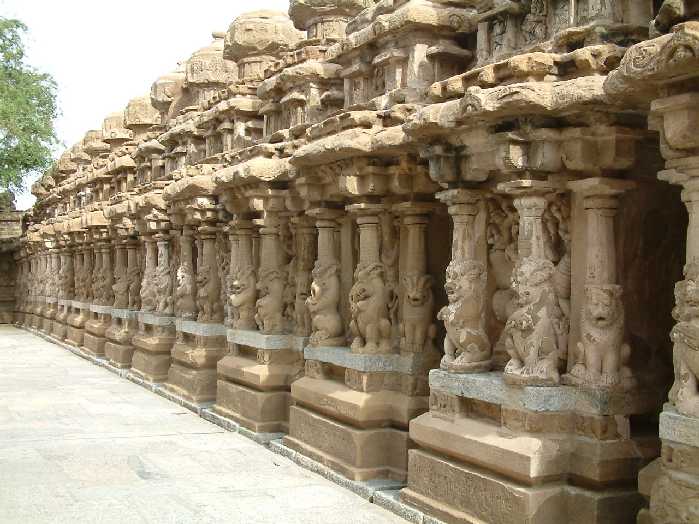
Before proceeding further, it would be better if we could understand briefly the views held by scholars on the history of art and architecture of the Pallavas1. Both European and Indian scholars, basing their conclusions on the Maṇḍagapaḍḍu inscription of Vicitracitta2 (Mahendra), decided that Mahendra introduced the rock cut technique to South India for the first time and that before him, all the temples were built of brick, mortar and other perishable materials. His caves were characterised by simplicity in plan and in the treatment of pillars which were square at the top and bottom and octagonal at the middle. His son Narasimha also known as Māmalla continued the rock cut caves and for the first time conceived the idea of cutting the huge boulders into monolithic temples, familiarly known as rathas. He also introduced the sedant lion at the base of the pillars and bulbous capitals with palaka at the top. Paramesvaravarman-I who succeeded Narasimha-I, continued the monoliths. He for the first time introduced the structural temples built of granite slabs and since he had to fight with the Chalukyan adversary, Vikramaditya-I, also known as Ranarasika, the work at the monoliths abruptly ended. Rājasimha who succeeded Paramesvara-I was a great builder of structural shrines as evidenced from the Kailāsanātha temple of Kāñci and the Sea-shore temple of Māmallapuram. Except the stray example of Saluvankuppan cave, excavated by Rājasimha, there are no other caves, which could be ascribed to him. Rājasimha for the first time introduced the rampant lions at the base of the pillars. After Rājasimha, the rock cut technique ceased and only structural temples predominated as evidenced by the Vaikuntaperumal temple of Kāñci, built by Nandivarman **. The above is the conclusion generally accepted by scholars now. The scholars also believed, that the rathas exhibit architectural details like the pavalions, etc. which were the copies of Buddhist Viharas3.
The conclusions mentioned above are far from satisfactory. Let us examine the Buddhist influence of architecture. Did the sculptors of Māmalla's reign copy the Buddhist structures already in existance in South India or did the inspiration come from Northern India? If it is from South, then is there any structure which could be cited as an eample, which was the source of inspiration? If it is from North then which is the structural example for such an inspiration? Further why did not these rows of pavalions etc. found on the stories of rathas, and which are stated to have become reduced architectural motiffs in the structural temples, like the shore temple, show the design of a Buddhist stupa which was much more prevalent in northern India and particularly so in the Krishna valley, from where the pallava art is said to have received its inspiration. So the theory that these pavalions etc. were after some Buddhist structures, is absolutely unsatisfactory.
And again when we examine the main point, namely Māmalla started cutting the monoliths and his grandson Paramesvara continued it for sometime and abruptly stopped it afterwards, we are unable to appreciate the abrupt end of the work4.
Since Paramesvara boasts5 himself of, as having invaded the very capital of Vikramaditya, he was certainly powerful enough in his own kingdom. It does not explain why he suddenly stopped the work.
There is no record from where we can gather that Paramesvara-I introduced structural temples of granite slabs. There is one copper plate grant from Kuram6, issued by the same king Paramesvara, recording the gift of a land for erecting a temple, at the request of a chieftain called Vidyavinita Pallava. It was this chieftain who built the temple and named it after his own name and also after the name of his ruler as Vidyavinita Pallava Paramesvaragṛham. Further the inscription states a portion of land was meant of burning tiles, which are to be used in building the temple (தளி எடுப்பதற்கு ஓடு சுடக்கொண்ட இடம்). The temple was perhaps built of brick and mortar and covered with tiled roof. There is nothing in the inscription to suggest that the first introduced into this part of the country.
All the lithic records and copper plate grants of the pallavas, referring to Rājasimha, fortunately we have a good number of them, tell us that he was a great temple-builder and was a great devotee of Śiva. It is substantiated by atleast three of his monumental structures, viz. the Kailāsanātha temple, the Sea-shore temple and the Panamalai temple, where he was shown his capacity to erect, equally great monuments like the monoliths.
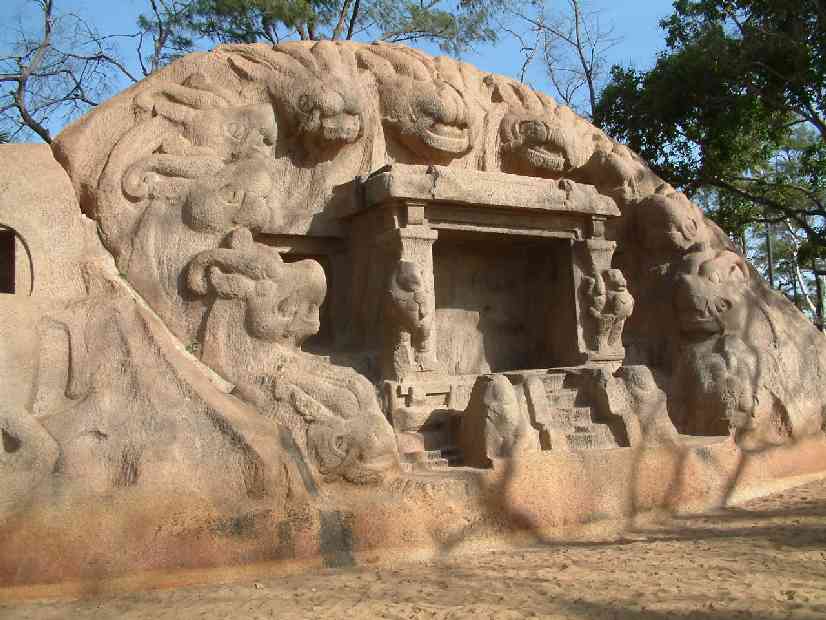
Tiger Cave at Saluvan kuppam
It is not clear why such a prolific temple builder like Rājasimha did not continue the monoliths and complete the same and why he should have favoured only the structural temples. Further we are sure that he was equally interested in excavating rocks and that rock cut technique continued during his reign, as proved by the Sāluvankuppam caves which are his creations. The explanation is again far from satisfactory.
If it is suggested that Māmalla started and Paramesvara and Rājasimha both continued it and that after them it ceased, again the explanation falls short of reasons. We know that Narasimha-I ruled for about thirty years and Paramesvara-I twenty five years. We also know that Rājasimha had comparatively a peaceful rule for a long period of about forty years. This will lead us to another problem, namely that since the beginning of the monoliths, the work continued on them for over hundred years and still the work could not be completed!
Is name of the town the only clue?
Thus we find ourselves in very unsteady grounds, in our conclusions regarding the authorship and date of these monuments. Hence I raised a new problem namely whether the name of the town Māmallapuram gives us the only clue to identify the author of these monuments with Māmalla. The name of Māmalla and Māmallapuram are so intimately connected, that we hesitate to raise the question whether Māmalla was the author of these monuments. In my opinion all our problems lie in the mystic word Māmalla. There are certainly other clues which will help us in arriving at some solutions and hence before attempting to answer the connection between Māmalla and Māmallapuram we shall examine the other evidences which may be divided into (a) Literature; (b) Paleography; (c) Evolution of Architecture; and (d) Epigraphy.
From Literature
No light is thrown on the subject by literature, for there are very few references to Māmallapuram. Referring to Toṇḍaimān Iḷamtiraiyan, in Perumbānāṛṛuppadai7 Kadiyalur Rudrankannanar gives a graphic description of a seaport of Toṇḍainādu which was mainly the land of the pallavas in later times. He also refers to a light house which helped as a bacon light for seamen. Late M. Raghava Iyangar in his book8 on Āḻvārgal Kālavaralāru (The Age of Alvars) identifies the town mentioned, with Māmallapuram and in doing so he points out that the intention of the poet was to indicate that Kāñci was very near to this town. From a reference to Lord Viṣṇu of the Seashore temple, in Avantisundarikatha9, by Dandin. Late M. Raghava Iyengar concludes, that the Viṣṇu image was under worship long before Rājasimha. The reference of Kaḍalmallai temples of Śiva and Viṣṇu, by Tirumangai Ālvar10, is not much helpful for our present study, (he was later than Rājasimha,) since he does not refer to the building of the temples or other monuments. Thus literature does not help us.
From Paleography
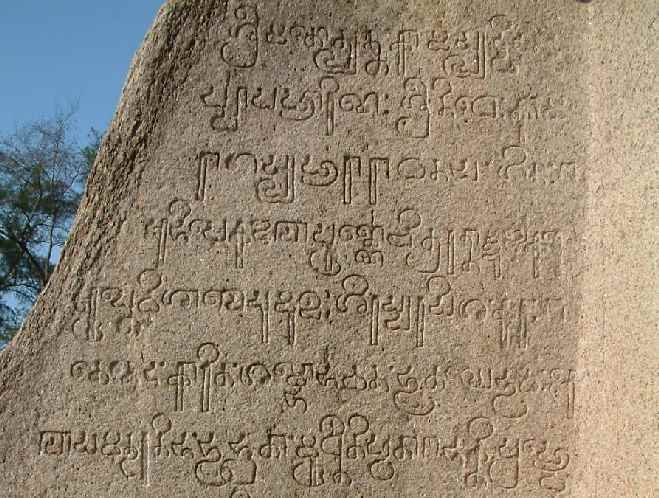
Paleography has been a very useful source, in determining the age of inscriptions and monuments. We know that the scripts employed by the Cholas were different from those employed by the Pallavas and that the Vijayanagar kings employed altogether different scripts. Even amongst the same dynasty of rulers, like the Cholas, one could perceive some evolution in the scripts. But with reference to our study of the date of the Māmallapuram monuments, paleography is absolutely of little value. We know that several different alphabets were employed in the Kailāsanātha inscriptions11 of Kāñcipuram which led scholars to think that these inscriptions belonged to successive rulers of Kāñci. The inscription found all around the basement of the main shrine, and which was written in archaic characters were believed to have been coeval with the temple. The rest of the inscription of the temple run round the inside of the enclosure, and contain an enumeration of several hundred birudās of Rājasimha. They are arranged in four tiers. The first tier is made of hard granite and preserves the inscription intact, while the other tiers are of sand stone and have suffered considerable weathering. It was also found that the inscriptions of the second and third tiers, were word for word identical with the first. In discribing the date of the inscriptions, Hultsch remarked that "the third tier is written in the same archaic alphabet as the inscription round the Rājasimhesvara shrine and evidently belongs to the time of Rājasimha, the founder of the temple himself. The first and second tiers must be considered as later copies of the original inscription of the third tier and were executed by some descendents of Rājasimha. The inscriptions of the fourth tier is written in a peculiar ornamental alphabet, which is based on the alphabet of the same type, as that of the first tier. It follows that the engraver of the fourth tier copies from the third and not from the first tier, perhaps the first and fourth tiers were contemperoneous."12Sāluvankuppam InscriptionsSāluvankuppam (pic Jul-2004)
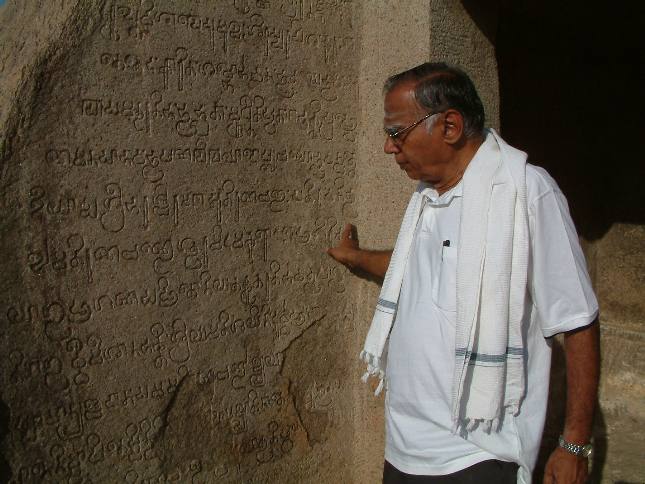
The rock cut cave at Sāluvankuppam, called Atiraṇacaṇḍa Pallavesvaragṛam, was excavated by Rājasimha himself. It contains some sanskrit verses13, inscribed on the northern and southern wall of the cave, extolling the greatness of Rājasimha. The script employed in the northern wall is different from the south and hence it was suggested that the inscription of the southern wall was a later transcript of the north and the author of the inscription of the southern wall was a successor of Rājasimha., It was only in later times that the suggestion of successive engravers was discarded and rightly noted, that since the inscriptions on the south and north wall are identical verses, they were written by the same king Rājasimha. In the same vein it was concluded that the inscriptions in four different alphabets, found at the Kailāsanātha temple, which were the repetitions of the same titles of the corresponding tiers, were all inscribed by Rājasimha himself to exhibit varieties. Thus, since Rājasimha himself has left five different varieties of scripts which include the scripts employed by early Pallava kings, the study of paleography certainty fails in determining the age of the monuments of Māmallapuram.
From Architecture
The scholars, being quite conscious of these defects, therefore turned their attention to the study of architecture, which, it was believed, shed welcome light on the subject. We all owe a great deal to Pprof. Joveau Dubreuil for his illuminating study of South Indian architecture14. It was he, who first made a thorough survey of Pallava monuments and brought out his valuable literature on Pallava antiquities. The evolution of pillars as shown by Dubreuil was perhaps the best study from which we were able to arrive at some tangible conclusions. Thus according Dubreuil, the Maṇḍagapaḍḍu cave was the first to be excavated by Mahendra, judging from the inscription, which states that this cave was caused to be made for Brahma, Viṣṇu and Śiva, by Vicitracitta without the use of brick, mortar, wood and metal. Dubreuil suggested that the proud attainment of excavating rock, for the first time, made Mahendra to mention, that he caused it to be made without the use of brick etc. Further this suggests that all the monuments prior to Mahendra, were built of perishable materials like brick and owing to temperate climate nothing has survived. Further Dubreuil suggested that beginning from the Maṇḍagapaḍḍu cave, the pillars of Mahendra, are plain; Narasimha I introduced the sedent lion and Rājasimha introduced the rampant lion motif. But I am afraid that Dubreuil made the fundamental mistake and scholars subsequent to him, followed suit without pausing to question the suggestion. In my opinion the evolution of architecture as suggested by Dubreuil is of little help for our study as we shall presently notice.
Maṇḍagapaḍḍu inscription
Before proceeding further let us pause to think on the first suggestion of Dubreuil on Maṇḍagapaḍḍu inscription. I am sure that Dubreuil's suggestion, though very fascinating, is not satisfactory. Asoka Maurya started excavating caves for the Ājīvaka ascetics in about 3rd century B.C. as evidenced from Barbar hills. Asoka's cave beds were highly polished and carry inscriptions is Brahmi. All most at the same time, if not earlier, we have in south, the natural caverns converted into beds, with the polish similar to that of Asoka and with Brahmi inscriptions. These inscriptions are ascribed to the middle of 3rd century, B.C., as almost contemporary with Asoka. Thus we find that the travel of idea or the technique, from north to south is almost spontaneous. The rock cut technique in northern India, assumed greater importance, especially in the west coast, through the centuries, till the beginning of the 7th A.D. There are remains of caves, which were excavated during the first and second centuries before Christ and also during the first, second, third, fourth and fifth centuries A.D. The technique of rock cutting became a highly developed art during this period. But in South India, the same art which travelled almost spontaneously during the Mauryan era, died out immediately and there was no rock cut caves! We wait patiently for almost about thousand long years from 250 B.C. to 600 A.D. for Mahendravikrama Pallava to introduce the rock cut technique! This almost coincides with the period in north, when the rock cut technique has almost died out to be revived by the Rashtrakutas for a short period. This is very strange, since the contact between the north and the south during the succeeding centuries of the Christian era was much more easier and greater than the preceding era. We certainly know that Buddhism and Jainism did travel to a great extent during this period. If that be the case why should we wait for Mahendra alone to take up this work?
Let us study the inscription itself. What does the inscription say? It says that this temple, dedicated to Brahma, Viṣṇu and Śiva was caused to be made by Vicitracitta, without the use of brick, mortar, wood or metal. It does not mention that this was being excavated for the first time in South India. Nor in any of his subsequent inscriptions Mahendra assumed a title, commemorating this great achievement of his life. He was certainly fond of titles and could have assumed a title like "the first excavator of cave" Ādyaguhayatanakari or some such thing. We do not come across any such titles in his inscription.
None of the epigraphical records, both lithic and copper plates, which were issued after him, refer to Mahendra's achievement in excavating caves for the first time.
As I pointed out earlier, when the technique has reached a high perfection in the Andhra area and especially when Mahendra had great connections with that part of the country as evidenced from his titles, it is not convincing, when it is said that with Mahendra, only simpler forms of architecture are introduced like the pillars, which have plain cubical shape at the top and bottom with an octagonal flutting at the middle.
When we look at the Dvārapālakās,15 carved on either side of the very Maṇḍagapaḍḍu cave with an unsurpassing realism and elegance, and when we look at the Gangadhara panel16 at Trichirappalli cave of Mahendra, it is futile to suggest that the granite carvers were still primitive in their conception and technique.
Tirukkaḻukuṉṛam inscription
In order to justify the Mahendra style theory, the Tirukkaḻukuṉṛam inscription17 of Vātapikoṇḍa Narasimha pottarasar I, who confirmed a grant of Skandasishya, who caused the mūlasthāna to be made, was explained in a very unsatisfactory manner. Tirukkaḻukuṉṛam inscription is certainly a pointer to the existence of either the cave or the other shrine, long before the time of Mahendra and that the theory none of them existed prior to him is absolutely untenable. After all a good number of prehistoric rock cut cave burials have come to light from Kerala and that the technique was already known to the south. I am therefore inclined to believe, that to arrive at a conclusion on the basis of the evolution of architecture, beginning with the plain pillars and sedent lion pillars and rampant lion pillars, does not contribute to the proper study of the age.
Study of Architecture falls short of expectation
I shall now proceed to prove that the study of architecture, falls short of expectation in another direction. If it is proved that during the rule of one and the same king the architectural details exhibit great variety, then the evolutionary theory which is based on the conviction that with one king only one form of architecture prevailed and each king introduced a novel theme will certainly fall short of any satisfactory conclusion. One need not look anywhere for this. We may take the monumental structures of Rājasimha, who was left us more temples than any other monarch of South India. The Kailāsanātha temple of Kāñcipuram, the Tālagirīsvara temple of Panamalai, the shore temple of Māmallapuram, and the Atiraṇacaṇḍa temple of Sāluvankuppam are undounbtedly the creations of Rājasimha, for he was virtually left his inscriptions there.
Atiranacandesvarar
Let us study some of the features of the architecture of these temples. Sāluvankuppam temple is a rock cave of rectangular plan, which is altogether different from the other three, which are structural examples. The ground plan of each of these temples is different from the other.
(a) The sea shore temple has to square garbhagṛha one big and one small placed one behind the other and interspersed with the rectangular shrine in between, which is a peculiar combination not noticed any where. It has a large open court in the front and a balipitha. The Kailāsanātha has a square garbhagṛha with a large open court in front, carrying a pillar maṇḍapa. The Panamalai temple has also a small square garbhagṛha but has no open court in the front.
(b) The shore temple has two outer walls running parallel to each other with an intervening space of about ten feet, which forms itself as a prākara. The Kailāsanātha temple has no two outerwalls, but only one carrying number of small cells with elegant sculptures. There is no outer wall at Panamalai.
(c) There is a narrow pradakshiṇāpada around the main sanctum, in the Kailāsanātha temple in between the garbhagrha wall and outer wall of the sanctorum whjch is a unique feature. At Panamalai there is no pradakshiṇāpada. At the sea shore temple the passage around the Śiva and Viṣṇu temple could be either described as a pradakshiṇāpada or as not.
(d) There are no side cells around the wall of the sanctum at the shore temple. At the Kailāsanātha temple there are seven cells placed at equal distance in all the quarters. There are only three small cells at the Panamalai temple.
(e) The outer walls of the sea shore temple are exquisitely carved, with sculptures. The outer walls of garbhagṛha at the Kailāsanātha temple are also carved. At the Panamalai temple, the outer walls are plain.
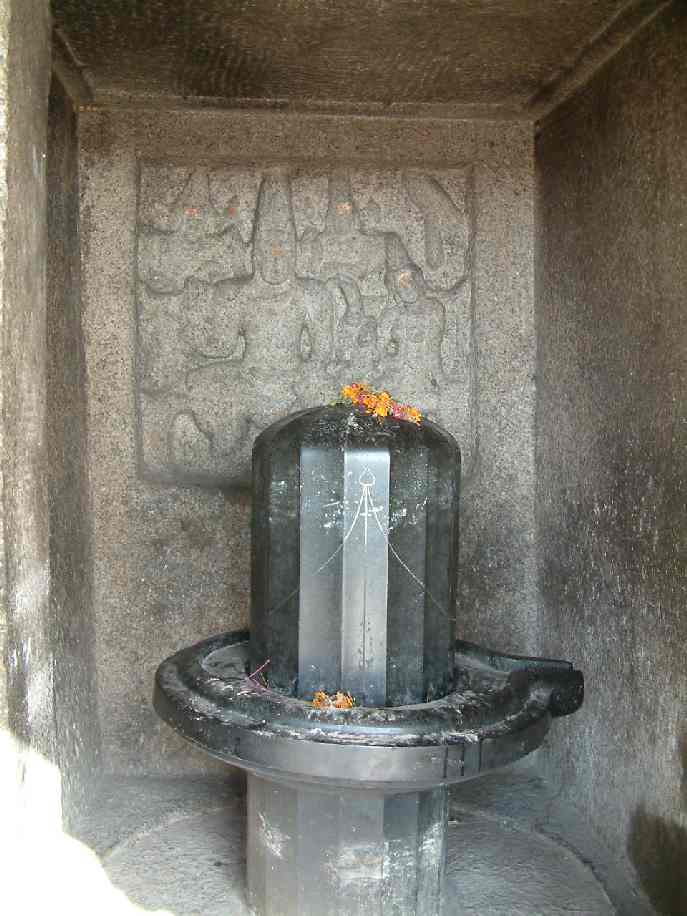
(f) At the Kailāsanātha temple the inner walls of the side cells contain colossal sculptures of Śiva but does not contain liṅga in the centre. At Panamalai the inner walls of the side cells are severely plain, and in the centre prismatic liṅgas are placed. In place of sculptures, Rājasimha covered the inner walls of the side cells with paintings of exquisite beauty, resembling exactly the sculptures of Kailāsanātha temple of Kāñci.
(g) The superstructure of the Vimāna of the shore temple is swift and sharp in its up-ward movement and is slender in appearance. The Vimāna of the Kailāsanātha temples is slow and steady in its upward move and is solid and majestic in appearance. The Vimāna of the Panamalai temple shows a peculiar combination with its sharpely recessed corners, taken up to the stūpi. It blends in itself the horizontal and vertical lines of the structure and is stately in appearance.
(h) The outer walls of the Kailāsanātha exhibit rampant lions with riders at regular intervals. The Panamalai temple show only rampant lions. The sea shore temple show a series of Nāgarājās in anjali pose.
Thus these four temples exhibit bewildering variety in their architectural details in almost all respects. Has Rājasimha not left his inscriptions in these temples, certainly these monuments would have been ascribed to various monarchs and would have been ascribed to various centuries. That it was the case we know with reference to the shore temple. Till the discovery of Rājasimha's inscription18 in the plinth of the balipītha, scholars were divided as to the author of the Sea shore temple.
Factor against the evolutionary theory
I shall cite another important factor against the evolutionary theory. The rock cut cave of Sāluvankuppam excavated by Rājasimha has very simple and plain pillars very much like the Mahendra's pillars. Therefore Sāluvankuppam cave posed a great problem for scholars19 in placing it in the evolutionary cadre. It may be noted here that the inscription of Rājasimha is found outside the cave on the north and south wall. But let us take the case of Vayalur inscription20 of the same king. The inscription is engraved on a pillar itself, which is plain and is in the so called Mahendra style.
Kailāsanātha Temple Kāñci
The huge Nandi Maṇḍapa in front of the Kailāsanātha temple of Kāñciuram has four pillars with sedent lions at the base. The small cells running along the outer walls of the same temple, also have pillars with sedent lions at the base. According to the prevalent view this is a motiff of Māmalla, but we know certainly that the Kailāsanātha temple is the magnificant creation of Rājasimha. The Konerimaṇḍapa at Mahabalipuram contains two rows of pillars. The outer row carries series of pillars with seated lions at the base end bulbous capital which may be termed as the Māmalla pillar. The inner row of pillars are slender and fluted without any motiff at the base and is termed the Paramesvara pillar. It was therefore explained that the outer portion which was necessarily the first to be excavated was by Māmalla Narasimha - I, and the inner portion was excavated by Paramesvara. This explanation is quite convincing. But it fails with reference to the Ādivarāha cave where the outer pillars are plain, slender and fluted, while the inner row of pillars carry seated lion at the base and bulbous capital. The explanation will have to be reversed here and will totally ail since it will amount to saying that Narasimha - I succeeded his grandson Paramesvara. Thus the theory that with one king only from of architecture prevailed will not hold good. So also the theory that each king brought in a new innovation will fail. Thus it is quite evident, the evolution of architectural motiff fails with reference to our present study.
Thus either literature or paleography or for that matter architecture help us in determining the age. We found ourselves in no better ground when we turn to the inscriptions. It may be mentioned that many kings are said to have assumed same names and titles and with Māmallapuram monuments, where we have only titles the difficulty is all the more greater.
When thus, all our tangible sources fail how are we to arrive at a conclusion? My answer will be that the clue to our problem lie in the very failure of all these sources. Paradoxical it may seem, when I say that all these evidences do ot ail us when we reverse our process of enquiry by first taking inscriptions, applying it to architecture and applying both to paleography. We arrive at a solution which is quite convincing.
Inscriptions of Rājasimha
Let us take the inscriptions of Rājasimha about whom we are absolutely on safe grounds. Rājasimha was a great monarch, an ambious king and was a prolific builder. In his celebrated Kailāsanātha21 temple he has left us about three hundred titles, ever assumed by any monarch of India. His titles are very valuable in understanding his personality. Of his birth, Rājasimha says that "He took birth from Paramesvara, the destroyer of the city of Ranarasika just as Guha took birth from Paramesvara". He was proud of his race and of his noble birth and hence assumed such titles as pallavādityaḥ, kulatilakaḥ, kuladhvajaḥ, jātigambīraḥ, adhbhutacaritaḥ, kshatracūlamaṇiḥ. He was a prince of great beauty and elegance and was conscious of it when he assumed such title as ekasundaraḥ, nayanamanoharaḥ, parjjanyarūpaḥ, udayacandraḥ, vilāsaḥ, abhirāmaḥ, cāruvilāsaḥ, lalitāvilāsaḥ, sārvabhaumaḥ, etc. His great love for Vaidika mārga, viz. śruti, smṛti and purāṇa is reflected in his titles, as āgamapramāṇaḥ, āgamānusāri, śāstradṛṣṭiḥ, nayānusari, ācāraparaḥ, tatvavedi, etc. His devotion to Śiva and Saivasiddhanta is unparallelled in the history of South India. All his inscriptions and the inscriptions of his successors, speak of him as a great Śiva-bhakta. He was Śivacūdāmaṇi and styled himself as īshvarabhaktaḥ, devadevabhaktaḥ, śaṅkarabhaktaḥ, īshānasharaṇaḥ, etc. We could only compare Raja Raja-I as an equal in his devotion to Śiva and who rightly assumed the title of Śivapādaśekhara. Rājasimha himself had the title of Raiaraja. He was the very abode of dharma. He was dharmasetuḥ, dharmakavacaḥ. He was afraid of only unrighteousness adharmabhīruḥ. He had unlimited desires atyantakāmaḥ and his ideals were lofty unnatecchaḥ. His ideals were mostly fulfiled, icchāpūraḥ, pūritecchaḥ, tṛṣṇāpūraḥ, etc. He had great love for all the fine arts, and was himself a great master of all arts, kalasamudraḥ, ātodhyatumburuḥ, vīṇanāradaḥ. In fact he was the very ocean of all fine arts kalasamudraḥ. Such a king was never moved to anger and once roused he was terrible, tīvrakopaḥ, avandhyakopaḥ; but his angers were always reasonable kāraṇakopaḥ. He was severe in inflicting punishments and upholding justice, agradaṇḍaḥ, caṇḍadaṇḍḥ. He was a great statesman, and was the only Pallava monarch who could maintain friendly relations with his neighbours and give some peace to his subjects. dūradarśī, carucakṣuḥ, abhayarāśi, caṛvarti He was not at the same time weak. He was a great warrior raṇajayaḥ, aparājitaḥ, akutobhayaḥ, ugrapratāpaḥ, amitaprabhāvaḥ, etc. He was very fond of his subjects rakṣāmaṇiḥ, āśritavatsalaḥ. The very idea of poverty made him shiver, daridrānukampī, khinnānukampī and hence poured forth gifts and presents dānavarṣaḥ, aviratadāna. In short he is a true Hindu monarch, in whom we find all the qualities of warrior, statesman, poet and above all a lover of peace as described in our nitisastras.
Sāluvankuppam Inscription
It is no wonder that such a great monarch has left us his temples as monumental structures, unsurpassed in their variety and beauty. The same king Atiraṇacaṇḍa has excavated the Sāluvankuppam cave and left his inscriptions. The verses are fascinating poetry. But strange indeed, the same verses are found in Dharmarājamaṇḍapa, Rāmānujamaṇḍapa and Ganesa ratha! Verse for verse, word for word and syllable for syllable they are identical and yet we have been looking elsewhere for the author.
Five verses found at Sāluvankuppam, Ganesa Ratha and Dharmarāja maṇḍapa:-
atayanatakāmo nṛpatiḥ nirjitārātimaṇḍalaḥ|khyāto raṇajayaḥ śūraḥ tenedaṁ veśmakāritam||bhaktiprahvena manasā bhavaṁ bhūṣaṇalīlayā|doṣṇā ca yo bhūvo bhāraṁ jīyāt sa śrībharaściram||śrīmatotyanatakāmasya dviṣaddarpāpahāriṇaḥ|śrīnidheḥ kāmarāgasya harārādhānasaṁginaḥ||abhiṣekajalāpūrṇe citraratnāmbujākare|āste viśāle sumukhaḥ śiraḥ sarasi śaṅkaraḥ||tenedaṁ kāritaṁ śaṁbhorbhavanaṁ bhūtayebhuvaḥ|kailāsamandiranibhaṁ bhṛbhṛtāṁ mūraddhni tiṣṭatā||
ATYANTAKĀMA excavated Salavankuppam cave. The same ATYANTAKĀMA excavated Ganesa ratha, Rāmānuja maṇḍapa and Dharmarāja maṇḍapa. Yet we differentiate this ATYANTAKĀMA from the other.
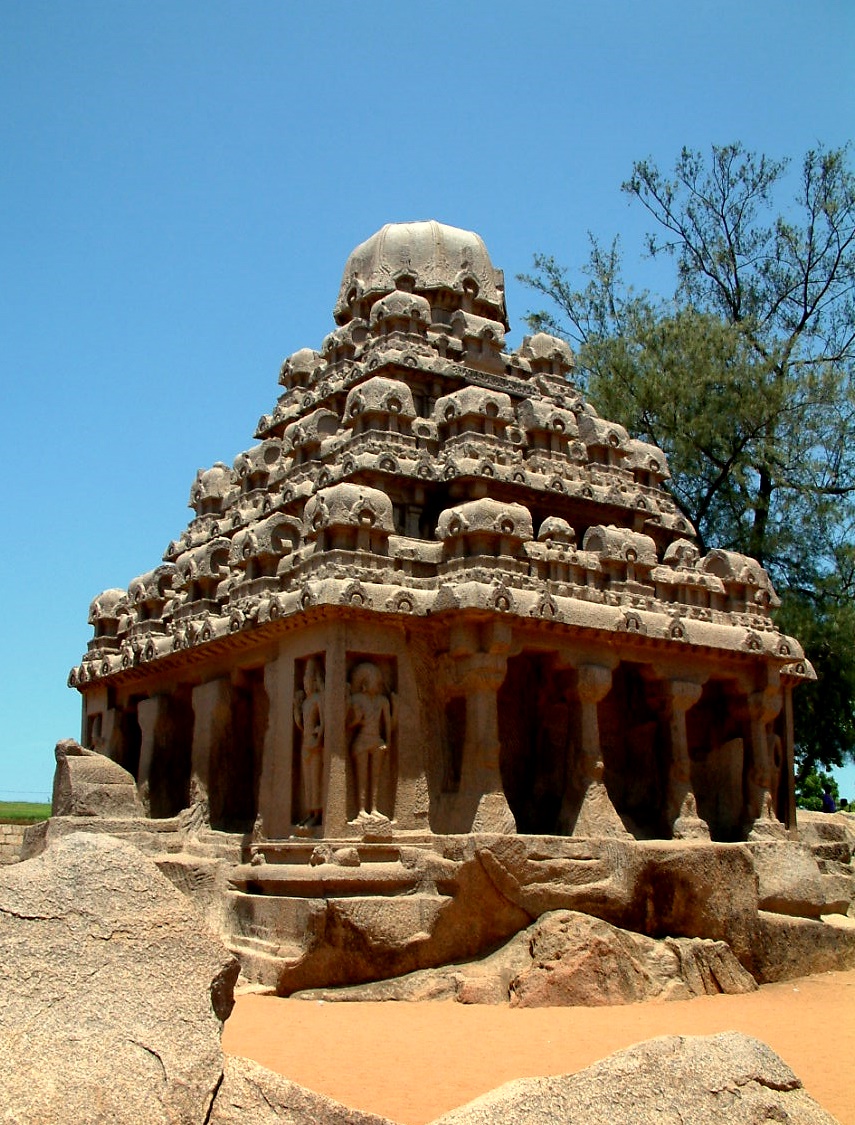
The Dharmarājaratha, bears the name of Atyantakāma Pallavesvara gṛham. Of the thirty titles inscribed in Dharmarājaratha, over fifteen titles are found in Kāñci inscriptions of Rājamsimha.
Titles Common to both Kailāsanātha and Dharmarājaratha.
Dharmarājaratha Kailāsanātha
narasimha sribhara bhuvanabhājana srimegha trailokyavardhana atyantakāma kaamalalita nayanamanohara sarvatobhadra srinidhi niruttara parāvara raṇajaya parāpara mahāmalla apratihatashāsana rājasimha
In all his inscriptions the Kāñci, the shore temple of Māmallapuram22, (22. A. R. E. 961 of 1913.) the Sāluvankuppam23 (23. S. I. I. Vol. I. 21.) cave, the Vayalur inscription24 (24. E. I. XVIII. 145.) and the Tirupporur25 (25. S. I. I. Vol. XII, 27, A. R. E. No. 76 of 1909.) inscription, Rājasimha calls himself Atyantakāma. Vainly we have been trying to give the same title to Narasimhavarman-I, Paramesvara-I, and even to Nandivarman Pallavamalla26. (26. S. I. I. Vol. I.)
Table showing the titles of Rājasimha appearing in all the monuments. Note the significant titles of Raṇajayah, Atyantakāma, and Sribhara.
VāyalurTirupporurSāluvankuppamSea-shorePanamalaiKāñciDharmarājarathaGanesa RathaDharmarāja maṇḍapaNarasimha......Narendrasimha...NarasimhaNarasimha......Srimegha............SrimeghaSrimegha......Srinidhi...Srinidhi......SrinidhiSrinidhiSrinidhiSrinidhiRaṇajayah...RaṇajayahRaṇajayahRaṇajayahRaṇajayahRaṇajayahRaṇajayahRaṇajayahAtyantakāmaAtyantakāmaAtyantakāmaAtyantakāma...AtyantakāmaAtyantakāmaAtyantakāmaAtyantakāmaMahāmalla ............Mahāmalla Mahāmalla.........Kamalalita.........KamalalitaKamalalita............SribharaSribharaSribharaSribharaSribharaSribharaSribhara...............NiruttaraNiruttaraNiruttaraNiruttara
There is no evidence to show that Narasimha Varman I, the great Vātāpi-hero started these unique monuments. Strangely enough we have only two inscriptions of him, one at Vātāpi27 the capital of Chalukyas, far away from his own capital. The other is at Tirukkaḻukuṉṛam28. In none of his inscriptions, he records his unique achievement in temple building. Nor does he mention his title as Atyantakāma. The charters issued after him are equally silent on his unique achievement and his title.
Let us study the Kuram plates29 of Paramesvara I, who was Rājasimha's father. From line 19 to line 39, where he gives his own attainment, there is no mention of the title Atyantakāma. Nor is there any mention of his attainment at these unique monuments or for that matter temple building. He only boasts of his victory over Vikramaditya - I, his Chalukyan adversary. Let us study all the copper plates issued after him. Velurpalayam30, Kasakudi31, and Udayendiram32, speak of him as a vanquisher of Vikramaditya and nothing else. His title as Atyantakāma is not mentioned in any.
We know from the inscriptions of Narasimhavarman I, that the greatest event in his life was the victory over Pulakesi and the conquest of Vātāpi and Ceylon. It is recorded in all the Pallava charters issued after him also. But this event is not mentioned in any of the Māmallapuram inscriptions which unmistakably suggest, that Narasimha did not have anything to do with the monuments of Māmallapuram.
tadudaya dharaṇīdhara somādityasya avinata mukhaḥ nṛpati mūrdhdini cūlāmaṇeḥ pratyartha rājagaja yūtha siṁhasya narasiṁhavarmaṇaḥ svayam iva bhagavataḥ nṛpatirūpa avatīrṇasya narasiṁhasya muhur avajita cola kerala kalabhra pāṇḍayasya sahastrabāhor iva samara śata nirvbiṣṭa sahasra bāhu karmaṇaḥ pariyala| maṇimaṅgala śūramāra prabhṛtir aṇa vidatapulakeśi pṛṣṭa paṭṭa likhita vijayakṣarasya kalaśa yoner iva vimathita vātāpeḥ . . . . . . ........................................ Kuram grant - S. I. I, vol. - I, p. 148laṅkājaya adharita rāma parākramaśrīr udvaṛtta śatrukula saṁkṣaya dhūmaketuḥ|vātāpi nirjjaya vilambita kumbha janmāviras tato'jani jayi narasiṁha varmā||.......... Kasakkudi - S. I. I. p. 349.tasmāt agastya iva vimathita vātāpiḥpariyala maṇimaṁgala śūramāra prabhṛtiṣu jetābahuśaḥ vallabha rājasya narasiṁha varmā||...... Udayendiram plates - S. I. I, p. 366.tadānmajāt āvirabhūt mahendrād upendrakīrtiḥ narasiṁhavarmāvātāpi madhye vijitārivargaḥ sthitaṁ jayastambam alambayat yaḥ..................... Velurpalayam plates - S. I. I, p. 508.narasiṁha varmā.... Vayalur inscription - E. I. XVIII, p. 150.
We also know from the Kuram grant of Paramesvara I and the inscriptions issued after him, that the greatest event in the life of Paramesvara I, was the Victory over Vikramaditya I, also known as Ranarasika, his Chalukyan enemy. This important event is also not noticed in Māmallapuram, though a major portion of these monuments are ascribed to him. The Dharmarājaratha which is said to have been continued by him does not even bear his name Paramesvara-I. It is thus evident that Paramesvara also had little to do with the monuments of Māmallapuram.
prameśvara iva sarvādhikadarśanaḥ parameśvaravarmā bharata iva sagara iva kṛtāsamañjasatyāgaḥ karṇṇa iva puṣkalaṁgo yaḥ priyakāvyo yayatiriva anupanatānāṁ rājāyasya ājñā bhavati sarvadā pīlā saiva suhṛdāmprayacchati mukhaśobhā karṇapūratayas caturaḥ kalāvilāse niyatṁ yścānta(kaḥ)bhavatyanṁgasya muktāguṇastu hṛdaye......... [āyodhanaśirasi viṛmādityaṁ karpaṭamātraparicchadaṁ ekākīpalāyitamkṛtaḥ|] .................... Kuram plate - S. I. L. vol. I, 148.icchādheya sakalāvaniypālalokaḥpaścādbabhūva parameśvarapotavarmmā|bhūtiparāṁ vahata bhūtapatiḥ khaḍhvāṁgaketuḥacalasthitiradhbhuto yaḥ||.............. Kasakkudi - S. I. I - II, 349.tataḥ peruvalanalluryudhde vijitaḥvallabhalaḥ parameśvaravarmmā..... Udayendiram - S. I. I-II, 366.tataḥ param atadvaṁsī babhūva parameśvaraḥcālukya kśitibhṛt saunya dhvānta dhvaṁsa divākaraḥ............... Velurpalayam - S. I. I-II, 508.teṣāṁ vaṁśe prasūtāt raṇarasika puron mardhdanāt agradaṇḍāt.........Kailāsanātha == S. I. I==I.lokādityāt prasūtaḥ raṇarasika camū paṅka śoṣi pratāpāt====Panamalai.
It is quiet clear, that the title of Atyantakāma is not noticed either for Narasimha-I, or Paramesvara-I, in all the known inscriptions. Nor is there any mention of this unique achievement of temple building, by either of them. Further the significant events in both their life, (the defeat of their Chalukyan rivals) which are mentioned in all inscriptions, are not at all noticed in any of the Māmallapuram inscriptions. It is therefore quite clear that neither of them had anything to do with Māmallapuram monuments.
On the contrary, Rājasimha calls himself Atyantakāma in all his inscription. All the charters issued after him speak of him as a great temple builder. He did nothing but building temples and donating money.
deva brāmhaṇa sātkṛtātma vibhavaḥ yaḥ kṣatra cūlāmaṇiḥcāturvaidhyam avīviśat svavaśagāṁ bhūdevata bhaktitaḥ|saṁprāpto narasiṁhatāṁ svavapuṣā nāmnā ca dig vyāpinā jāta śrī parameśvarasya sakalasya aṅgāvatāras tataḥ||............. Kasakkudi - S. I. I-II, 349.tasmāt prama māheśvara parama bramhaṇyaḥ narasiṁha varmmā..................... Udayendiram - S. I. I-II, 366.tatputra sūnuḥ narasiṁha varmāpunarvyadhāt yo ghaṭikaṁ dvijānāṁ|śilāmayaṁ veśma śāśāṅka mauleḥkailāsa kalpñca mahendra kalpaḥ||.... Velurpalayam - S. I. I-II, 508.Ocean of Art and Literature
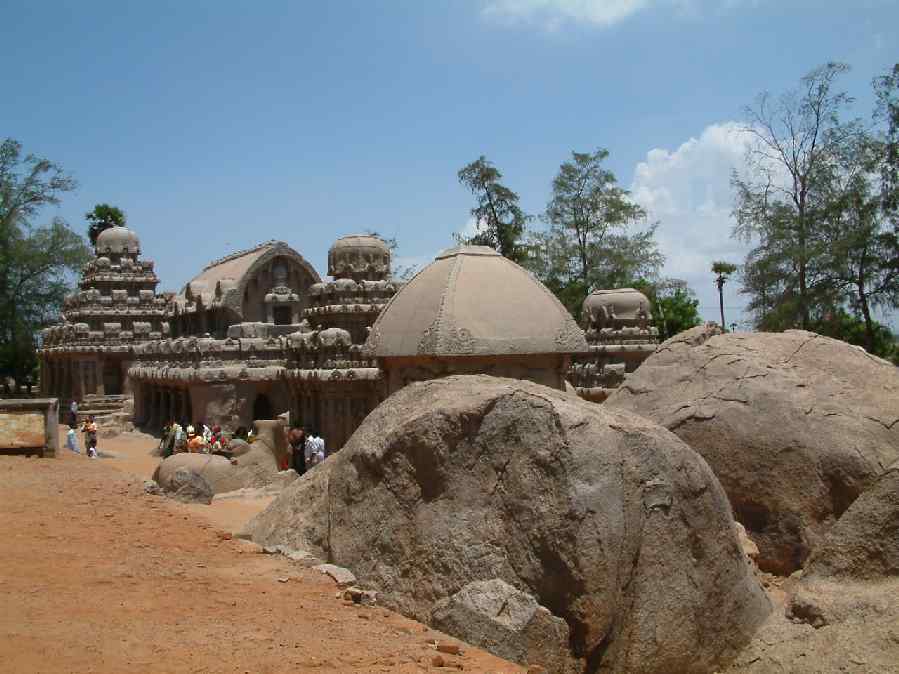
Let us fancy for a moment as Rājasimha standing on the sea shore of Māmallapuram. He looks at the vast ocean in front of him. He whispers, that he also is a ocean. Ocean of art and literature. Kalāsamudrah. Wave after wave bring him new ideas, desires and fancies. He styles himself as Atyantakāma, a king of unlimited fancies. He turns and transforms these lofty ideals, into tangible and visual forms by way of art and architecture. He styles himself Icchapūrah, one whose desires a fulfilled. He is ever active Nityotsāha, Utsāhanitya; stands before the boulder; each idea transforms itself. One is a three storied square Dharmarājaratha. The other becomes a rectangular Bhīmaratha. The third becomes two storied Arjunaratha. The fourth becomes a hut shaped Draupadiratha; the fifth a horse-shoe Sahadevaratha. A lion, a bull an elephant. Wherever he turns he conceives new forms and transforms them. Power and force exhibit themselves in Mahishamardani panel. Absolute peace and compusure, transform themselves into Viṣṇu as Anantasāyin. A huge vertical slab of 90', with a fissure in the centre, transforms itself as an open air sculpture of unsurpassing beauty and variety. The elephants, the monkeys, the lion, the cat all are his fancies. A whole boulder is transformed into the heads of yālis and a cave cut into it becomes the tiger cave. He erects a temple on the sea shore, another in the plains of Kāñci and yet another on the top of a hill at Panamalai. He leaves painting at one place - Panamalai, and sculptures at another place Kāñci. He leaves complete list of geneology at one place - Vāyalur; gives titles at Kāñci and leaves poetry at Māmallapuram. He shows variety in scripts. He introduces prismatic linga; compares himself with Subrahmanya the son of Lord Paramesvara. It is a Kumara-sambhava. This becomes the Somaskanda motif at the back wall of the sanctum. What has he not fancied, what has he not thought of? He is indeed a great Atyantakāma and no one else.
Struggle for power
Now the story is complete. Rājasimha, the greatest lover of art on earth dies; his son Paramesvara-II comes to the throne. Immediately he has to fight and his rule was short. Nandivarman, it is stated usurps the throne of Kāñci. He himself is driven out of Kāñci by Vikramāditya-II and runs for his life. Vikramāditya inspects the Kailāsanātha temple of Kāñcipuram. He is wonder stuck with the beauty of the temple and loftiness of the king. He pays tribute to Rājasimha by himself donoting gifts to the temple, without destroying it. Catches hold of the great artists, like Sarvasiddhi ācārya33 and removes them to his capital and there at Pattadakkal comes up a temple on the same model of Kailāsanātha temple. Nandivarman struggles throughout his life for the power. Thus with the patronage gone, with the best of artists gone, Māmallapuram stands as it is never to be completed.
Great Imagination
A study of the Māmallapuram monuments will reveal that the author, whosoever he may be, had great imagination and delighted in getting monuments carved, according to his desire. The five rathas which are most fascinating, exhibit variety. Every ratha is different from the other and each sculpture (namely an elephant, a lion and a bull) is equally different from the other. All scholars, writing on the rathas have stated that it was the desire of the king to show five different varieties of structures, that were in vogue at the period. The other monoliths namely Ganesa ratha, Valayankuttai ratha and Pidari ratha are also different from each other. The same may be said of the caves of Māmallapuram.Each cave is different from the other in plan, as could be noticed from the Trimūrti cave, the Mahishamardani cave, the varāha cave, the Rāmānujamaṇḍapa, the Dharmarāja maṇḍapa, and the Pancapandavamaṇḍapa, the mention only the well known ones. The open air sculptures which are again the unique contributions of Māmallapuram exhibit variety. There are two Arjuna's penance carved, each being different from the other. By the side is Krishna as Govardhanadhari. The monkey group is yet another interesting creation and also the elephant-peacock monkey group near the Trimūrti cave. A little to the North of the Sea-shore temple is a Durga cave, which has a colossal Mahisha carved on the northern side. In the south of the Shore temple, are again free monolithic sculptures, which are but small replicas of the Tiger cave of Sāluvankuppam. The seated lion, with a little Durga cut inside its stomach, within the outer walls of the shore temple, is again another interesting specimen. The cave with a series of Yalis, familiarly known as the Tiger cave at Sāluvankuppam, is a unique monument of grandeur. Apart from these, there are also the rock cut tanks like Gopi's churn.
Urge to Express Multitudious Forms
Underlying all these monuments, of rock cut caves, monoliths, open air sculptures and miscellaneous cuttings, on could clearly perceive that there was a great desire on the author, to be possessed of unlimited imaginations and to translate them into the living rocks. Each rock presenting a novel idea or theme got itself transformed, in the hands of the king. In fact, what we have at Māmallapuram is only a fraction of the king's fancies for many of his desires, as could be noticed from attempts to cut every rock, never attained even the state of outlines. This urge to express multitudious forms, is the underlying current of Māmallapuram monuments. This aspect of variety in the expression of art, in all the rocks and at the same place, gives Māmallapuam a unique place, unparallelled by any in the world. It will not be an exageration, when it is said that Māmallapuram will ever be supreme in the art history of the world. As I have proved earlier this king who was the author of these monuments and who very appropriately assumed the title of Atyantakāma, a king of unlimited fancies, is none other than RĀJASIMHA, the celebrated builder of the Kailāsanātha temple of Kāñcipuram, and the Sea shore temple of Māmallapuram.
General Agreement
There is a general agreement that the Sāluvankuppam cave was undoubtedly the creation of Rājasimha. It is also accepted that the inscriptions at Sāluvankuppam are that of Rājasimha, who also bore the title of Atyantakāma, Ranajaya etc. I have stated earlier, that five verses found at, Sāluvankuppam are found verbatin at the Ganesaratha and the Dharmarāja maṇḍapa of Māmallapuram. But the same verses which are ascribed of Rājasimha at Sāluvankuppam are ascribed to Paramesvara-I at Māmallapuram without much justification. After all not only the verses are repeated verbatin, but also the titles of the king are repeated. Prof. Joveau Dubreuil contends, that the verses at the Dharmarājamaṇḍapa, and the Ganesaratha refer to a king called Paramesvara.
Inscriptions of Ganesaratha and the Dharmarāja maṇḍapa
It is therefore necessary to consider the inscriptions of the Ganesaratha and the Dharmarāja maṇḍapa in some detail. The first three verses are imprecatary verses, refering to Śiva. The general tenor of these verses is to state the great qualities of Lord, as having apparent contradiction, by a clever use of Sabdalankara. Thus Amāya - Chitramāya; Aguṇa - Guṇabhājana; Anīsa - Paramesvara - (One Without as Lord - The Lord of all the universe.) In the second verse, there are two words Anīsa and Paramesvara, which are enunciated as the essential natures of Śiva. The primary connotation of the word, Paramesvara, is to refer to lord Śiva. It does not refer to a king called Paramesvara as hitherto contended. In a subsequent verse, the name of the king is specifically mentioned as King Atyantakāma.
atayanatakāmo nṛpatiḥ nirjitārāti maṇḍalaḥ|khyāto raṇajayaḥ śūraḥ tenedaṁ veśmakāritam||"The king Atyantakāma, who was conquered all his foes and also known as Ranajaya, has caused this temple to be made." It is significant to mention that Rājasimha in his Kailāsanātha inscription of Kāñci states that he was Atyantakāma, the son of Agradaṇḍa.
teṣāmaṁ vaṁśe prasūtāt raṇarasikapuron mardanād agradaṇḍāt|subrahmaṇyaḥ kumāro guhaiva paramād īśvarādatt amajanmā||śaktiḥ kṣunnāri vargaḥ vidita bahunayaḥ śaivasiddhānta mārge|śrīmān atyantakāmaḥ kṣatasakalamalaḥ dhūradharaḥ pallavānām||
His title as Rājasimha appears only at a subsequent verse. In the same way, Rājasimha delights in calling himself as king Atyantakāma, in all his inscriptions.
However the impracatory verse in the Ganesaratha, also seem to imply a reference to the king. Thus the first verse which reads as
sambhava sthiti saṁhāra kāraṇaṁ vītakāraṇaḥ|bhūyāt atyantakāmāya jagatāṁ kāmamardanaḥ||
means - "May the destroyer of life, who is the cause of creation, sustenance and destruction, (but is himself) without cause fulfill the boundless desires of men." Here the word Atyantakāma is primarily employed to denote boundless desires, but also implies a reference to the King Atyantakāma (whose prosperity Śiva may fulfil). It is in the same context the word Paramesvara in the second verse must be taken to refer to Śiva primarily. It also implies a reference to a title of the King as Paramesvara. The title Paramesvara was borne by Rājasimha also is seen from his Kāñci inscriptions as ĪḶĀ PARAMESVARA. In Rangapatāka inscription he is refered to as PARAMESVARA.
bhartuḥ puronmathanadṛṣṭadhanurbalasya śailādhirājatanayeva vṛṣadhvajasya|yaḥ kālakāla iti viśruta puṇyakīrteḥ kāntā nitāntadayitā parāmeśvarasya||
That the Rangapatāka inscriptions is the one of Rājasimha, is beyond doubt and the title PARAMESVARA is also noticed there. Thus the secondary reference to the title of Paramesvara in the second verse of the Ganesaratha and the Dharmarāja maṇḍapa is only a reference to Rājasimha. I have already stated that five verses found here are identical with the inscriptions of Rājasimha at Sāluvankuppam. Further out of the nine verses inscribed at the Ganesaratha and the Dharmarājamaṇḍapa, the word Atyantakāma is repeated three times. The inscription specifically mentions that the temple was caused to be made by the king Atyantakāma. I have proved that the title Atyantakāma is the exclusive title of Rājasimha. It is therefore evident that the monolith called Ganesaratha and the Dharmarāja maṇḍapa are the creations of Rājasimha.
The last verse noticed at the Ganesaratha and the Dharmarājamaṇḍapa
dhikteṣāṁ dhikteṣāṁ punarapi dhik dhik dhigastu dhikteṣāṁ|yeṣāṁ vasati hṛdaye kupathagativimokṣako rudraḥ||
is found repeated at the Rāmānuja maṇḍapa and the Ādivarāha cave. The alphabet employed is also the same as that of the other monuments. It is also accepted by all, that the author of the Rāmānuja maṇḍapa and the Ādivarāha cave, is the same who created the Ganesaratha and the Dharmarāja maṇḍapa. It follows that the Rāmānuja maṇḍapa and the Ādivarāha cave are also Rājasimha's creations.
Authorship of the group of Five MonolithsFive Rathas
As we now turn to the consideration of the authorship of the group of five monoliths, familiarly known as Pancapandavaratha (The Dharmarāja ratha, the Bhima ratha, the Arjuna ratha, the Draupadi ratha and the Sahadeva ratha) the answer is all the more clear. Of the five monoliths, only one, namely the Dharmarājaratha bears inscription. But it is accepted that the author of all these five monoliths, is the same king who evidently wanted to show five different kinds of architecture, that were prevalent at the time. It is also held that they were started by Māmalla Narasimha-I and continued by Paramesvara-I. Regarding the authorship Prof. Dubreuil states "we shall therefore conclude by saying that the tenor of the inscriptions, the form of letters and the style of the sculptures are fully in accord to show that the caves and rathas of Mahābalipuram were cut in the rock, during the reign of Narasimha-I and that they were finished and consecrated during the reign of Paramesvara I." The view that the monuments were consecrated by Paramesvara-I is untenable since most of the monuments at Māmallapuram are unfinished and were never consecrated.
We shall examine the inscription of the Dharmarājaratha in detail. There are no verses but only titles of a King, inscribed in this ratha. But there are two label inscriptions which give the name of the Dharmarājaratha as ATYANTAKĀMAPALLAVESVARA GṚHAM. Both the lables are in the third story, one on the eastern side and the other on the western side. Basing the conclusion on the inscription of the Ganesaratha, it was hitherto considered that Paramesvara-I is identical with Atyantakāma and that the Dharmarājaratha was consecrated by him. There are titles which mention Narasimha. It was therefore contended that Māmalla Narasimha-I started these monoliths and that Paramesvara-I, continued and consecrated them. But the name Narasimha occurs twice in the Dharmarāja-ratha, once at the first story and secondly at the second story. Since the mode of cutting a monolith is from the top, the third story will be the first to be excavated and the work continued downwards to the second story and the first story will be the last to be excavated. Thus when the title Narasimha is found in the second and bottom story it is evident that Narasimha has carved the monolith to the present stage. Under the circumsstances it will be difficult to state the contribution of Paramesvara-I, to this monument and it may be mentioned that the Dharmarājaratha is still unfinished. It may also be mentioned that the name Paramesvara never occurs on the Dharmarājaratha. It must therefore be sstated that Paramesvara's contribution was nothing and that he caused only the name Atyantakāma Pallavesara gṛham engraved. This explanation is not satisfactory.
But as I have stated earlier, the title Atyantakāma is the exclusive title of Rājasimha and the name of the temple as Atyantakāma Pallavesvara Gṛham is after the well known title of Rājasimha. This is fully supported by other inscriptions as well. It is well known that Rājasimha is also known as Narasimha-II. In fact Narasimha seems to be the surname of Rājasimha, as gleaned from the copper plate charters issued after him. Hence the name NARASIMHA appearing twice at the Dharmarājaratha is in fact the name of Rājasimha. (c) There are altogether thirty two titles mentioned in the Dharmarājaratha of which sixteen of them are noticed in the Kailāsanātha inscription of Rājasimha, which can not be taken as a mere coincidence (refer page 15). Of them, some are very significant titles mentioned by Rājasimha in all his inscriptions (Raṇajayah, Sribhara, etc.) (d) There is a title, recently discovered by Sri K. R. Srinivasan, in the eastern face of the third story, on the parapet wall of the steps which reads as MAHĀMALLA. This title was held by Narasimha-I as seen from his Vātāpi inscription. However the same title was assumed by Rājasimha also, as noticed in his Kailāsanātha inscription. That this seems to have been a very significant title of Rājasimha is known from the Vayalur inscription, where he specifically states that he was well known to his subjects as MAHĀMALLA.
śaṁbhoḥ pādaravindadvayaparicaraṇe nityamatyantakāmaḥśrīmegho viprasasyākaravibhavakaro vyomaratnaughacandaḥ|rajyāntārāvāgāho vidita mahāmallaśabdaḥ prajānāmrakṣādīkṣādhikāraṁ vahatu raṇajayaḥ śrīnidhiḥ dvīpalakṣam||||
Thus it is evident that the Dharmarājaratha is the creation of Rājasimha; so also the other monoliths. It is also evident that Rājasimha is the author of the whole group of five rathas. It is also generally accepted that all the monuments, the Arjuna's penance, the Goverdhanadhāri the Ādivarāha cave, the Mahishamardani cave, the varāha cave, the Trimūrti cave etc. were the creations of the same king, who created the five rathas.
From the epigraphical records, and the Mahāvamsa, it is learned, that Narasimha-I, invaded Ceylon, twice during his victorious reign and his second assault was successful and that he esstablished his friend Manavarman on the throne. Therefore it is possible that he established the present Māmallapuram as a seaport, from where he sent naval fleets and the village was renamed Māmallapuram after his title.
It is also possible that the present Māmallapuram was already a seaport of the Toṇḍainādu before Narasimha-I. This is likely, since we have reference to a seaport of Tondainadu in Snagam literature which certainly ante-dates Narasimha-I. But because of the constant presence of Rājasimha at this village, commanding and supervising his creations, the village received the name MĀMALLAPURAM, after the well known title of Rājasimha. The word MĀMALLA appear as a title of Narasimha I, only once, in a fragmentary record at Vātāpi. But it appears as a title of Rājasimha thrice and that Rājasimha specifically mentions that he was well known to his subjects as MAHĀMALLA. Be that as it may, the mere name, Māmallapuram can not be taken as a conclusive evidence, to ascribe the monuments to Narasimha-I.
As I have stated earlier from the well known monuments and inscriptions of Rājasimha, we understand, that he is a king who is fond of variety and new innovations. Thus he has shown five different alphabets at the Kailsanatha temple itself. He has shown novel ideas at every monument. The monuments at Kāñci, Seashore, Panamalai, Tiger cave and Sāluvankuppam well prove that there is great variety in his architecture. The inscriptions at Vayalur, Tirupporur, Kāñci, Seashore, Sāluvankuppam etc. give new form of expression at every place, which is different from the other. At Tirupporur Rājasimha gives his titles. At Vayalur he gives a list of geneology of the Pallavas, whih is a unique record in the history of India and which proves beyond doubts, the historic leanings of Rājasimha. At Seashore he exhorts all kings to obey him. At Panamalai, he speaks of the Asvamedha sacrifices performed by his ancestors. At Sāluvankuppam he speaks of his Prowess as Atiraṇacaṇḍa and his attainment in music. At Kailāsanātha, he gives his great parentage and speaks of his magnificant creation. At Ganesaratha he gives his Vedantic leaning. In all these monuments he shows his devotion to Śiva. He gives new names to his monuments. Thus Kailāsanātha temple is known as Rājasimha Pallavesvaragṛham. Of the two towers of the seashore temple one is called Kshatriyasimha Pallavesvaragṛham and the other is called Rājasimha Pallavesvaragṛham. The third is called Talasayana Perumāl Temple. The Sāluvankuppam bears the title of Adiraṇacaṇḍa Pallavesvaragṛham. Thus every aspect, the palaeography the architecture, and the inscription point to the fact that these monuments could be ascribed to only one king and that is ATYANTAKĀMA RĀJASIMHA and no one else.
This also explains why these monuments were left unfinished. If it is stated that Narasimha-I started and Paramesvara-I continued and consecrated, it does not explain why all these monuments are left unfinished. The question also arises, why Rājasimha who had a long and peaceful life and who was a lover of art, did not complete the magnificant creation of his ancestors? But when it is taken that Rājasimha is the author of them it is evident that due to the set back in the regular line of the Pallavas after him and since Kāñci was captured thrice by Chalukya Vikramaditya-II and since the best of the artists were transported to Pattadakal to erect the Virupaksha temple, the work at Māmallapuram ended abruptly.
It is accepted by common consent that all the other monuments are the creations of the same king, who created the monoliths. THUS IT IS PROVED BEYOND ALL REASONABLE DOUBTS THAT MĀMALLAPURAM MONUMENTS ARE THE CREATIONS OF KING ATYANTAKĀMA RAJASIMHA. It is also wrong to suggesst that Rājasimha misappropriated the monuments of his ancestors and caused his titles to be inscribed. A study of his character will prove the calumny of the suggestion. Further there is no evidence to show that these were started by other kings.
Ādivarāha CaveSimhaViṣṇu-Potradhirajar
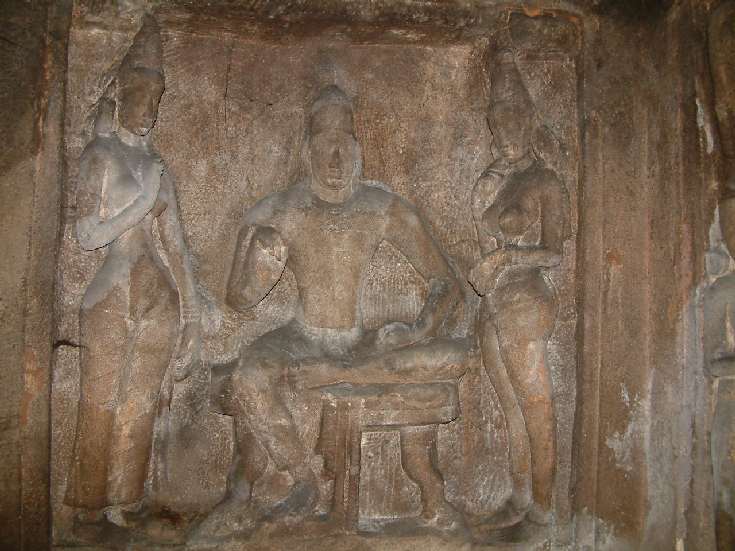
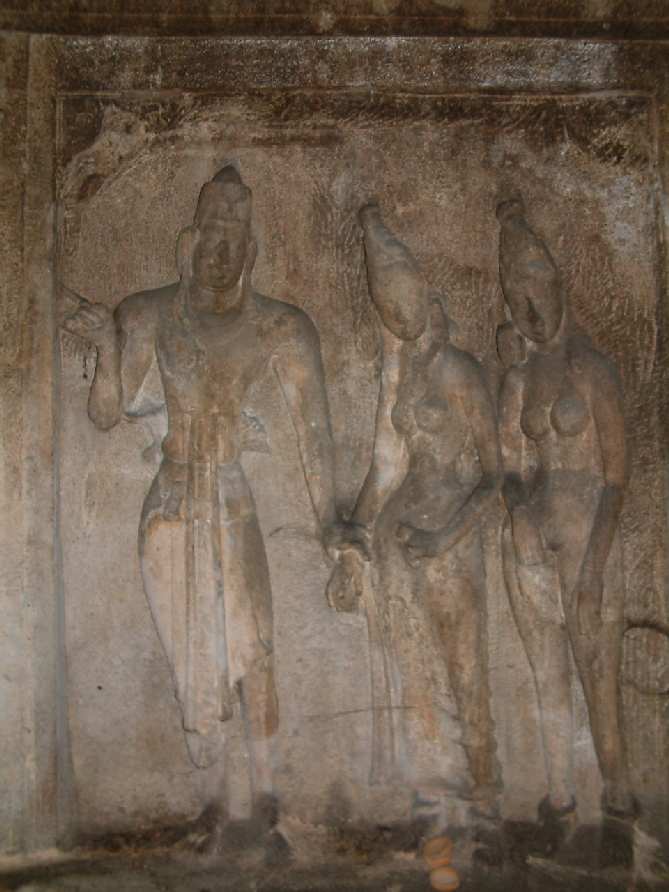
Yet there is one more point which needs clarification. The Ādivarāha cave at Māmallapuram, bears the title of Paramesvara Mahāvarāha Viṣṇu gṛha according to Chola inscription. This cave is therefore ascribed to Paramesvaravarman-I. It contains with other sculptures two portraits of kings, one standing and the other seated with label inscriptions. The label on the top of the seated king with his consort, mentions Simhaviṣṇu-potradhirājar and the one over the standing king mentions Mahendra Potradhirajar. Since all these monuments are ascribed to Narasimhavarman-I. earlier scholars identified the standing king with Mahendravarman-I, the father of Narasimha-I. Since Narasimha-I, also had the title of Narasimhaviṣṇu in his Vātāpi inscription, the seated figure was identified with Narasimha-I. But it is almost impossible to believe that the great Pallavas could depict the father standing and the son seated, which is against tradition and culture. Therefore some scholars identified the seated Simhaviṣṇu with that of Simhaviṣṇu, the father of Mahendra and the celebrated founder of the Pallava dynasty at Kāñci. But from the inscription we learn that the cave was named Paramesvara Mahavarāha Viṣṇugṛha. On this basis some scholars ascribe the excavation of the cave to Paramesvaravarman-I and identify the portraits as that of Narasimha-I and his son Mahendra-II. Since Mahendra-II was the father of Paramesvara-I this explanation was logica. But according to the present study, a better explanation becomes possible. One of the favourite verse of Rājasimha found at Ganesa ratha, Dharmarāja maṇḍapa and Rāmānuja maṇḍapa, is also found here inscribed in which he exhorts the praise of Śiva. Though Rājasimha was a great Śivabhakta, he was no bigot of Viṣṇu as is proved by the Varāha cave, the Mahishamardani cave, the Govardhandhari sculpture and the shore temple. In Reyuru Copper plate grant of the same king, we find that Rājasimha calls himself Paramamāhesvara, Paramabrahamaṇya, and Paramabhāgavata. Since one of his inscription mentioned above is repeated here also, the Ādivarāha cave must also be ascribed to him. The very fact that the praise of Śiva is inscribed in the Viṣṇu cave clearly indicates, that it was excavated by Rājasimha. Therefore the seated Simhaviṣṇu is none other than Rājasimha himself. His title as Narasimha-Viṣṇu is well known in the Rangapatāka inscription.
deve jagadvalayarakṣaṇabaddhadīkṣe nirbhinnaśatruhṛdaye narasiṁhaviṣṇau|vāllabhyamūrjjitamavāpya virājite yā nirjitya garvamiva puṣkarādevatāyāḥ||Mahendra Potradhirajar
The other standing figure is therefore the portrait of Mahendravarman-III, the son of Rājasimha. It is well known that Rājasimha had a son Mahendra who erected the Mahendra varmesvaragṛham at Kāñci at the entrance of the Kailāsanātha temple. Judging from the inscription engraved in Mahendravarmesvaragṛha it is understopod that Rājasimha was still ruling when the temple was erected. The plan, the entrance and the rows of small shrines in line with the entrance suggest, Mahendra's shrine was an integral part of the master plan of the Kailāsanātha temple of Rājasimha. It is therefore evident that Rājasimha associated his son Mahendra in this temple building activity. The portrait of the seated king at the back of the Mahendra's shrine has been identified as Mahendra III the builder of the temple. But a careful study of the inscription will reveal that Rājasimha gives his own attainment and simply mentions Mahendra as his son and that the temple was erected by Mahendra. It is therefore certain that the portrait at the back wall, is that of Rājasimha, shown as facing his favourite diety Rājasimhesvara.
Therefore the standing portrait at Ādivarāha cave is Mahendra III, the son of Rājasimha. As I have pointed out earlier Rājasimha himself had the title of Paramesvara and hence there is no difficulty with reference to the name of the temple as Paramesvara Mahāvaradha Viṣṇugṛha.
On the basis of the above conclusion and on the basis of a re-examination of the historic inscription of Vaikunthaperumal temple of Kāñci, which seems to be a doubtful one, I am inclined to believe that even the Vaikuntaperumal temple was the creation of Rājasimha. Rājasimha has built a shore temple for Anantasayi and also Varāha, and Ādivarāha caves, dedicating to Viṣṇu. This ambitious king would have naturally thought of a Viṣṇu temple in his own capital Kāñci, on the lines of Kailāsanātha temple and such a shrine could naturally be only VAIKUṆTHANĀTHA and that we have in Kāñcipuram.
Conclusions
That structural temples of stone existed prior to Mahendra in Tamilnād.
Though rock cut cave was known to the Tamils, Mahendra had a great fancy for it and was responsible for popularising it.
Māmallapuram was probably established as a seaport by Narasimhavarman-I, but the monuments did not come into existence during his reign.
The monuments of Māmallapuram were the creations of Rājasimha a king of unlimited fancies.
The view that these monuments were started by Narasimha-I and were continued by Mahendra-II and by Paramesvara-I when the work stopped because of the emphasis on structural temple, is therefore untenable.
a) The greatest event in the life of Narasimha-I is the conquest of Vātāpi which is not mentioned in any of the Māmallapuram inscriptions.
b) The greatest event in the life of Paramesvara-I is the conquest of Ranarasika Vikramaditya which is also not mentioned in any of the Māmallapuram monuments.
c) The inscriptions found at Ganesaratha, Rāmānuja maṇḍapa and Dharmarāja maṇḍapa are in fact repetitioins of Rājasimha's inscriptions o Sāluvankuppam.
d) Therefore there is no inscription of either Narasimhavarman - I or Mahendra - II or Paramesvara -I at Māmallapuram
The title Atyantakāma appearing on many of the monuments of Māmallapuram is the exclusive title of Rājasimha as is proved from his other inscriptions.
Out of 32 titles inscribed at Dharmarāja ratha, 16 of them are repetitions of Rājasimha's titles found at Kāñcipuram.
A study of Rājasimha's character proves that he was a peace loving king and lover of Art and literature. He was a king of unlimited imagination. That is perhaps the reason why a number of monuments carved here, do not correspond to any Agamic discriptions.
That Rājasimha was a lover of great variety is proved from his
a) Employment of five varieties of scripts,
b) Varieties of inscriptions;
c) Varieties of Architecture; and
d) Varieties of sculptures.
While all the other kings were torn between wars, Rājasimha alone was free from war and had a peaceful reign.
Soon after him the Pallava rule received a set back and Nandivarman is said to have usurped the throne. Nandi was also driven out of Kāñci by Vikramaditya-II. Vikramaditya probably removed the best artists to Pattadakal for building the Virupaksha temple. After the death of Paramesvara II, the Pallava Kingdom, witnessed general confusion and war, through out the reign of Nandivarman. This explains why most of the monuments were left unfinished.
The Ādivarāha cave was also excavated by Rājasimha and that the portraits there are of Rājasimha and his son Mahendra-III;
Vaikunthaperumal temple of Kāñci was also probably built by Rājasimha, since the inscription in the temple is a doubtful one.
APPENDIX I.
The title of Atyantakāma being found in monuments that are definitely attributed to Rājasimha by all scholars.
1. Kailāsanātha temple.Kāñci.2. Sea Shore temple.Māmallapuram.3. Atiraṇacaṇḍa cave.Sāluvankuppam.4. Pillar inscription.Vayalur.5. Pillar inscription.Tirupporur.
For others:- Nil
Vātāpi and Tirukkaḻukuṉram inscriptions which are the only inscriptions of Māmalla Narasimha-I, do not mention this title of him.
Kuram plate of Paramesvara-I does not mention this title of the king.
There is no record by which this title of Atyantakāma could be attributed to either Narasimha-I or Paramesvara-I.
APPENDIX 2.
EXPRESSION OF VARIETY BY RAJASIMHA
Variety in script:- 5 varieties at Kāñci and 2 varieties at Sāluvankuppam.
Variety in structures:- Sāluvankuppam caves. Sea shore temple. Kailāsanātha temple in the plain. Panamalai temple in the hills. Mukundanayanar temple.
Variety in inscription:- Vayalur, Kāñci, Panamalai, Tirupporur and Māmallapuram.
Compare varities in Māmallapuram :- (a) Rock cut caves. (b) Monoliths. (c) Open air sculptures. (d) Structural temples. (e) Misc. cuttings.
APPENDIX 3
SOME SIGNIFICANT TITLES OF RAJASIMHA:- Compare with this his title AtyantakāmaMahāmallaTavrakopaApratimallaAvandhyakopaAmitramallaKāraṇakopaSatrumallaMattapramattaAbhirāmaMattavikāraMadanābhirāmaSangrāmarāmaUnnatarāmaUdayabhāskaraUdayachandraNarasimhaUdayavasantaRājasimhaKshatrasimhaUditaprabhāvaPurushasimhaUditakirtiNarendrasimhaUditoditaNarapatisimhaVīrasimhaTṛṣṇāpūraṇahDharmavijayīĀsāpūraDharmanityaIcchāpūrahDharmasetuDharmakavacahGuṇālayaAdharmabhīruGuṇavinītaGuṇonnataKalavikramaKalavasana.APPENDIX 4.
MONUMENTS OF MĀMALLAPURAM:- Each is different from the other.(Compare with this his titles. Atyantakāma, Anekopayah and Upayanipuṇah)
A. CAVESC. OPEN AIR SCULPTURES1. Ādivarāha1. Arjuna's penence2. Varāha2. Arjuna's penance (a second version)3. Trimūrti3. Govardhanadhāri4. Rāmānuja maṇḍapa4. Elephant-peacock-money group5. Dharmarāja maṇḍapa5. Lion bed6. Kotikal maṇḍapa6. Lion with Durga7. Pañca Pāṇdava maṇḍapa7 Horse etc. on the shore8. Atiraṇacaṇḍa cave9. Yāliheaded cave (Tiger cave)10. Mahishamardani caveMahisha cave at the shoreB. MONOLITHSD. STRUCTURAL TEMPLES1.Dharmarājaratha1. Kailāsanātha2.Bhīmaratha2. Sea shore temple3.Arjunaratha3. Panamalai temple4.Draupadiratha4. Mukundanayanar5.Sahadevaratha5. Light house temple6.Ganesaratha6 Airavatesvara7.Valayankuttairatha7. Vaikuṇṭa Perumal8.Pidāriratha
From the foregoing conclusions, it is evident that Atyantakāma Rājasimha, the author of all the Māmallapuram monuments and inscriptions, is the noblest king that the Tamil country has ever produced. He is indeed one of the greatest sons of Mother India, who delighted in art, music, literature, valour and above all in peace and dprosperity of his people. Rājasimha's attainment in the field of art is unparalleled in the history of India. It is indeed a pity that this noble Hindu monarch, has not been given an honoured place in the history of India. Let us do him justice by giving him, an exalted place in the history of the nation. (* The above forms part of a monograph on this greatest Pallava prince, to be published shortly by the author.)
Inscription on the Southern Wall of the Atiranacandesvara Temple Sāluvankuppam.
śrīmāto tyanata kāmasya dviṣaddar pāpahāriṇaḥ|śrīnidheḥ kāma rāgasya harārādhana saṁginaḥ|| 1abhiṣeka jalāpūrṇe citra ratnāmbujākare|āste viśāle sumukhaḥ śiraḥ sarasi śaṅkaraḥ|| 2tenedaṁ kāritaṁ śaṁbhor bhavanaṁ bhūtaye bhuvaḥ|kailāsa mandaranibhaṁ bhṛbhṛtāṁ mūrdhni tiṣṭatā|| 3bhakti prahveṇa manasā bhavaṁ bhūṣaṇa līlayā|doṣṇā ca yo bhuvandhatte jīyātsa śrībharaściram|| 4atiraṇacaṇaḍaḥ patiravānibhujām atiraṇacaṇḍeśvaram idam akarot|iha giritanayāguhagaṇasahito niyatakṛtaratirbhavatu paśupatiḥ|| 5gurvvām īśāna bhaktiṁ śriyamati śayinīṁ durvvahaṁ bhāramurvvyānissāmānyañca dānaṁ samamati ra ṇacaṇḍākhyayā yo bibhārti|sthāne nirmmāpitesminvidi taraṇa jayakhyātinā tena bha rttābhūtānām aṣṭamūrttiś ciram atiraṇacaṇḍeścare yātu niṣṭām|| 6a nugra śīlaḥ||yadi na vidhātā bharato yadi na harirn nārado na vā skandaḥ|boddhuṁ ka ivasamartthas saṁgītaṁ kālakālasya|| 7om|| samaradhanañjayaḥ saṁgramadhīraḥ|| om
TRANSLATION
(Verses 1 and 2) Just as in a large lake filled with water which is fit for bathing, and covered with various lotus flowers, handsome Samkara (Śiva) abides on the large head-sprinkled with the water of coronation and covered with bright jewels====of the illustrious Atyantakāma, who deprives his enemies of their pride, who is a receptacle of wealth, who possesses the charm of Cupid and who assiduously worships Hara (Śiva).
3. For the welfare of the earth, he who stands at the head of the lords of the earth, caused to be made this house of Sambu (Śiva), which resembles Kailasa and Mandara.
4. May Sribhara be victorious for a long time, who bears Bhava (Śiva) in his mind which is filled with devotion, and bears the earth on his arm like a coquettish embellishment!
5.Atiraṇacaṇḍa, the lord of the rulers of the earth, made this (temple called) Atiranacandesvara. May Pasupati (Śiva), attended by the mountain-daughter (Parvati) and troop of Guhas, always take delight (in residing here!
6. May the eight-formed lord of beings (Śiva) for a long time take up his abode in this temple called Atiranacandesvara which was caused to be built by him, who together with the name of Atiraṇacaṇḍa bears deep devotion to Isana (Śiva), abundant prosperity, the heavy burden of the earth and unequalled liberality, and who is famed by the name of Ranajaya!
Anugrasila (the gentle-minded)
7. Who will be able to understand the music of Kalakala, if it were not Vidhatri (Brahman) Bharata, Hari, Narada or Skanda?
Samaradhanamjaya (the conqueror of wealth in battle) Samgramadhira (the firm in war.)
Inscription on the Northern Wall of the Atiranacandesvara Temple, Sāluvankuppam.
śrīmātotyanatakāmasyadviṣaddarppāphāriṇaḥ| śrīni-dheḥ kāmarāgasya harārādhanasaṁgi-naḥ|| 1abhiṣekajalāpūrṇe citraratnāṁ-bujākare| āsteviśāle sumukhaḥ śirassara-si śaṅkaraḥ|| 2tenedaṁ kāritaṁ śaṁbhorbhava-naṁ bhūtaye bhuvaḥ| kailāsamandaranibhaṁ bhūbhṛtāṁmūrdhni tiṣṭatā|| 3bhakti prahveṇa manasā bhavaṁ bhūṣaṇa-līlayā| doṣṇā ca yo bhuvandhatte jīyātsaśrībharaści-ram|| 4atiraṇacaṇaḍaḥ patiravānibhujāmatira-ṇacaṇḍeśvaramidamakarot| iha giritanayāgu-hagaṇasahito niyatakṛtaratirbhavatu paśupatiḥ|| 5gurvvāmīśānabhaktiṁ śriyamatiśayinīṁ durvvahaṁ bhāramurvvyānissāmānyañca dānaṁ samamatiraṇacaṇḍā khya yā yo bi bhārti| sthānenirmmāpitesminviditaraṇajaya khyātinā tena bharttā bhūtānā-maṣṭamūrttiścirama tiraṇacaṇḍe ścare yātu niṣṭām ||6--svasti
Inscription at the Dharmarāja maṇḍapa, Māmallapuram.
sambhavasthitisaṁhārakāraṇaṁvitakāraṇaḥ| bhūyādatyantakāmāyajagatāṁ kāmamarddanaḥ||amāyaścitramāyosāvaguṇo guṇabhājanaḥ|svasatho niruttaro jīyādaniśaḥ|| yasyāṅguṣṭhabharākrānataḥ kailāsassadaśānanaḥ| pātālamagamanbhūrdūdhnā śrīnidhistambhibhartyajam||bhaktiprahveṇa manasā bhavaṁ bhūṣaṇalīlayā|doṣaṇa ca yo bhūvo bhāraṁ jīyātasaśrībharaściram|| atyantakāmo nṛpatirnnirjitārātimaṇaḍalaḥ| khyāto raṇajayaḥ śambhostenedaṁ veśma kāritam||ñjaḥ sthāṇurnniṣkalaḥ somaḥ pāvakātmā viyadvapuḥ|bhīmaḥ śivo vijayatāṁ śaṅkaraḥ kāmasūdanaḥ||rājarājo na virasaścakrabhṛnna janārddanaḥ|tārakādhipatiḥ svastho jayatāttaruṇāṅkuraḥ||śrīmatotyantakāmasya dviṣaddarppāpahāriṇaḥ|śrīnidheḥ kāmarāgāsya harārādhanasaṅginaḥ||abhiṣeka jalāpūrṇṇe citraratnāmbujākare|āste viśāle sumukhaḥ śirassarasi śaṅkaraḥ||tenedaṁkāritantuṅgandhūrjjaṭermmandira gṛha|prajānām iṣṭa siddhayartthe śaṅkarīṁ bhūtimicchatā|||| oṁ |||| atyanatakāmapallaveśvaragṛham ||dhikteṣāndhikteṣāmpunarapi dhigdhigdhigastu dhikteṣām|yeṣānnavasati hṛdaye kupathagativimokṣako rudraḥ||
TRANSLATION
(Verse 1) May (Śiva) the destroyer of Love, who is the cause of production, existence and destruction (but is himself) without cause, fulfil the boundless desires of men!
2. May he (Śiva) be victorious, who is without illusion and possessed of manifold illusion, who is without qualities and endowed with qualities, who is existing by himself and is without superior, who is without lord and the highest lord!
3. Srinidhi bears on his head the unborn (Śiva), by the weight of whose great toe Kailasa together with the ten faced (Ravana) sank down into Patala.
4. May Sribhara be victorious for a long time, who bears Bhava (Śiva) in his mind which is filled with devotion, and bears the earth on his arm like a conquettish embellishment!
5. King Atyantakāma, who has subdued the territories of his foes, is famed (by the name of) Ranajaya:====he caused to be made this house of Sambhu (Śiva)
6. May he be victorious, who is both sentient and motionless (Sthanu), who is both undivided and the moon, who is both fire and air, who is both terrible (Bhima) and kind (Śiva), who is both the cause of prosperity (Samkara and the destroyer of Love!
7. May Tarunankura be victorious, who is a king of kings, but is not ugly (like Kuvera) who is am emperor, but does not distress people (while Viṣṇu as both Chakrabhrit and Janardana) who is the lord of protectors, but healthy (while the moon is the lord of stars, but is subject to eclipses)!
(8 and 9) Just as in a large lake filled with water which is fit for bathing, and covered with various lotus-flowers, handsome Samkara (Śiva) abides on the large head sprinkled with the water of coronation and covered with bright jewels====of the illustrious Atyanatakama who deprives his enemies of their pride, who is a receptacle of wealth, who possesses the charm of Cupid, and who assiduously worships Hara (Śiva.)
10. He, desiring to attain the glory of Samkara (Śiva), caused to be made this lofty dwelling of Dhurjati (Śiva) in order to procure the fulfilment of their desires to his subjects.
11. Six times cursed be those, in whose hearts does not dwell Rudra (Śiva), the deliverer from the walking on the evil path! The temple of Atyantakāma Pallavesvara.
Inscription of the Ganesa Temple, Māmallapuram.
sambhavasthitisaṁhārakāraṇaṁ vitakāraṇaḥ|bhūyād atyantakāmāya jagatāṁ kāmarmaddanaḥ||1||amāyaścitramāyosāvaguṇo guṇabhājanaḥ|svasatho niruttaro jīyādanīśaḥ parameśvaraḥ||2||yasyāṅguṣṭhabharākrānataḥ kailāsaḥ sadaśānanaḥ|pātālamagamanbhūrdūdhnā śrīnidhistambhibhartyajam||3||bhaktiprahveṇa manasā bhavaṁ bhūṣaṇalīlayā|doṣaṇa ca yo bhūvo bhāraṁjīyātasa śrībharaściram||4||atyantakāmon ṛpatirnnirjitārātimaṇaḍalaḥ|khyāto raṇajayaḥ śambhostenedaṁ veśma kāritam||5||ñjaḥ sthāṇurnniṣkalaḥ somaḥ pāvakātdmā viyadvapuḥ|bhīmaḥ śivo vijayatāṁ śaṅkaraḥ kāmāsūdanaḥ||6||rājarājo na virasaścakrabhṛnna janārddanaḥ|tārakādhipatiḥ svastho jayatāttaruṇāṅkuraḥ||7||śrīmatotyantakāmasya dviṣaddarppāpahāriṇaḥ|śrīnidheḥ kāmarāgāsya harārādhanasaṅginaḥ||8||abhiṣeka jalāpūrṇṇe citraratnāmbujākare|āste viśāle sumukhaḥ śirassarasi śaṅkaraḥ||9||tenedaṅkāritantuṅgandhūrjjaṭermmandiragṛham|prajānāmiṣṭasiddhayartthe śaṅkarīṁbhūtimicchatā||10||dhikteṣāndhikteṣāmpunarapi dhigdhigdhigastu dhikteṣām|yeṣānna vasati hṛdayekupathagativimokṣakorudraḥ|| 11|| atyanatakāmapallaveśvaragṛham ||
Fragment of an inscription at the Rāmānuja maṇḍapa, Māmallapuram.
dhikteṣām dhikteṣām punarapi dhigdhigdhigastu dhikte-ṣām [.] yeṣānna vasati hṛdaye kupathagati-vimokṣako rudraḥ ..
Inscription at the Ādivarāha cave at Māmallapuram.
dhikteṣām dhikteṣām punarapi dhigdhigdhigastu dhikteṣām .yeṣān na vasati hṛdaye kupathagati vimokṣako rudraḥ ..Notes and References1. Percy Brown, Indian Architecture (Buddhist and Hindu), 3rd ed. (Bombay, 1956). 2. O. C. Gangoly, J. Goswamy and N. Ramakrishna The Art of the Pallavas (Calcutta, 1957). 3. G. Jouveau-Dubreuil, The Pallavas (Madras 1907). 4. G. Jouveau-Dubreuil, Dravidian Architecture (Madras, 1917). 5. G. Jouveau-Dubreuil, Pallava Antiquities, 2 vols. (Pondicherry, 1916 and 1918). 6. G. Jouveau-Dubreuil, Archaeologie du sud de I'lnde (Paris, 1924). 7. St Kramrisch, The Hindu Temple, 2 vols. (Calcutta, 1946). 8. H Krishna Sastri, The Statues of Pallava Kings and five Inscriptions in a rock temple at Mahabalipuram, Mem. Arch. Surv. Ind., No. 26 (Calcutta, 1926). 9. A. H. Longhurst, Pallava Architecture, 3 pts., Men. Arch. Surv. Ind., Nos. 17, 33 and 40 (Simla, 1924, Calcutta, 1928 and 1930). 10. C. Minakshi, The Historical Sculptures of the Vaikunthaperumal Temple, Kāñci. Mem. Arch. Surv. Ind., No. 63 Delhi, 1941). 11. T. N. Ramachandran, 'The royal artist Mahendravarman I', Jour. Oriental Research, Madras, VII (1933), pp. 219==46. 12. A. Rea, Pallava Architecture Arch. Surv. Ind., New Imperial Series, XXXIV (Madras, 1909). 13. H. Zimmer, The Art of Indian Asia, 2 vols. (New York 1955). 14. Fergusson History of Indian and Eastern Architecture. 15. Hultsch, South Indian Inscription. Vol. I. 16. K. R. Srinivasan, Ancient India No. 14. 17. C. Śivaramamurti, Mahabalipuram.2. Epigraphia India, Vol. XVII. Page 17.3. Fergusson, Op. cit.4. Dubreuil, Pallava Antiquities. Vol. I. Page. 76.5. S.I.I. Vol. I. No. 24.6. S.I.I. Vol. 1.7. Perumbānaṛṛuppadai. Line. 319.)8. Pandit Raghava Ayangar, Āḻvārgal Kālavaralaru.9. Avantisundarikatha.10. Thirumangai Alvar, Divyaprabandham. (1088-1107, 1995, 1551, 2050, 2060.)11. S. I. I. Vol. I.12. Ibid.13. Ibid No. 2114. Dubreuil. Op. cit.15. Ibid. plate. XXVIII.16. K. R. Srinivasan. Ancient India, No. 14. pl. XLIX.17. Annual Report on Epigraphy. 65 of 1907 pt. II para 5.18. A. R. E. 961 of 1913.19. C. Śivaramamurti. Mahabalipuram.20. Epigraphia Indica, Vol. XVIII - 145.21. S. I. I. Vol. I. 24.22. A. R. E. 961 of 1913.23. S. I. I. Vol. I. 21.24. E. I. XVIII. 145.25. S. I. I. Vol. XII, 27, A. R. E. No. 76 of 1909.26. S. I. I. Vol. I.27. Indian Antiquary. Vol. IX. P. 100.28. E. I. Vol. III. Pp. 277 - 280.29. S. I. I. Vol. I. No. 151.30. 30. S. I. I. Vol. II. NO. 98.31. Ibid. No. 73.32. Ibid. No. 74.33. F. H. Gravery and T. N. Ramachandra The three main styles of Indian temple Architecture. Page 18 - 19.(** A. H. Longhurst in his Pallava Architecture divides the Māmallapuram monuments into four periods as (1) Mahendra style (610-640 A.D.), (2) Māmalla style (640-670 A.D.), (3) Rājasimha style (674-800 A.D.) and (4) Nandivarman style (800-900 A.D.) But Sri K.R. Srinivasan in his recent studies divides the periods into three as (1) Mahendra style; (2) Māmalla style; and (3) Paramesvara-I's style.